
In the rapidly evolving world of blockchain and decentralized finance (DeFi), Walrus (WAL) has emerged as a standout project that addresses one of the most pressing challenges in Web3 — scalable, cost‑effective, and secure data storage. As digital ecosystems expand to support rich media, AI datasets, NFT metadata, decentralized applications (dApps), and enterprise data needs, traditional blockchain storage solutions struggle under the weight of large files and high costs. Walrus Network, powered by the WAL token and built on the high‑performance Sui blockchain, is designed to change that paradigm by offering a robust, decentralized, privacy‑centric data layer that is reshaping how data is stored, accessed, and monetized on‑chain. �
Binance +1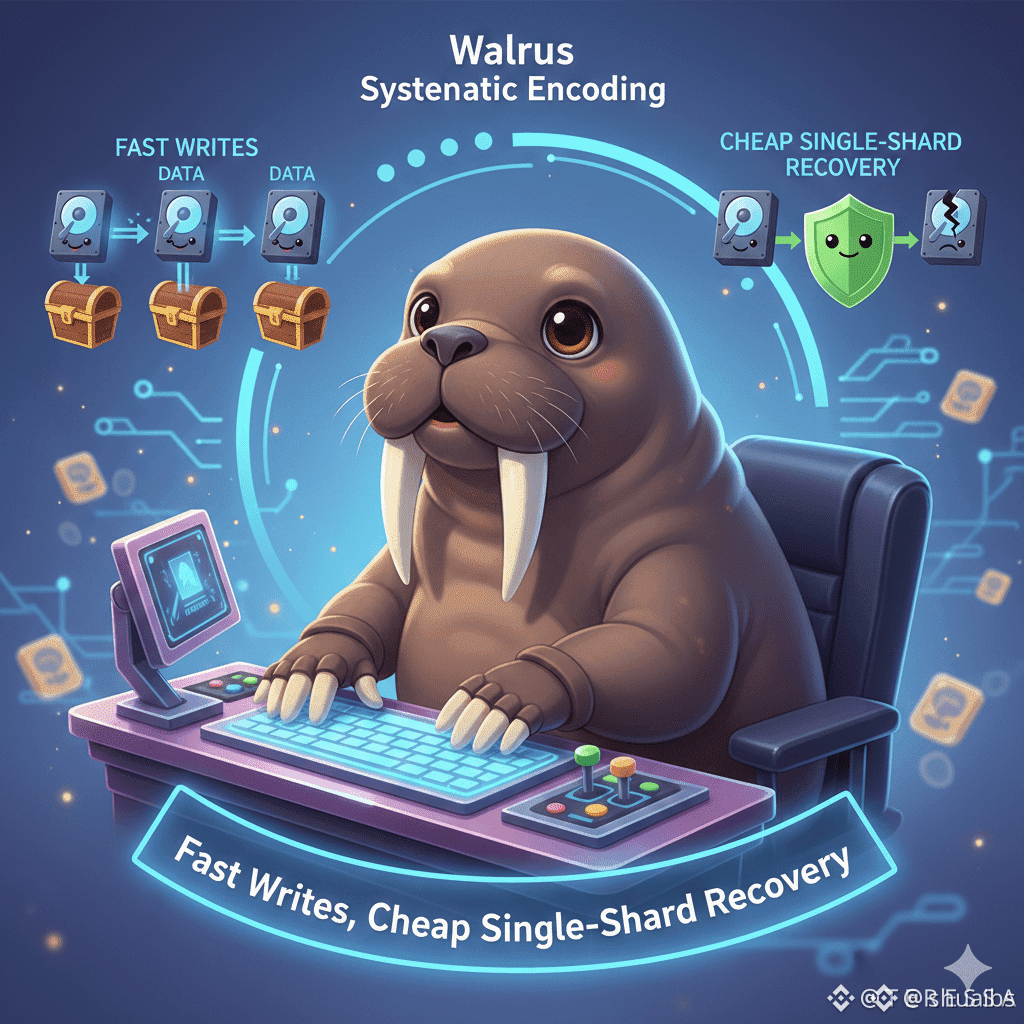
At its core, Walrus is more than just a storage layer — it is an infrastructure catalyst for Web3, AI, and data‑driven economies. By leveraging innovative technologies such as advanced erasure coding, distributed blob storage, smart contract programmability, and token‑based incentives, Walrus is positioning itself as a scalable alternative to centralized storage while empowering users and developers with true data ownership and censorship resistance. �
Nansen +1
The WAL token, native to the Walrus protocol, fuels this ecosystem by enabling essential functions like storage payments, staking, governance, and network incentives. As we move into 2025–2026, Walrus’s integration with Sui’s expanding ecosystem — including private transactions and an AI‑focused tech stack — further reinforces its relevance and potential for broad adoption. �
Walrus +1
Central to Walrus’s strategy is its focus on practical utility and real‑world use cases rather than speculative hype. Unlike many blockchain projects that emphasize token price or trading volume, Walrus prioritizes dependable infrastructure — addressing the storage bottlenecks that have long hindered decentralized applications capable of handling media‑rich or data‑heavy operations. �
CoinGecko
The result is an ecosystem where data is treated not merely as passive information but as a programmable asset that can be securely stored, verified, and integrated directly with smart contracts and decentralized logic. This novel approach catalyzes new markets and opportunities for developers, enterprises, and end users alike. �
Backpack Learn
From a technical perspective, Walrus distinguishes itself with its use of Red Stuff erasure coding — a custom algorithm that splits large files into encoded fragments (“slivers”). These slivers are distributed across dozens or hundreds of independent storage nodes. A subset of these fragments is sufficient to reassemble the original data, meaning that even if nodes go offline, the data remains recoverable. This design dramatically enhances reliability and resilience while using far less storage than traditional replication strategies. �
Nansen +1
Moreover, by integrating with Sui’s smart contract capabilities, Walrus enables storage programmability — making stored data operable within decentralized applications. This allows developers to build logic that interacts with data directly on‑chain: from automated file expirations to tokenized access rights and dynamic content delivery. This integration of blob storage with smart contracts is a fundamental shift from siloed storage systems toward programmable, composable on‑chain assets. �
Backpack Learn
The economic design of the WAL token reinforces Walrus’s long‑term sustainability. WAL serves as the payment medium for data storage, where users prepay for storage services in WAL to secure predictable pricing that remains stable against fiat currency fluctuations. These payments are then distributed over time to storage providers and stakers, which aligns incentives and fosters network reliability. Additionally, a portion of WAL tokens is allocated as early adoption subsidies, helping lower initial storage costs and encourage ecosystem participation. �
Walrus
Staking WAL is another crucial feature that underpins network security and decentralization. Storage node operators must stake WAL to participate, and token holders can also delegate their tokens to trusted nodes. This delegated proof‑of‑stake (dPoS) mechanism enhances network performance while allowing token holders to earn rewards, participate in governance, and influence key protocol parameters. �
Nansen
In governance terms, WAL holders have a voice in shaping Walrus’s evolution, including decisions about pricing models, penalties for misbehavior, incentives, and long‑term protocol upgrades. This decentralization of control not only aligns with core blockchain ideals but also ensures that development reflects community interests and market realities. �
CoinMarketCap
One of the most compelling practical aspects of Walrus is its versatility across use cases:
Decentralized Web Hosting: With programmable storage, developers can host fully decentralized websites, reducing dependence on centralized servers and delivering content without traditional hosting costs. �
Backpack Learn
NFT Metadata and Media Storage: NFT platforms and marketplaces can leverage Walrus to store images, metadata, and rich media in a censorship‑resistant fashion that protects digital assets from loss or alteration. �
Nansen
AI and Data Markets: As AI systems demand vast datasets, Walrus offers cost‑efficient, trustable storage that supports training, validation, and deployment of intelligent models. The Walrus network transforms static data into a tradable and programmable resource. �
CoinGecko
Enterprise and Blockchain Archiving: Businesses and blockchain projects with extensive history data can store and archive information reliably and securely without the prohibitive costs of traditional or on‑chain storage. �
Nansen
This breadth of application underscores why Walrus is gaining traction not just within the Sui ecosystem but across a wider range of Web3 infrastructure efforts. Its ability to support multi‑chain integration (including Ethereum and Solana) further amplifies its utility, offering a cross‑chain storage layer capable of serving diverse blockchain environments. �
CoinGecko
Critically, while Walrus has already launched mainnet and garnered significant backing — including a $140 million funding round led by major investors like Standard Crypto and a16z Crypto — the protocol’s success will ultimately depend on adoption, community engagement, and developer ecosystem growth. Encouraging signs indicate gradual uptake, particularly among AI, NFT, and decentralized application developers seeking scalable data solutions. �
Walrus +1
In the broader landscape, Walrus confronts well‑known decentralized storage competitors such as Filecoin, but its use of advanced erasure coding, integration with smart contract logic, and cost‑efficiency goals give it a competitive edge — especially for programmable and large‑scale decentralized storage demands. �
Honor
In conclusion, Walrus (WAL) stands at the intersection of decentralized storage, programmable data markets, and blockchain‑native economic design. As Web3 technologies mature and demand for scalable data solutions accelerates, Walrus offers a compelling infrastructure foundation — one that empowers users with data ownership, developers with powerful tools, and token holders with governance and reward mechanisms. Whether for AI datasets, rich media storage, or decentralized web services, Walrus is positioning itself as a cornerstone of next‑generation digital infrastructure. �