
Most blockchains treat regulation as a binary problem. Either comply by exposing everything or resist by hiding everything. Dusk takes a different path by allowing disclosure to evolve based on context, risk, and requirement.
Adaptive disclosure means that information is not released by default. It is revealed only when necessary and only to the appropriate parties. This protects users while reducing regulatory friction. Compliance becomes a controlled process rather than an invasive one.
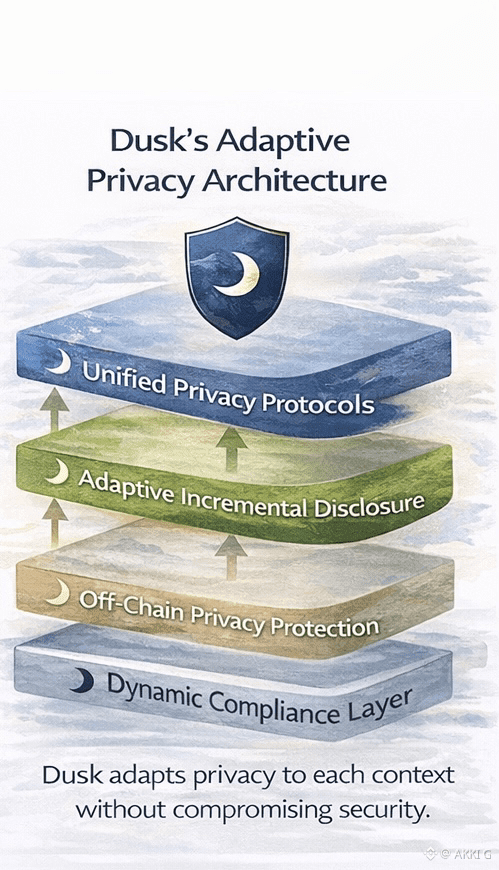
This matters because regulation is not static. Requirements change across jurisdictions, asset classes, and time. A rigid privacy model breaks under these conditions. Dusk’s adaptive approach allows the same infrastructure to support different regulatory needs without rewriting the system.
From my perspective, this is one of Dusk’s most future proof qualities. It does not assume a single regulatory outcome. It prepares for many.
