

Most global traders feel stuck with a choice when it comes to blockchain: you either get full transparency and open access, or you get privacy and regulation but not both. Dusk set out to break that rule. Instead of picking sides, Dusk builds a blockchain that gives you privacy and still fits inside a regulated world. That’s the big difference here, and honestly, it’s what makes Dusk worth talking about in plain language.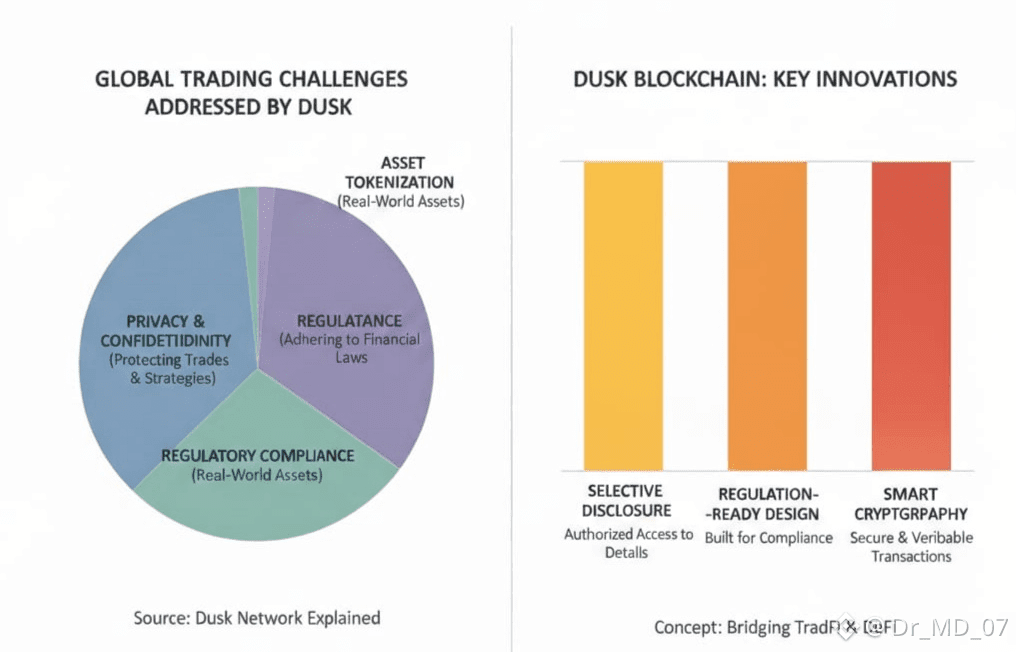
At its core, Dusk is a blockchain made for financial markets where privacy isn’t just a nice-to-have it’s a requirement. In traditional finance, banks and institutions don’t put every transaction up for everyone to see, but they still answer to regulators. Most public blockchains flip that around. Everything’s out in the open, which works fine if you’re just trading tokens, but it falls apart when you need to follow strict rules. Dusk changes things by keeping transactions private by default but still letting them be checked when needed. For traders working across countries, this is a big deal.
One of the main ideas behind Dusk is selective disclosure. That just means only the right people see the details. If you’re not supposed to see a trade, you don’t. But regulators or authorized folks can still check for compliance. This is a lot like how audits work in traditional markets checks happen, but they don’t blast private info all over the place. For global traders, that means less risk. Your strategies and trades stay your business, but the system stays honest.
Regulation is another area where Dusk really leans in. Most blockchain projects either dodge regulation or act like it’s a headache. Dusk takes a different route. It’s built to work with regulations, not against them. That’s important because real money follows clear rules. If you’re an institutional trader or asset manager, you want to know the system won’t suddenly become illegal. Dusk bakes regulation into its design, so you get stability, not surprises.
On the tech side, Dusk uses smart cryptography to make sure privacy doesn’t come at the cost of security. The details are complicated, no doubt, but the end result is simple: users get confidential transactions, can issue and trade assets, and still have everything properly verified by the network. Traders don’t need to know the math behind it all. What matters is their activity stays protected and can be trusted. That simplicity matters a lot for adoption.
Dusk’s focus on real-world assets and regulated financial products is another thing that sets it apart. Over the past couple of years especially in 2024 and heading into 2025 tokenized assets started moving from just an idea to actually being used. But most blockchains aren’t built to handle these assets because of privacy and compliance issues. Dusk is. It lets assets live on-chain while still following the rules from traditional markets. For traders, this means getting into new asset classes without giving up the safety nets they rely on.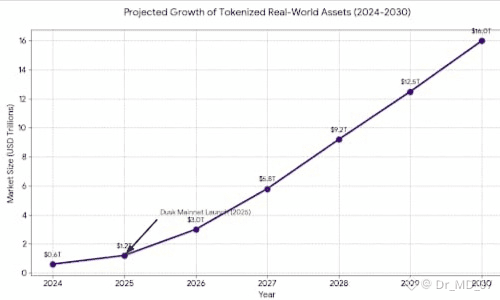
From a global trading angle, privacy isn’t about hiding shady behavior. It’s about protecting legitimate trades. Big moves, portfolio changes, cross-border transfers those attract attention if everything’s public. Dusk shields that info while still keeping things accountable. This balance really matters for traders working in fast-moving or tightly regulated markets.
What stands out to me personally is how Dusk plays the long game. A lot of projects chase hype, jumping from trend to trend. Dusk has spent years honing its focus on privacy and regulation. As a trader, I care about that kind of consistency. Platforms with a clear purpose tend to last, while trend-chasers fade away. I see Dusk not as some wild experiment, but as solid ground for serious finance.
Dusk isn’t out to replace public blockchains. It fills a space they weren’t set up for. It creates a place where privacy and compliance actually work together, making blockchain useful for markets that need both. If you’re a global trader thinking about the future, this combo is only going to matter more.
Put simply, Dusk gets how finance really works. It keeps your info safe, follows the rules, and still gives you the perks of decentralization. As the industry grows up, solutions like this aren’t going anywhere they’re just getting started.
