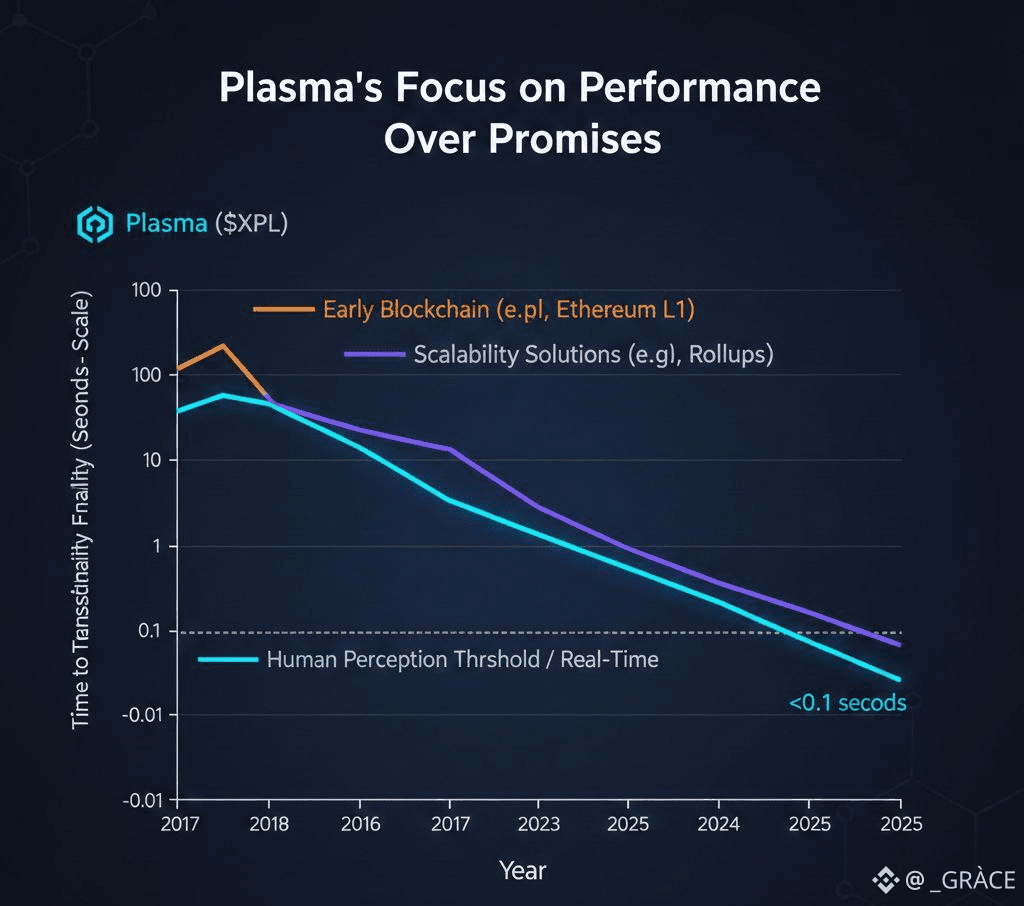
Plasma is built around a simple realization that many blockchains arrive at too late: most decentralized networks were never meant to run continuously. They function well when activity is sporadic, but struggle when applications demand speed, consistency, and uninterrupted execution. As Web3 moves toward real-world usage, that limitation becomes impossible to ignore.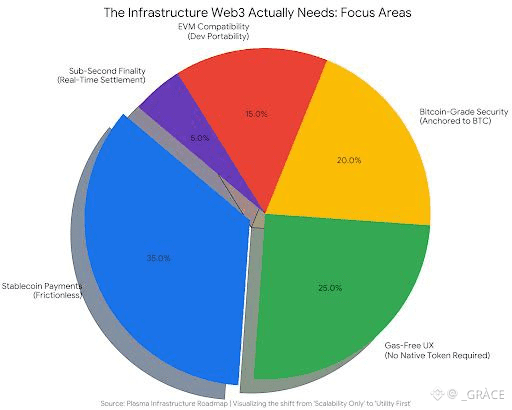
Rather than expanding outward to cover every possible function, Plasma narrows its focus. It exists to execute transactions efficiently and reliably, even under constant load. This specialization is intentional. Plasma does not try to replace settlement layers or governance systems. It is designed to handle the part of blockchain infrastructure that breaks first when usage increases: execution.
In practical terms, modern applications behave more like live systems than static programs. Trading platforms react to market changes every second. Games require instant feedback. Automated agents operate without pause. Plasma is structured to support this kind of activity without degrading performance or pushing costs higher as demand grows.
A major reason many networks slow down is the way they process transactions. When every action must wait its turn, throughput becomes a bottleneck. Plasma approaches execution differently by allowing independent operations to run at the same time. When transactions do not interfere with one another, they do not need to be processed sequentially. This parallelism allows the network to scale with demand rather than choke under it.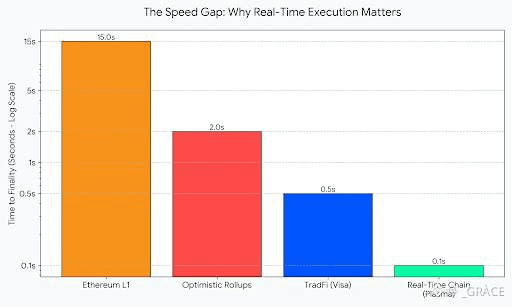
For users, the result is straightforward. Interactions feel responsive instead of delayed. Actions resolve quickly without the uncertainty that often comes with congested networks. For developers, this consistency changes how applications are designed. Instead of planning around worst-case performance, teams can focus on functionality and experience.
Efficiency is another core consideration. Plasma is engineered to reduce wasted computation and unnecessary state updates. When contracts run, they do only what is required. This matters less in small deployments and more as systems grow. Over time, inefficiency compounds. Plasma is built to prevent that from happening.
This design makes Plasma particularly suitable for environments where timing matters. In financial systems, faster execution improves outcomes and reduces inefficiencies caused by delays. In interactive applications, responsiveness maintains immersion. For automated processes and intelligent agents, Plasma provides an execution environment that can operate continuously without interruption.
Plasma also assumes a future where blockchains are modular by default. Instead of forcing one network to handle everything, different layers specialize. Plasma occupies the execution role, while other systems handle settlement, coordination, or security guarantees. This division of responsibility allows each layer to optimize deeply for its purpose.
Interoperability between these layers is a key part of the model. Activity can occur at high speed on Plasma, while final outcomes are recorded elsewhere. This mirrors how large-scale systems are built outside of blockchain, where specialization tends to outperform monolithic design.
Security is not treated as negotiable. Plasma’s performance improvements come from architectural decisions, not reduced validation or trust assumptions. Execution remains deterministic, meaning results are consistent and verifiable. Speed is achieved through structure, not shortcuts.
From a builder’s perspective, Plasma aims to feel familiar. Developers are not required to abandon established patterns or tools. Predictable performance and execution costs make long-term planning easier, especially for teams building applications intended to last rather than launch quickly and fade.
Looking forward, Plasma is designed for a world where activity does not stop. As Web3 systems become increasingly automated, blockchains must support constant execution rather than occasional interaction. Smart contracts begin to resemble services rather than scripts. Plasma is built with this shift in mind.
Economic stability is an important part of that future. Networks that experience sudden congestion often push costs to extremes, making them unusable for everyday applications. Plasma’s architecture minimizes these swings, creating an environment where applications can grow without being derailed by fee volatility.
What ultimately defines Plasma is restraint. It does not attempt to solve every problem in decentralized technology. It focuses on execution and commits fully to doing that well. This discipline allows deeper optimization than broad, unfocused designs.
As Web3 matures, infrastructure quality will matter more than narratives. Applications that serve large user bases or operate continuously will depend on execution layers that are fast, consistent, and reliable. Plasma positions itself as that foundation.
Rather than chasing attention, Plasma addresses a structural need. By aligning blockchain execution with how modern systems actually operate, it enables decentralized applications to function at a pace that matches real-world expectations.