


Dusk starts to feel familiar in the way patterns do, not in the way stories do.
You don't notice it on the first cycle. Or the second. Committees form, attestations land, outcomes clear. Everything checks out. The same logic keeps selecting the same kinds of participants, and there is comfort in that. Predictability reads as professionalism. Explainability is what people hide behind when they want to stop the discussion.
And you stop being surprised.
The same profiles keep showing up. Not because anyone chose them. Because the Dusk selection rules eligibility boundary and committee weight... keep pointing there. It's clean. Deterministic. Easy to defend if someone asks why this committee, not another. The answer fits in a sentence. That's usually where people stop asking questions.
Risk doesn't stop asking; it just learns where to stand and what not to bother escalating.
Nothing breaks. Nothing drifts out of bounds. But the edge cases start looking familiar too. The same timing quirks. The same behaviors under load. Same clock drift story, same upgrade hour, same "we all throttled at once' moment. The same situations where everyone reacts correctly and still ends up exposed in the same way as last time. Not wrong. Just... repeated.
On Dusk, no one tweaks the committee because of a vibe. There's no lever for that. Selection keeps doing what it's allowed to do and it does it well enough that changing it feels unjustified. You'd have to admit the rule is part of the exposure. Nobody likes that sentence.
So the system keeps picking what it knows how to pick.
Over time, power shifts without announcing itself. Not because anyone seized authority. More like repetition doing the work. If the same selection logic keeps encountering the same class of risk, that class becomes the one the system learns to live with. Everything else fades into theory.
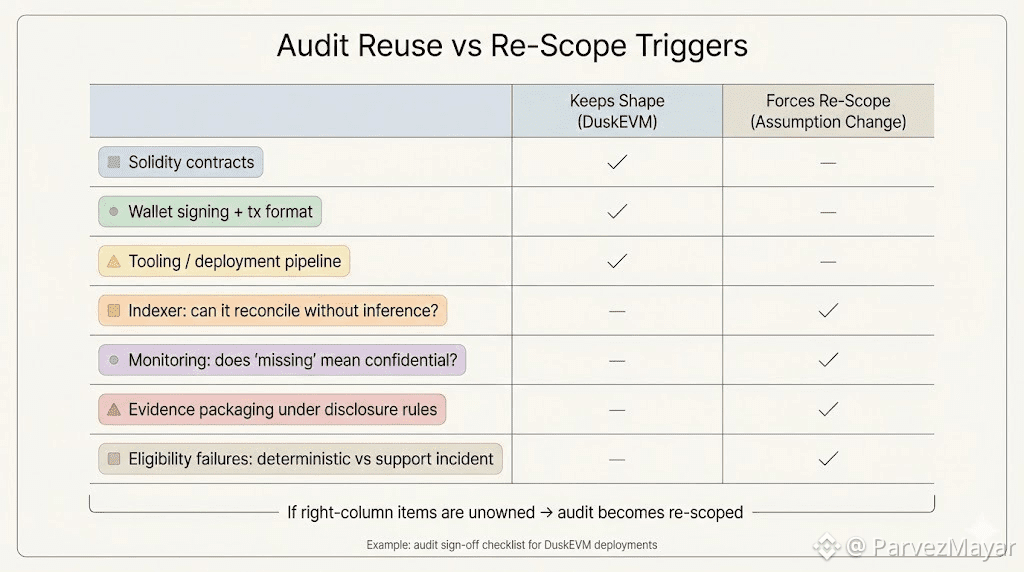
Audits on Dusk look clean. Reviews are boring, and the close-out note keeps reading the same: "committee selection rationale... unchanged under current eligibility boundary". Teams pick the explanation that passes review, and that's how the blind spot settles. The system can tell you exactly why this committee was correct. It can't tell you what it is stopped seeing.
You hear it in how people talk.
"This again'. "Same shape as last cycle." "At least we know how it behaves"'.
That is not confidence. That's accommodation.
Nobody violated policy. That's what makes it annoying. The exposure came from something more subtle... selection that never had to adapt because nothing forced it to. It was easy to justify, so it got reused, and the repetition started feeling acceptable.
By the time someone wonders whether the committee surface is too predictable, the answer is already baked in. Changing it now wouldn't look like caution. It would look like admission. That the system trained itself into a corner by being too consistent to argue with.
Dusk Committees keep forming. Outcomes keep clearing. The same risks keep showing up, right where the selection logic leaves the light on.
Nothing about that is accidental, exactly. Just easy.
