
In Dusk’s post-monolithic architecture, DuskDS is the base layer that simultaneously provides settlement, consensus, and data availability for multiple execution environments, notably DuskEVM and DuskVM. The architecture positions DuskDS at the foundation, providing finality, security, and native bridging upward to execution layers. In a modular system, the data layer is not a generic database; it is the canonical availability-and-finality surface on which every higher-layer state transition ultimately depends. Execution layers decide how computation is performed, while DuskDS determines what data is admitted as valid, remains available, and becomes final. DuskEVM makes this concrete by maintaining EVM equivalence while settling directly using DuskDS rather than Ethereum and utilizing DuskDS to store blobs. As a result, DuskDS is not simply another Layer-1 chain, but the settlement and data availability substrate that enables multiple execution environments to remain composable without coupling them to the same virtual machine or privacy model.
Modular architectures exist because execution throughput and feature complexity scale differently than consensus and data availability. When all functions remain monolithic, every modification to execution semantics becomes a consensus-level upgrade, introducing risk and slowing institutional certification. By separating roles, execution layers utilize modular blockchains for settlement, consensus, and data availability. The necessity of a data availability layer extends beyond storage; verifiability requires underlying transaction and witness data to remain accessible so independent parties can reconstruct state and detect invalid transitions. Even with zero-knowledge validity proofs, sufficient published data remains essential for indexing, audit, dispute resolution, and regulatory-grade replay of financial activity. In regulated markets, auditable data lineage is a functional requirement. Institutions also require deterministic finality and canonical data to avoid reconciliation ambiguity across domains. Dusk’s foundational design emphasizes strong finality guarantees and privacy-preserving primitives at the protocol level, making the settlement-grade data layer the system of record for on-chain capital markets workflows, while execution environments remain evolvable.
Most modular data availability solutions either rely on Ethereum’s blob-based data publication or specialized DA networks optimized for blob ordering and retrievability. DuskDS is architected differently, combining settlement, consensus, data availability, and native bridging into a single base layer. This creates a distinct standard for institutional data availability, where the base layer is not merely a bandwidth marketplace for data blobs but a finality and compliance boundary inherited by all execution layers. DuskDS provides data availability that is simultaneously the settlement ledger, eliminating reconciliation complexity between separate DA and settlement domains. It also introduces native bridging across execution environments, replacing middleware bridges with protocol-level trustless transfers that resemble shared settlement infrastructures in traditional financial market venues. Furthermore, Dusk’s modular stack positions advanced cryptographic techniques such as zero-knowledge proofs and fully homomorphic encryption within execution environments, while preserving a stable and auditable base ledger. This inversion allows regulated privacy to emerge at the execution layer without compromising the transparency and integrity of the settlement record.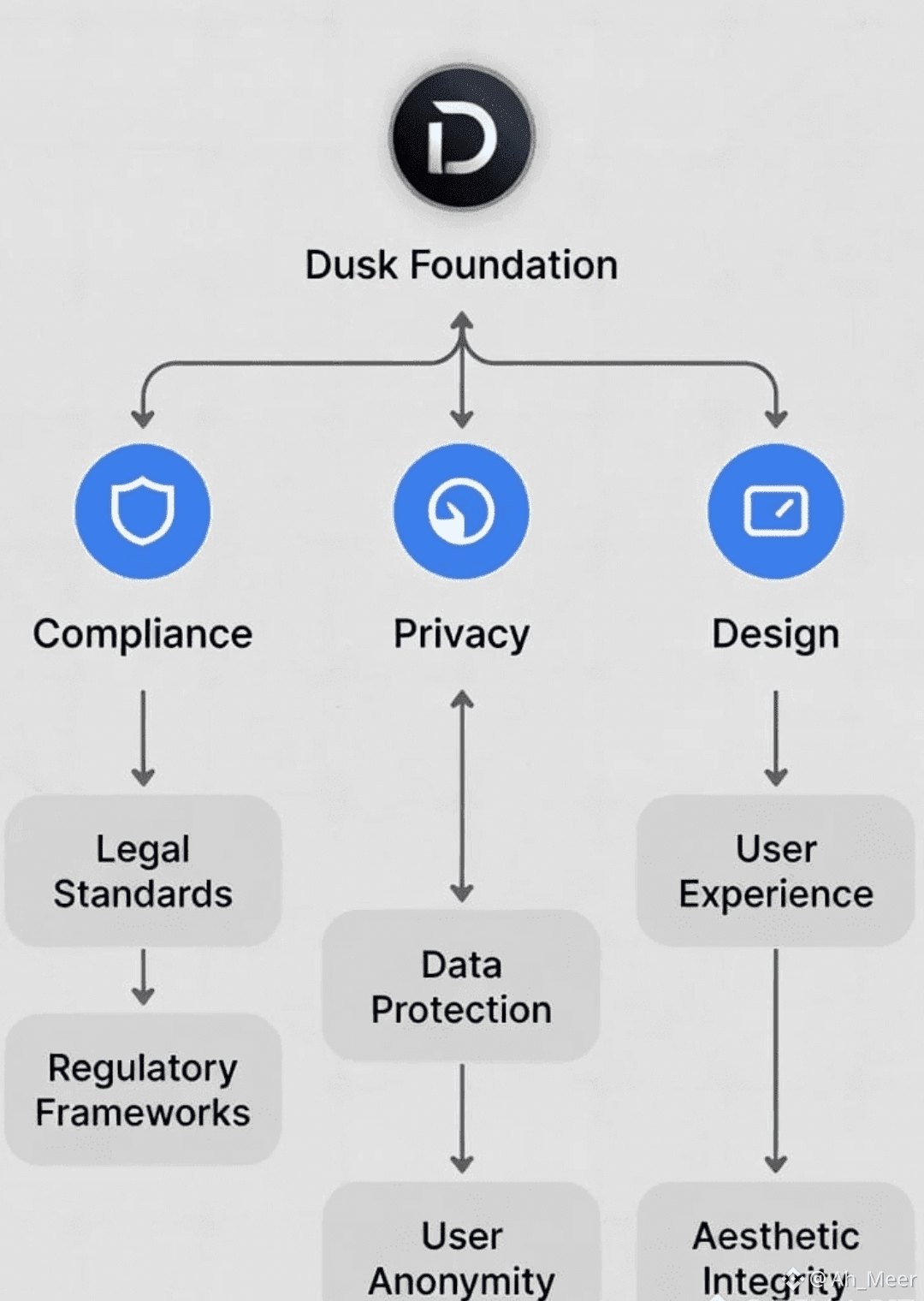
DUSK’s market fundamentals arise directly from protocol-enforced utility. DUSK functions as the staking asset securing consensus participation and as the native currency for transaction execution fees. As execution layers scale, they increasingly externalize settlement and data availability to DuskDS, driving continuous posting of blobs and settlement events that consume network resources priced in DUSK. As regulated financial use cases expand, the value of a stable, final, and auditable base ledger grows, reinforcing demand for the asset securing that ledger. The modular design accelerates integration through EVM equivalence, allowing standard Ethereum tooling to deploy on DuskEVM while inheriting DuskDS settlement guarantees. This produces a structural demand loop in which rising execution throughput increases data availability and settlement utilization, leading to greater fee expenditure and staking competition denominated in DUSK.
Institutional adoption is driven not by blockspace speculation but by the need for a credible, auditable, automation-ready system of record with predictable governance and integration pathways. Dusk’s multilayer design lowers integration friction through EVM equivalence, provides a stable settlement and data availability anchor for compliance and audit, and enables privacy-capable execution domains where confidentiality is mandated. This establishes a new standard in which data availability is not merely cheap data storage but regulated settlement data. The resulting infrastructure aligns more closely with capital markets systems than with generic rollup throughput networks.
Compared with traditional data solutions such as enterprise databases or distributed file systems, DuskDS introduces credible neutrality, verifiable finality, and incentive-compatible data availability. Databases can store records but cannot make them publicly verifiable without operator trust, while content-addressed networks distribute data without providing canonical ordering or economic guarantees of availability. Compared with existing on-chain data availability solutions, DuskDS differentiates itself as a settlement-grade data availability layer with native bridging across execution environments, designed to support compliant financial applications as first-class citizens. Relative to Ethereum’s blob data model, Dusk brings blob-style data publication into a stack where the settlement layer is purpose-built for institutional privacy and compliance, while maintaining EVM-equivalent execution to maximize integration velocity.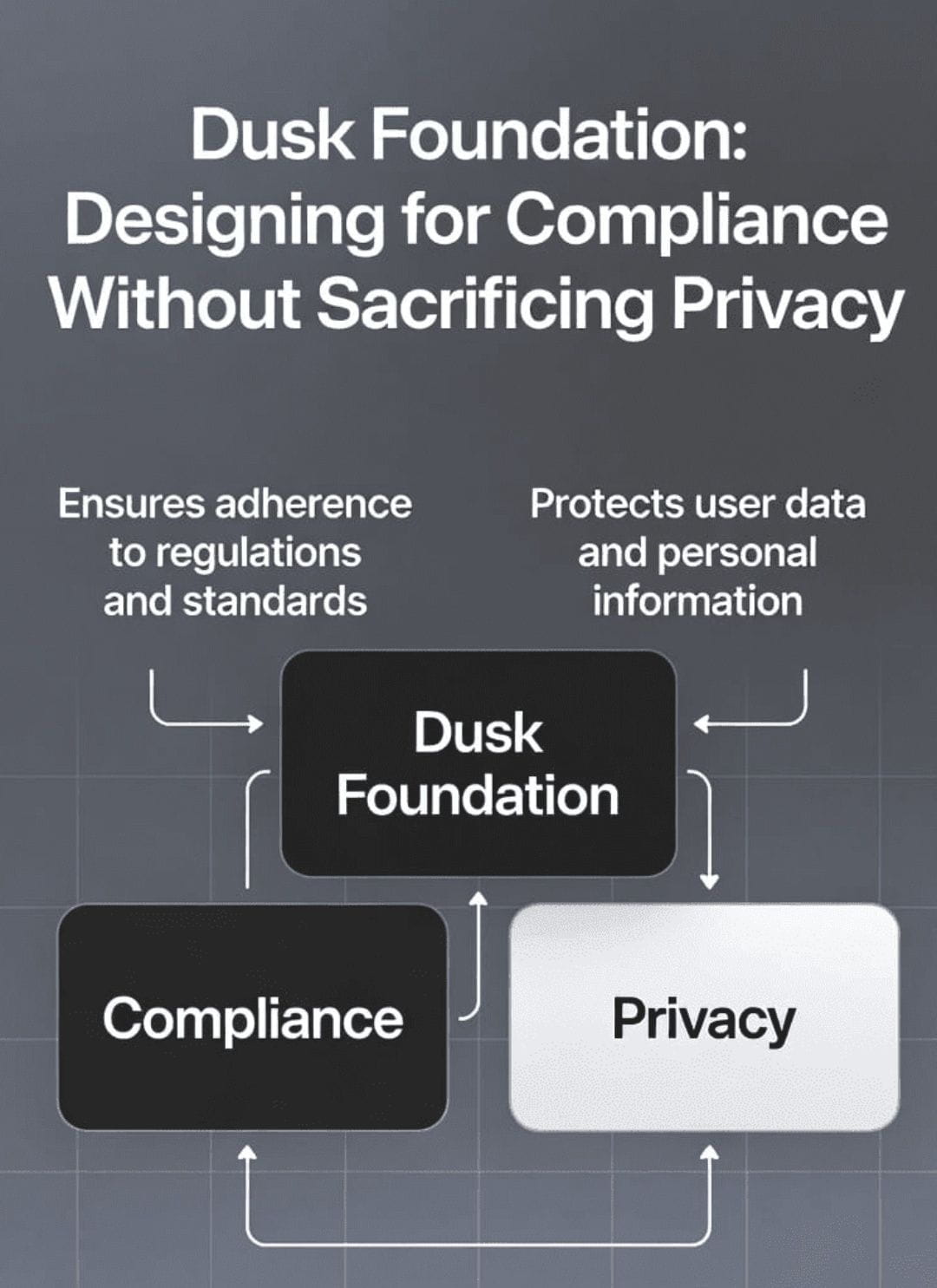
Dusk’s market fundamentals are inseparable from its architecture. By making DuskDS the canonical settlement and data availability layer for multiple execution environments and pairing this with EVM equivalence for adoption scalability, Dusk transforms data availability from a scaling commodity into institutional-grade market infrastructure: final, auditable, bridge-native, and compatible with privacy-preserving execution where regulation demands confidentiality.