I’ve been thinking a lot about why payments are still the hardest thing to get right in crypto. Not trading, not farming, not shiny new apps—just sending value from A to B without stress. That’s why Plasma keeps catching my attention. The whole thesis is almost boring on purpose: if stablecoins are already the most “used” product in crypto, then they deserve rails that are designed only for stablecoin behavior—high volume, constant throughput, predictable settlement, and no weird surprises when the network gets busy.
Most chains treat stablecoins like guests at a party. Plasma treats them like the main event. And that design choice matters because payment users don’t care about narratives—they care about certainty. If you’re paying a supplier, topping up an account, moving funds across borders, or batching payroll, you don’t want “maybe it confirms soon.” You want it to feel like sending a message: done, delivered, finished.
The Real Problem Isn’t Speed — It’s Anxiety
People always talk about TPS, but the real killer in payments is the emotional gap between “I clicked send” and “I know it worked.” Pending states, confusing confirmations, random fees, needing the native token for gas… these are tiny frictions that become big mistrust when money is involved. Plasma’s approach is basically: remove the moments where users second-guess themselves.
That’s why the “stablecoin-native” framing is interesting. It’s not just performance for performance’s sake. It’s performance in service of something psychological: the user should feel calm. In my opinion, the chains that win payments won’t be the ones with the loudest marketing—they’ll be the ones where a first-time user can do a transfer without feeling like they’re defusing a bomb.
Stablecoin-Native Means the Chain Is Optimized for One Job
A lot of networks try to be everything: NFTs, gaming, DeFi, social, data, whatever the season demands. Plasma feels more disciplined. The message is: stablecoin settlement is a workload, and the chain should be engineered around that workload from day one.
So instead of relying on “use stablecoins on us too,” the chain positions stablecoins as the default unit of motion. That changes how you think about fees, finality, and UX. In a real payments environment, fee spikes aren’t just annoying—they’re unacceptable. And if a network can’t guarantee a consistent experience under load, merchants and apps eventually stop trusting it no matter how good the tech is.
Zero-Fee Transfers Are a UX Weapon, Not a Gimmick
One of the cleanest ideas in Plasma’s story is the push toward gasless stablecoin transfers—where the user doesn’t need to hold a separate token just to move digital dollars. Whether it’s done via a paymaster model or another mechanism, the important thing is what it does to behavior: it removes the “I can’t send because I don’t have gas” problem, which is honestly one of the most embarrassing onboarding blockers in all of Web3.
If Plasma can keep that experience reliable, it becomes a serious advantage. Because once users get used to moving stablecoins with no friction, it’s hard to go back to networks where every transfer feels like a micro-negotiation with the fee market.
EVM Compatibility, But With a Payments-First Personality
EVM compatibility matters because developers already have muscle memory: tooling, Solidity, audit practices, deployment patterns. Plasma doesn’t need to convince builders to learn a whole new universe just to ship. That alone can speed up ecosystem growth.
But the real question is: can it keep the performance predictable while still supporting the kind of apps that appear naturally around payments—merchant tooling, settlement layers, liquidity routing, onchain invoicing, remittance UX, compliance-aware flows, and the “boring” infrastructure that ends up being the most valuable. If Plasma becomes the execution environment where stablecoin apps don’t get punished by congestion, that’s how it quietly compounds adoption.
Where $XPL Fits (And What I Actually Watch)
I don’t like treating network tokens like lottery tickets. For a payments-focused chain, the token’s job is usually simple: help secure the network, coordinate incentives, and eventually support governance in a way that doesn’t collapse into drama.
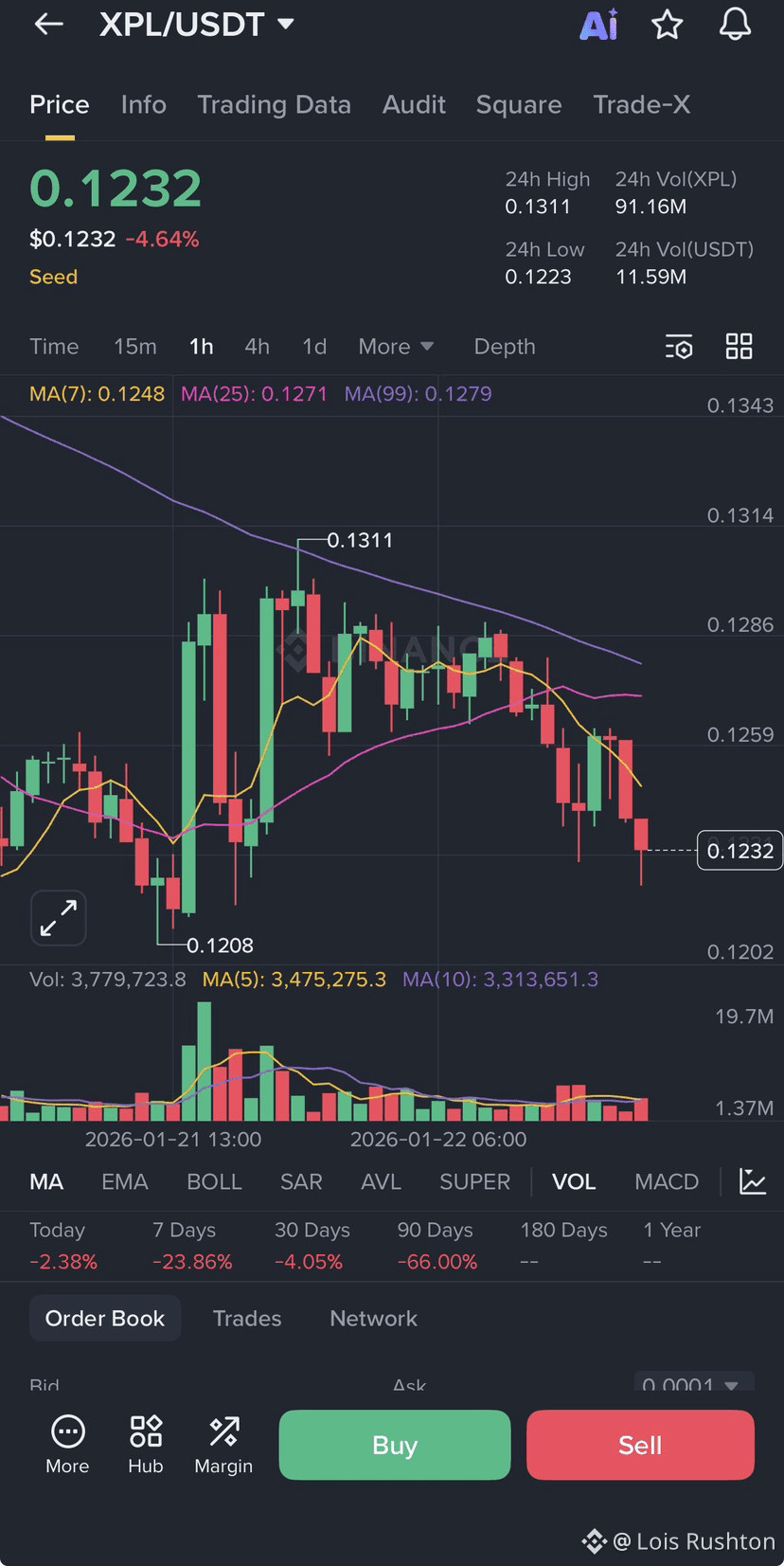
So with $XPL the things I watch are not just price candles. I watch whether staking participation grows in a healthy way, whether validator decentralization improves over time, and whether the network’s economics stay aligned with the mission. Payment rails die when incentives become unstable or when governance turns into a battlefield. If Plasma wants to be “real money infrastructure,” it has to feel boring and dependable on its worst days, not just its best days.
The Honest Risks: Execution, Competition, and Trust
I’m bullish on the problem Plasma is aiming at—but I’m not blind to the risks.
First, payments is a brutal category. Users are unforgiving. If the network has downtime, weird edge cases, or inconsistent settlement, people don’t debate it on Twitter—they just leave. Second, competition is intense: multiple ecosystems want to own stablecoin flows, from major L1s to specialized payment rails. Third, stablecoins sit close to regulation, and the rules can change quickly depending on region and issuer behavior.
And there’s also the social risk: if the token becomes too volatile or unlock schedules create constant supply shocks, it can distract from the product. End users paying with stablecoins shouldn’t inherit the emotional chaos of the underlying token market.
What Would “Winning” Look Like for Plasma?
For me, @Plasma starts feeling inevitable if a few things happen at the same time:
Real merchants and payment apps choose it because the UX is smoother than alternatives.
Stablecoin liquidity deepens in a way that supports reliable settlement, not just speculative TVL.
Developers build “invisible” infrastructure—things users never tweet about, but use daily.
Network reliability becomes a reputation: it just works.
That’s the kind of win you can’t fake. And if Plasma hits that standard, it doesn’t need hype. It becomes the layer people reach for when money has to move, now—not later.