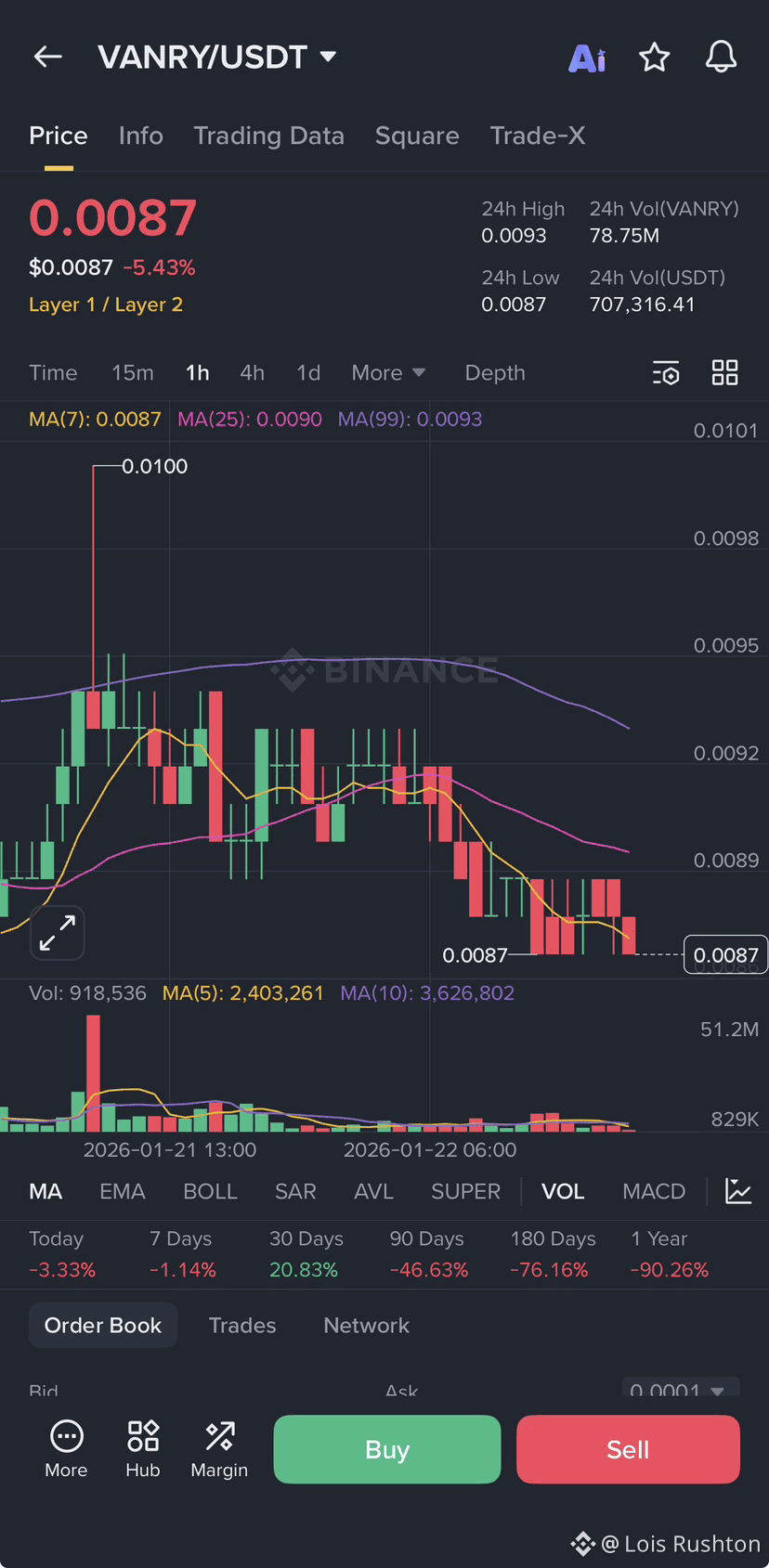
I’ve noticed something lately: the projects that feel “real” in Web3 aren’t the loudest ones anymore. They’re the ones solving boring problems—fees, speed, onboarding, reliability, and that constant friction that makes new users feel like they’re defusing a bomb just to complete a transaction. That’s the lens I look at $VANRY through.
Vanar doesn’t market itself as “the next big narrative.” It positions itself like infrastructure: fast, predictable, and designed for consumer-scale experiences—gaming, entertainment, brands, and increasingly, AI-driven applications. And if Web3 is ever going to reach mainstream users, it won’t be because people suddenly became blockchain experts. It’ll be because the tech stopped asking them to be.
The Real Adoption Problem Isn’t Education — It’s Anxiety
Most people don’t hate Web3. They hate the feeling that one wrong click can cost them money, time, or both. That anxiety shows up in very normal moments:
• A user sees a fee that makes no sense for a small action
• A wallet confirmation takes long enough to feel “broken”
• A game tries to do on-chain items, but every action feels like a financial decision
• A brand experiment becomes clunky because the chain behaves unpredictably under load
Vanar’s approach feels like it starts with that human reality. Fast transactions and ultra-low, fixed-feeling fees reduce the emotional weight of using the network. When a chain makes micro-actions cheap and consistent, people experiment more. And when people experiment more, adoption stops being a slogan and becomes a habit.
Built for Micro-Interactions, Not Just Big DeFi Moments
Here’s what stands out to me: Vanar’s direction makes more sense if you treat frequency as the goal.
In gaming and entertainment, users don’t do one transaction a day. They do dozens. Sometimes hundreds. They claim, trade, upgrade, mint, redeem, tip, unlock, move assets between experiences—over and over. If every single action has a meaningful fee or delay attached, you don’t have an economy. You have a frustration simulator.
Vanar’s low-cost design makes microtransactions feel possible again. That’s not a small detail. It’s the difference between “Web3 gaming” being a niche curiosity and it becoming the invisible backend of normal digital experiences.
A Token That’s Meant to Be Used, Not Just Held
A lot of ecosystems have tokens that mostly exist as narrative fuel. VANRY feels more like a network token with an actual job.
If the chain is where activity happens, the token is where coordination happens. That includes:
• Paying for network actions
• Supporting validators and security incentives
• Driving participation loops for builders and users
• Becoming a unit of account inside apps that need repeat interactions
The healthiest token ecosystems I’ve seen share one trait: the token becomes normal inside the product. Not just something you “invest” in, but something users bump into naturally when they’re doing useful things.
That’s what I watch for with VANRY—does it show up in real product flows? Does it become part of everyday usage inside apps? Because if it does, demand becomes connected to behavior, not mood.
The “User-First Chain” Idea Only Works If Developers Win Too
Vanar talks a lot about onboarding and usability, but there’s an unspoken rule in crypto: user-first doesn’t matter if developer experience is painful.
This is where EVM compatibility matters. Not because it’s trendy, but because it reduces friction for builders. A team that already knows Solidity and existing tooling can deploy faster, iterate faster, and spend less time reinventing basic infrastructure.
When builders can move quickly, you get more apps. When you get more apps, users show up for reasons that aren’t speculation. And that’s when an ecosystem starts to feel alive.
From Virtua to Vanar: The Rebrand That Actually Had a Point
Rebrands are often cosmetic. This one felt more like a repositioning.
The TVK-to-VANRY transition is important because it signals a shift in ambition—from being primarily tied to a metaverse/game world identity to becoming a broader Layer-1 foundation for mainstream-facing use cases.
And that matters for credibility. If a project can evolve without breaking continuity for its community, it shows a certain maturity. People underestimate how much trust is built through “boring” continuity—clean swaps, clear communication, stable direction.
AI-Native Infrastructure: More Than a Buzzword if It Ships
I’m careful with AI narratives because everyone uses the word. But Vanar’s “AI-native” angle is interesting when you interpret it as: less reliance on external duct-tape.
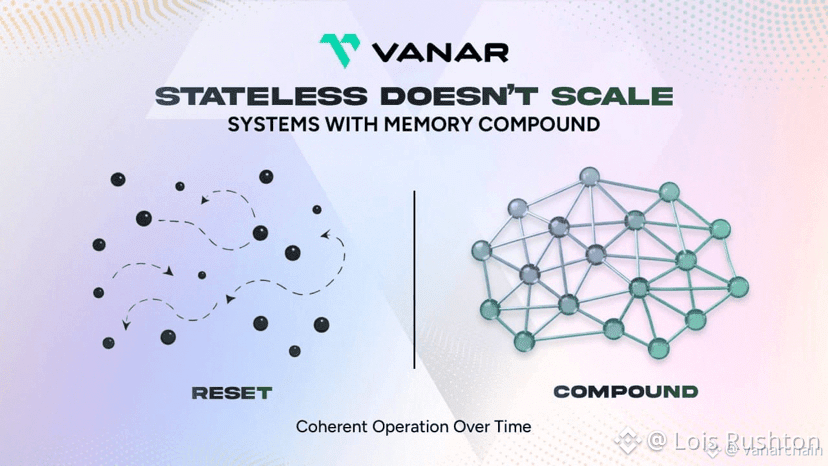
A lot of AI-app architectures in Web3 end up fragmented:
• Data stored somewhere else
• Reasoning done off-chain
• Execution half on-chain, half API-based
• Payments bolted on last minute
The promise of an AI-forward stack is that more of the workflow can live inside the ecosystem in a predictable way—data, verification, automation triggers, coordination, settlement. If Vanar keeps shipping here, it opens a lane where AI agents and consumer apps can run continuously without the chain feeling like a bottleneck.
And that’s the real “next era” point: Web3 is moving from occasional transactions to always-on systems. Always-on systems demand an always-stable chain.
Why Fixed Low Fees Change Behavior (And Behavior Is Everything)
People love to debate “tech specs,” but adoption is mostly psychology.
Fixed-feeling low fees do something powerful: they remove hesitation. They encourage exploration. They let a user click without thinking “is it worth it?”
That matters in gaming, where the magic is momentum. It matters in entertainment, where engagement is emotional. It matters for brands, where the customer journey must be smooth. And it matters for AI-driven apps, where machine activity needs predictable cost assumptions.
When cost is predictable, usage can scale. When cost is unpredictable, usage becomes fragile.
What I Watch Next (Because Narratives Don’t Pay the Bills)
I don’t judge $VANRY by how loud it is. I judge it by signals that are hard to fake:
• Are real apps launching that people actually use daily?
• Does gaming activity feel smooth under load?
• Do brands integrate without friction and keep shipping?
• Does the validator/security side keep maturing in a healthy direction?
• Does VANRY become a “normal” utility token inside products, not just a market chart?
If those signals keep improving, @Vanarchain becomes more than “another L1.” It becomes the kind of chain that quietly sits underneath consumer experiences—where users don’t even think about the blockchain part. They just enjoy the product.
And honestly, that’s the only version of Web3 I think wins long-term.