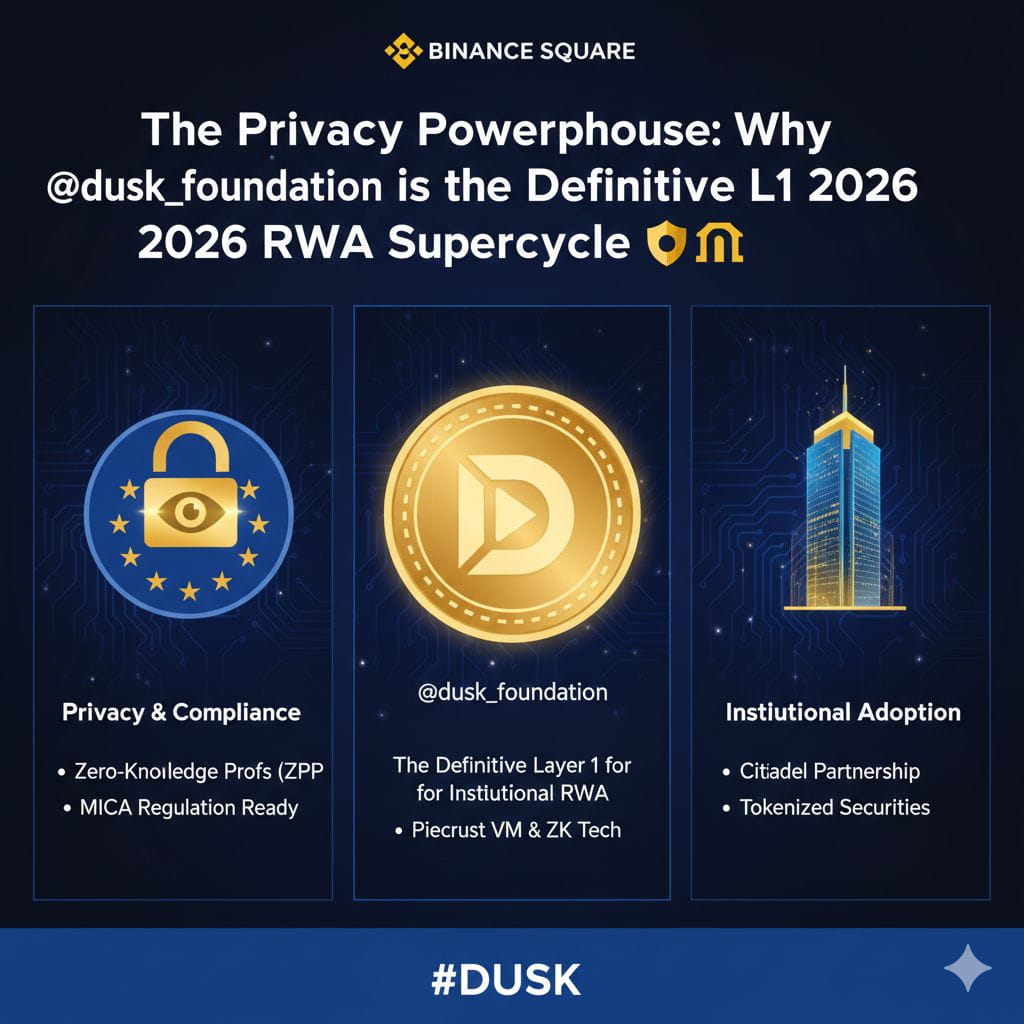
Institutional capital has avoided public blockchains for two main reasons: the lack of transaction privacy and the inability to meet strict KYC/AML mandates. Dusk solves this at the protocol level rather than through third-party.
The Piecrust VM, Dusk’s custom-built ZK-friendly virtual machine, allows developers to deploy private smart contracts. This means a fund manager can execute a multi-million dollar trade where the transaction value and participant identities are shielded from the public, yet cryptographically proven to be compliant with global standards like.
The DUSK tokenomics are no longer driven by speculation but by actual settlement volume. Through partnerships like the one with NPEX, the network is currently onboarding over million in tokenized securities.
Unlike Ethereum, which can take minutes for "economic finality," Dusk’s SBA (Segregated Byzantine Agreement) consensus offers sub-second, irreversible settlement—a non-negotiable requirement for stock and bond trading.
Dusk’s Citadel protocol allows users to maintain a "ZK-Identity," proving they are eligible to trade without ever surrendering their raw passport data to a centralized server.
As the gas token of the network, DUSK utility is at an all-time high:
"Hyperstaking" is now live, allowing DUSK holders to secure the network and earn rewards while the protocol handles the heavy lifting of ZK-proof generation.
Institutional Demand: With more securities moving on-chain via DuskTrade, the organic demand for DUSK to power these confidential transactions is creating a sustainable floor for the toke.#dusk $DUSK @Walrus 🦭/acc