

You can’t just throw technology at decentralized storage and hope it works out. Walrus gets this. It bakes economic incentives right into its protocol so that, honestly, being honest pays. Cheating just doesn’t add up, even if you try to game the system over the long haul.
Here’s how it works: Walrus relies on staking. If you want to run a storage node, you lock up WAL tokens. Stick to the rules and you get rewards. Mess up ose data, fail a challenge, or cause trouble with shard migrations and you lose your stake. There’s real money on the line. That’s crucial. Cryptography alone can’t keep people honest; there have to be stakes.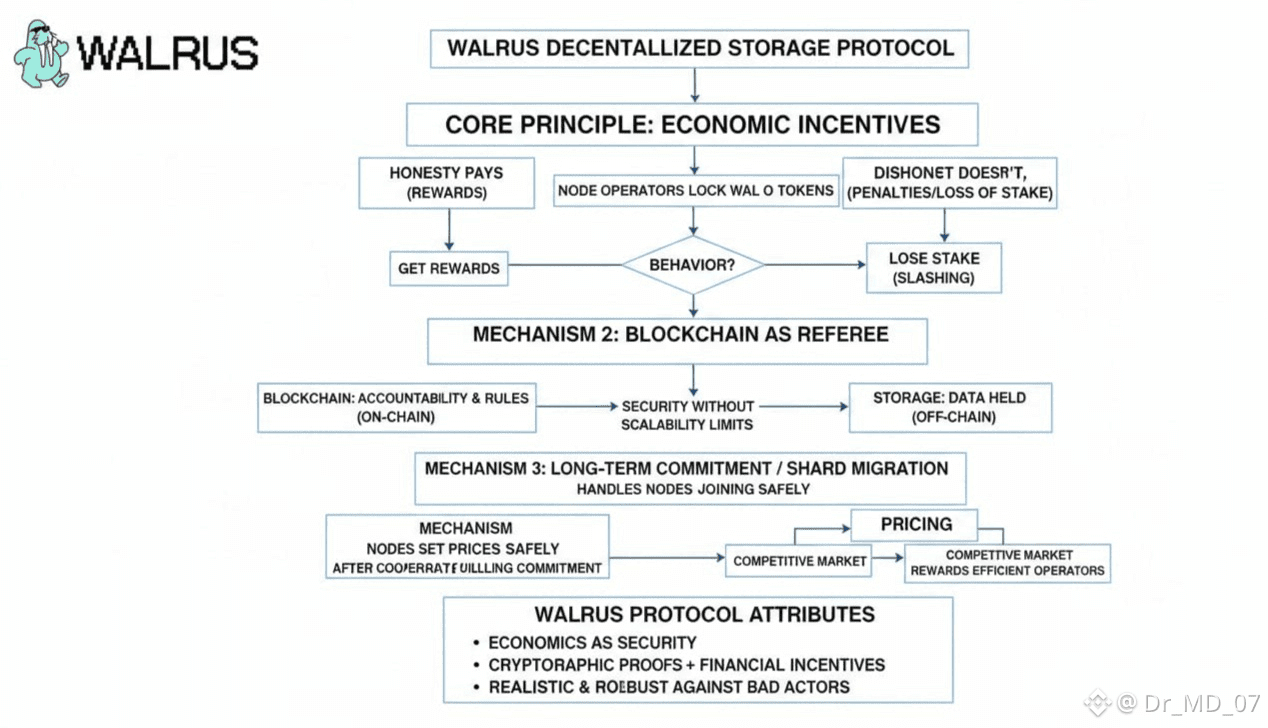
Walrus doesn’t use the blockchain the way most projects do. Instead, the blockchain acts as a kind of referee. All the storage actually happens off chain, but the rules and accountability stay on chain. This way, Walrus can handle a lot of storage without giving up security.
Long-term commitment is always tricky. Nodes promise to hold data for a long time, but things change prices swing, demand shifts, and sometimes people just want out. Walrus handles this through shard migration. When someone leaves or a new node joins, the data moves safely, and nodes only get their tokens back once they’ve done their part. Honestly, that’s just practical. Lots of systems ignore the problem of people coming and going, but Walrus faces it head-on.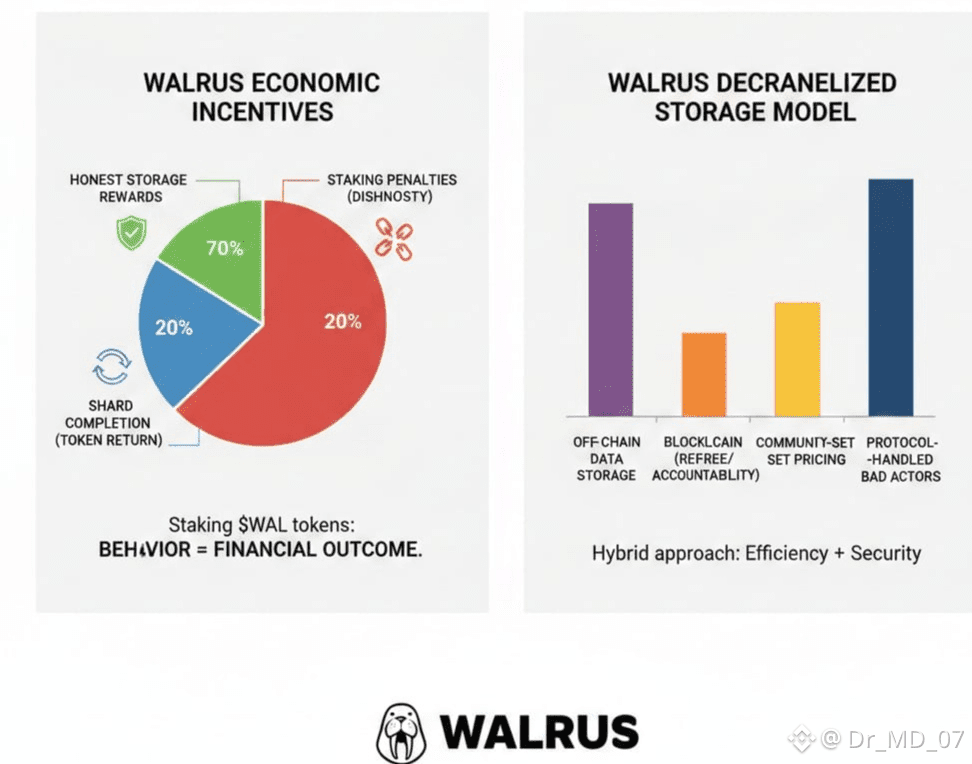
Pricing matters, too. Walrus lets nodes set prices together, out in the open. That keeps things competitive no one can just corner the market. Efficient operators get rewarded, and the whole thing feels a lot more like a real market than those rigid fee models you see elsewhere. In the end, that’s better for everyone users and node operators alike.
Of course, some nodes will try to cheat. Walrus doesn’t just cross its fingers and hope for the best. It assumes some people will behave badly and builds the protocol to handle it. Even when a few bad actors show up, the system keeps working.
What I like about Walrus is that it treats economics as part of security, not just an afterthought. By mixing cryptographic proofs, asynchronous challenges, and strong financial incentives, Walrus creates a storage network that actually accounts for how people behave. It’s realistic and tough, and that gives me real confidence in its future.

