
The assumptions made by many that compliance and confidentiality cannot coexist are false. Many regulators are saying that if they are allowed to see your activity then you have lost your right to privacy. If they can see your activities they cannot regulate you or audit the activities, so they will not be accountable to you.
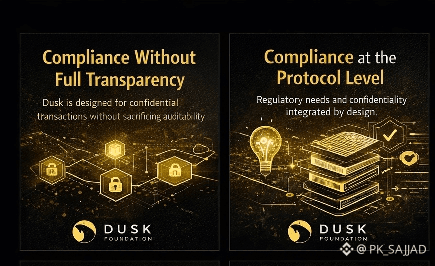
At an industry level the tension of these two constructs is what shaped the majority of the blockchain infrastructure. Public Ledgers allow for complete transparent usage of the blockchain and are able to be audited; however they will be extremely limited in terms of their applicability for regulated financial activity. Conversely Private Systems provide secure access but must therefore provide a level of trust and operational opacity. Because of this there are significant trade offs which mean that institutions have difficulty meeting their legal obligations without exposing sensitive information, while users of the blockchain must choose between having visibility into a system that reveals too much information or relying on a central authority for control.
This divide will continue to restrict the way in which decentralised networks may be used for real world financial activities.
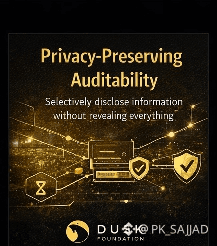
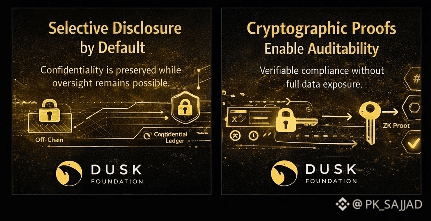
As a means of addressing these issues DUSK created an architecture where both committees and trustless protocols function as design constraints instead of as competing constructs. Therefore, using technology that allows the generation of selective disclosure DUSK built a network that uses privacy preserving cryptography while having confidential transactions and confidential asset data. By design, all transaction and asset data will remain confidential and all proofs of compliance may be created at any point in time in order to provide evidence of compliance, if necessary to regulators.
The DUSK architecture serves to satisfy the needs of regulated use cases where auditability is required but where continuous public disclosure would not be appropriate. Therefore the DUSK model embeds these constructs into the protocol and reduces the need for reliance on external reporting systems and manual administration.
Understanding these key points of reference can assist in the context of this project:
1) This network will support applications related to regulated finance.
2) The network has been designed to provide privacy as the default.
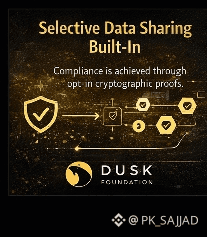
3) Compliance will be provided through cryptographic proofs.
4) Information will be selectively disclosed and not disclosed globally.
5) The architecture of the network promotes deterministic behaviour.
6) Execution paths will be optimised for verification.
7) Governance will focus on the legal compliance of the network.
8) The infrastructure of the network will be designed to support institutional workflows.
9) Protocol decisions will be guided by the long term operability of the network.
This long term strategy is critical because the pace of change in financial infrastructure is generally slow. Institutions need networks that can withstand scrutiny from regulators over time without requiring repeated redesigns. Similarly users will have confidence in using networks that treat confidentiality as a structural property rather than a matter of policy. When privacy and compliance are enforced by the infrastructure instead of intermediaries, ecosystems will be better able to withstand market fluctuations.
DUSK reflects a realistic and practical view of decentralised systems. While confidentiality of information can still be ensured, the accountability of decentralised systems can also be maintained. Balancing both ensures their long term viability.
