


The solution to the problem it is attempting to solve
What Dusk is really aiming at
Dusk Network is not an attempt to become another private coin. Its essence is as follows: privacy and yet still, regulated finance- think tokenized shares, bonds, funds, and other assets where regulations are important (who is allowed to hold it, who is allowed to trade it, what disclosures, etc.). Dusk forecasts that markets desire privacy (not to disclose positions, plans, customer information) and they must have verifiable adherence to the rules. This is why you will come across Dusk speaking of privacy and compliance not as adversaries.
The inability of traditional chains to deal with regulated assets.
Transparency is an option on most public blockchains: any person may check balances and transfers. Auditability On the one hand, that is very good, but on the other hand, that is a nightmare to institutions that cannot leak holdings or customer relationships. Conversely, entirely privatized systems may make regulators and counterparties anxious, since they will have no easy way of checking whether the mandated rules were observed. Dusk places itself in the center: make data private default, and enable system auditing in a prove it without revealing it mode with zero-knowledge and protocol-level design decisions.
The concept of privacy and being wrong without concealment (how that is possible)?
The pragmatic angle is not the fact that no one can see anything. The pragmatic case is selective disclosure: you can work out claims such as this transfer was in compliance with the restrictions of the asset or that this participant made the necessary checks on-chain without moving the personal or trading data on-chain. Dusk as well has written about self-sovereign identity ideas (such as Citadel) in the setting of private-by-default execution, the very type of building block you need should you be serious about regulated usage.
One of the design decisions: two transaction models are used, not one.
Dusk documentation presents a two transaction model (Phoenix and Moonlight). That is important since regulated finance is not a single workflow: at times you require a high level of confidentiality, at times you require other trade flows, and at other times you need an uncontaminated bridge between execution environments. Dusk uses its base as a settlement and data-availability layer, which can provide compliant layers on top of the execution layer.
Negotiations that you cannot avoid with this approach.
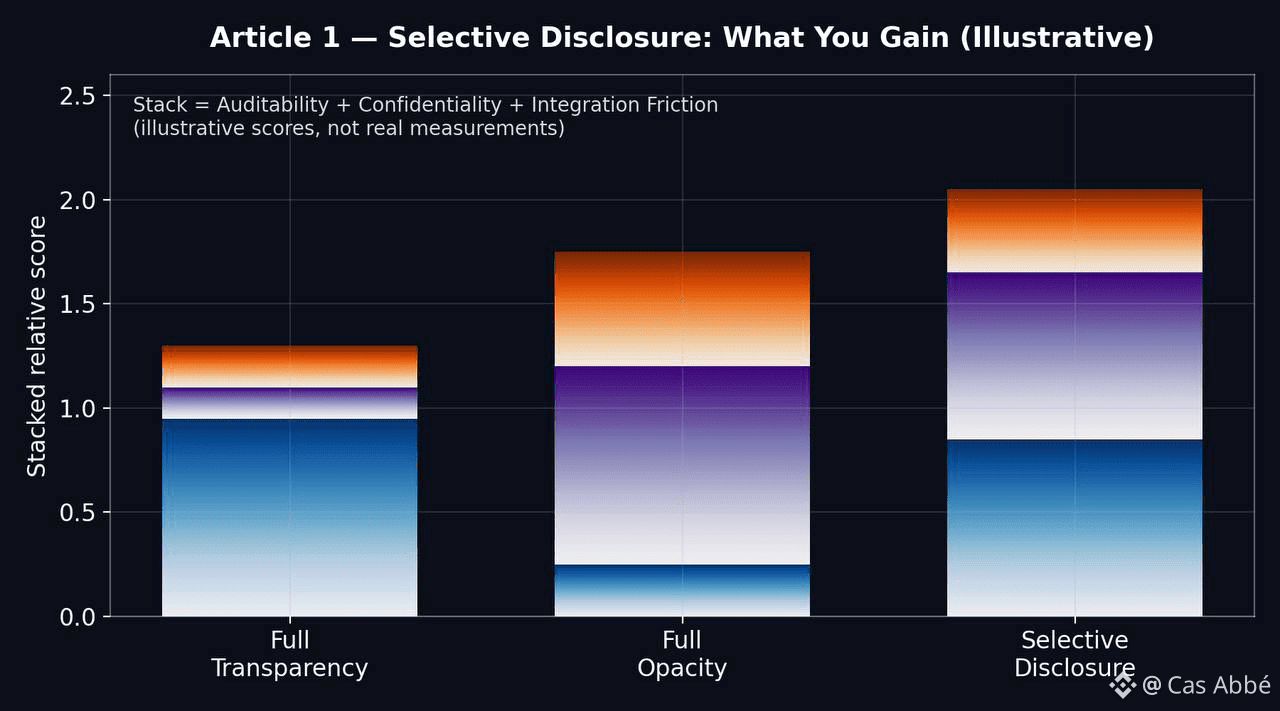
Construction of an acceptable privacy is more difficult than construction of an ordinary L1. You are doing state of the art cryptography, developer tooling, and real life legal limitations. That comes at the cost of tradeoffs, increased complexity will increase the number of items to audit, increase the work done by builders to integrate, and increase the time to achieve boredom reliability levels of production. Moreover, by going institutional, you can experience higher demands (support, stability, predictable upgrades) than in the case of retail crypto.
Adoption pressure on either side is the actual test.
By going too far on privacy, Dusk will come out as unfriendly to compliance teams. Should it go too far on the side of compliance stories, it can easily anger crypto users who want to get as neutral and as simple as possible. The question that is interesting is: can Dusk make the middle ground seem natural: builders receive privacy controls that do not make them feel like they are in a compliance cage, and institutions receive verifiability without making the chain a permissioned database.
However, the cost lies more on the surface: bridges, upgrade paths, cross-layer security assumptions, and user confusion (which layer am I on). And new privacy objectives on top of that, debugging and auditing may be more difficult, since you need to demonstrate correctness without necessarily being able to see everything plain text anymore.
Does Dusk still make privacy normal to developers?
But in case privacy is special mode which smashes wallets, indexers, analytics and dev tooling, it remains niche. The architectural decisions of Dusk imply that it desires privacy, compliance to be a modern developer stack, rather than a research toy.
The next indicator to consider is the ability of the developers to release applications without being required to study a completely different workflow.
