


The Real Reasons Why Tokens are Important in Storage.
In theory, decentralized storage can be a nice idea, however, in practice it is costly and insecure unless incentives are provided. Machines are expensive, bandwidth is not a gift and uptime means real manpower in operations. Without an economic incentive, nodes will either vanish or shirk corners. This is the reason why Walrus Protocol does not view tokens as an add-on feature, but a vital component of the system.
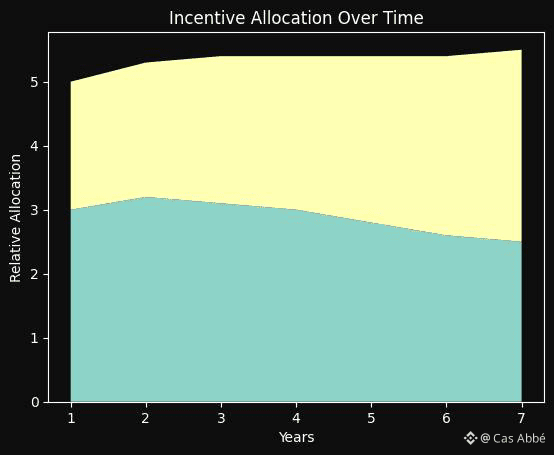
Walrus to respond to a single question, why should anyone act right when being not is not hard? The token provides a financial incentive to remain online, save data in the correct format and react to the request of data. This transforms a moral choice of good behavior into a rational one.
Notably, Walrus does not give rewards to nodes that simply claim that they have storage. It compensates them on credentials of availability and accuracy. That distinction matters. Capacity in itself is of no use without the ability to access data at the time of need. Walrus ensures that rewards correspond to the actual quality of the services by linking them with what really matters to users: access to quality (not theoretical) in the long run.
One of the main errors of a decentralized system is people thinking that participants will be honest at the majority of the time. Walrus does not assume that. Rather, it begins with a more realistic perspective of the world: nodes will fail, disconnect, go offline or perform selfless acts whenever it is to their advantage.
Instead of struggling with this fact, Walrus creates around it. Erasure coding divides the data, encodes it, and splits it into numerous nodes. This implies that there is no critical node. Although a number of nodes perish or malfunction, the data can still be restored.
This modality does not set security around trust but structure. The system has not gone down due to the goodness of participants but due to the lack of sufficient power to do any harm. This is the working of the resilient systems in the real world: airplanes anticipate engine failure, the internet anticipates the loss of packets, and Walrus anticipates node failure.
In this meaning, security is not dramatic. It is dull, monotonous, mathematical. And that is precisely the reason why it works.
The most difficult aspect of the decentralized storage is not the technology itself, but the economics. Walrus is always juggling between three forces that tend to drag him at opposite directions.
Firstly, the storage should be affordable to developers. In case the costs become too expensive, builders will just silently switch to centralized clouds. Second, rewards have to be appealing to the node operators. Should the running of a node be not worth the effort, the network becomes weak. Third, token inflation has to remain in check or long-term holders will lose trust and withdraw.
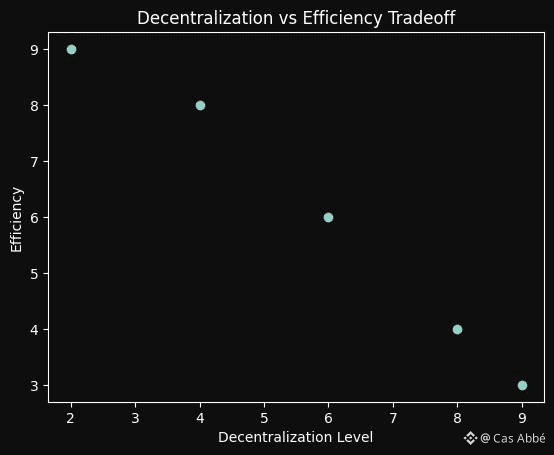
All these forces are not maximizable. Raising rewards is beneficial to operators and detrimental to token stability. Reduction in inflation augurs well with holders but drives nodes off. Compressing storage price benefits the user at the expense of system revenue. Walrus has no problem of resolving this tension, and it is not about solving the tension but coping with it over the years.
The protocol must be credible and based on gradual transparent changes as opposed to loud pledges. Such systems do not work in situations where they pursue growth at an unsustainable pace. They are found to be successful in the case they observe economic gravity.
As a builder, Walrus is a man of good faith. It does not pretend to be a universal and a substitute of everything. It is about a single, actual, hurtful issue: making vast volumes of data available in a decentralized manner without annihilating expenses.
This focus is refreshing. Another layer of magic abstraction is not required by the builders. They require infrastructure which will act predictably, integrate smoothly and graciously fail. Walrus offers that, but demands something back: the developers need to reconsider the way they handle data. Data is no longer something you arbitrarily put onchain or that you leave to the mercy of the centralized servers.
Constructors are sieved by that change of mind. The people who think about Walrus tend to be constructing future-facing systems - AI pipes, rich onchain apps, composable media - not reflections of the ideas of the previous cycle.
Walrus is not constructed in a manner that would impress initially. It is created to continue working several years later. It is not in pursuit of attention, stories, and memes. It is concerned with incentives, mathematics and silent dependability.
And in history this is the place of permanent value. Infrastructure develops at a slow pace, stress absorbing, quiet, and trust building over time. Walrus fits that pattern. It will never be loud, but in case it works, it will not be easy to substitute it.

