Dusk Blockchain: A Deep Dive into Its Layer 1 Architecture and Privacy-First Approach
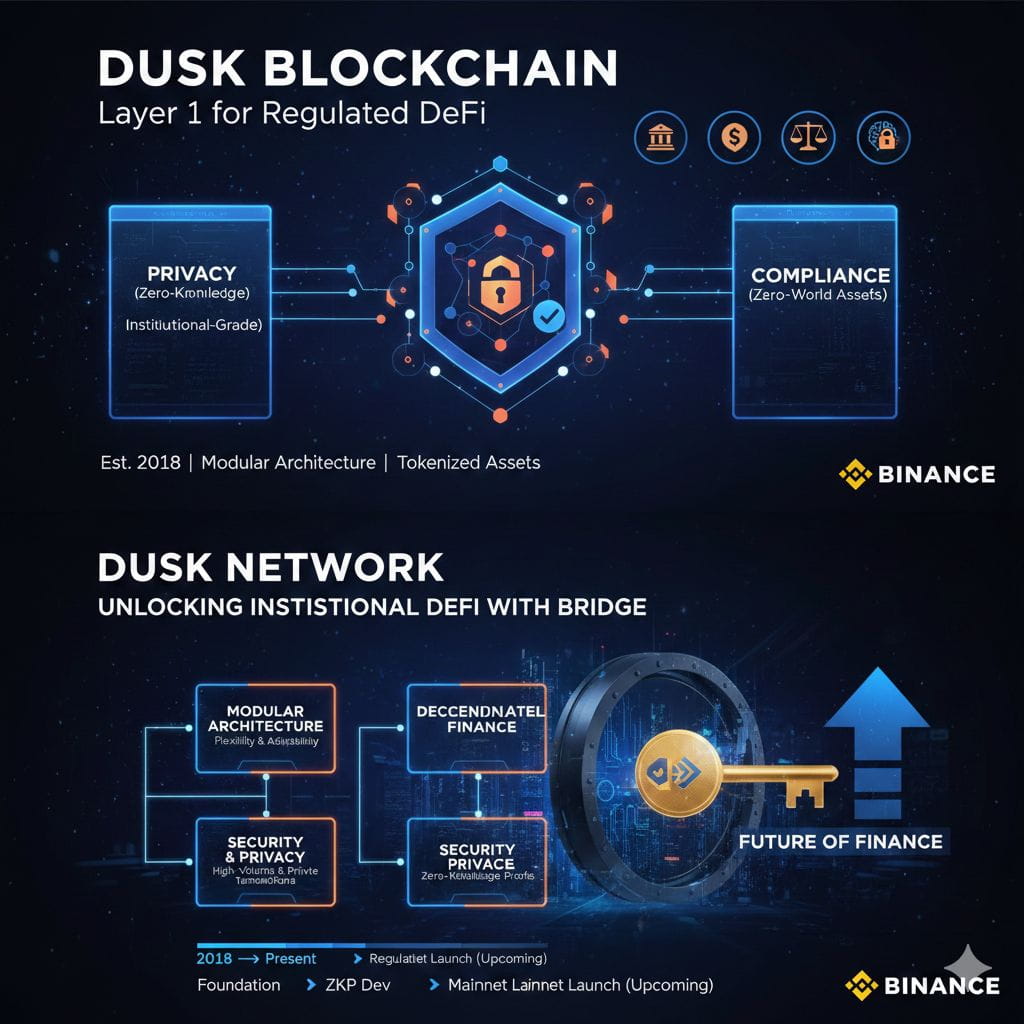
In my research into blockchain projects, few have presented as compelling an intersection of privacy, compliance, and scalability as Dusk Network. Founded in 2018, Dusk is a Layer 1 blockchain designed specifically for regulated and privacy-focused financial applications. Its modular architecture positions it as an intriguing option for institutions seeking to balance the often difficult trade-off between privacy and compliance. Upon diving deeper into Dusk’s design and vision, it becomes clear that this project aims to bridge the gap between traditional financial systems and the decentralized world, with a focus on ensuring security, transparency, and privacy.
One of the most striking features of Dusk is its attention to compliance and regulatory frameworks. In my research, I discovered that this blockchain was designed with institutional-grade applications in mind, ensuring that entities in the finance sector, such as banks and insurance companies, can use it to process transactions and manage data securely while adhering to global regulatory standards. Dusk’s architecture allows financial institutions to incorporate the benefits of blockchain technology without the concerns related to non-compliance with laws and regulations. This feature positions Dusk as a critical infrastructure layer for decentralized finance (DeFi) that also seeks to maintain institutional standards.
What differentiates Dusk from other Layer 1 blockchains is its focus on privacy, something that is often considered a secondary concern in many other blockchain projects. The network utilizes zero-knowledge proofs (ZKPs) as a core element of its design, a technology that enables transactions to be verified without revealing the underlying data. ZKPs are known for their ability to provide high levels of privacy while ensuring that the integrity of transactions remains intact. In my exploration of the project, I found that Dusk's emphasis on privacy is not just about user anonymity but also about enabling businesses to operate with a higher degree of confidentiality, which is a growing necessity in today's data-sensitive world.
Another key aspect of Dusk’s value proposition lies in its focus on tokenized real-world assets. Dusk provides a foundation for the creation and management of digital assets that are backed by physical entities, such as real estate or commodities. This is increasingly becoming a critical feature in the blockchain space, where traditional asset markets are looking for ways to incorporate the benefits of blockchain technology, including liquidity and enhanced security, into their operations. Dusk's ability to tokenize these assets in a manner that is both compliant with regulatory standards and privacy-focused could play a significant role in the tokenization of global markets.
The modular nature of Dusk’s architecture also deserves attention. Unlike monolithic blockchain structures, Dusk’s design allows for flexibility and scalability, which are essential for its long-term success. I read about how the modular architecture enables Dusk to be easily adapted to different use cases, whether for high-volume financial applications or private, compliance-heavy transactions. This adaptability makes Dusk a versatile platform, able to meet the needs of a wide range of financial services.
In terms of economic role, Dusk offers something unique in the blockchain ecosystem: the ability to support regulated, privacy-enhanced financial products while remaining fully decentralized. This creates opportunities for projects that need to operate in highly regulated environments, such as asset management, payments, and digital securities. By maintaining strong privacy and compliance features, Dusk could serve as a foundational layer for the future of decentralized finance, especially for institutional adoption.
So, where does Dusk fit in the broader blockchain ecosystem? Its design positions it as a crucial player in the regulated DeFi space. By solving the compliance issue that has been a major barrier to entry for traditional financial institutions, Dusk becomes a viable alternative to traditional centralized systems. In my analysis, I have come to believe that the privacy and regulatory balance that Dusk strikes could pave the way for mainstream adoption of blockchain technology in financial services.
In conclusion, Dusk presents a well-thought-out solution to the complexities of integrating privacy and regulation into decentralized systems. Its modular architecture, combined with a strong focus on privacy and compliance, positions it as a leading blockchain for institutional-grade applications. While still a relatively young project, Dusk’s approach to combining scalability, privacy, and regulatory compliance makes it an exciting and important development in the blockchain space, especially for businesses and institutions that need to navigate the complex landscape of finance and regulations. As the blockchain industry continues to evolve, Dusk’s role in shaping the future of privacy-first, regulated finance may only grow more significant.