Vanar Blockchain: A Comprehensive Analysis of Its Real-World Adoption Potential and Technological Foundation
In recent years, blockchain technology has become a pivotal part of various industries, with Web3 playing an increasingly significant role in reshaping the digital economy. Vanar, an L1 blockchain, is a project designed from the ground up with the aim of making blockchain more accessible and functional for real-world applications. After diving deep into the project's architecture, its potential to influence mainstream sectors becomes clearer, as it demonstrates a unique approach towards adoption, scalability, and ecosystem integration. In this analysis, I explore the core aspects of Vanar’s design, its economic role, and its broader impact on industries like gaming, entertainment, and AI.
The Foundation: Vanar’s Blockchain Architecture
Vanar’s architecture is built to address some of the critical limitations of existing blockchains. Unlike many blockchain projects that prioritize decentralization at the expense of scalability or user experience, Vanar has adopted a more balanced approach, aiming to provide a seamless and efficient experience for real-world use cases. The team behind Vanar has engineered the blockchain to support high throughput without compromising security, making it suitable for mass adoption.
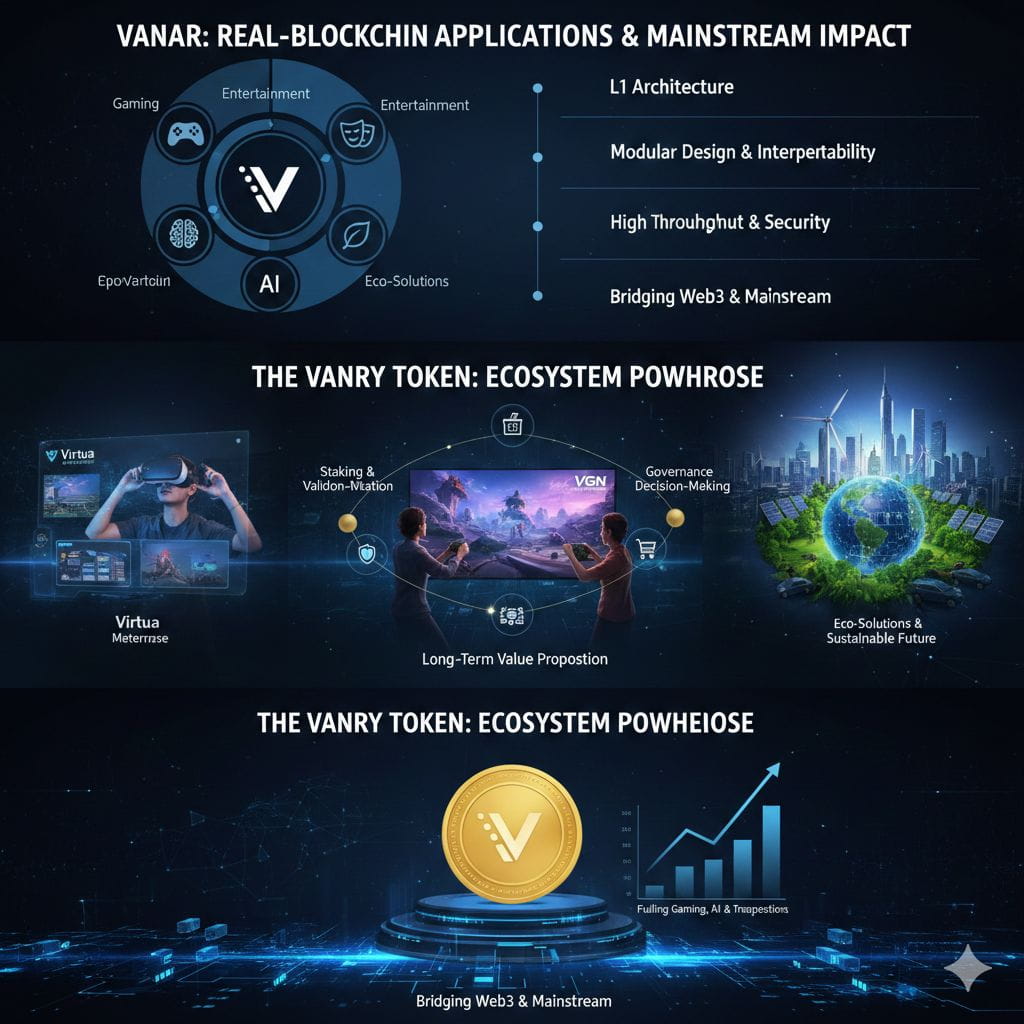
In my research, I read about the modular design of Vanar, which allows it to scale according to the needs of its users. This flexibility in its architecture ensures that it can handle the varying demands of applications in different sectors, from gaming to eco-solutions. Additionally, the blockchain's interoperability with other networks ensures that it is adaptable, making it an attractive option for developers looking to create cross-platform applications.
Technological Expertise and Cross-Sector Integration
One of the most compelling aspects of Vanar is its focus on real-world adoption. The team’s experience with gaming, entertainment, and brand solutions provides a clear vision of how Vanar intends to be more than just a blockchain. It is positioning itself as a comprehensive platform that bridges the gap between Web3 and the masses. There are several notable products already under its belt, including Virtua Metaverse and the VGN Games Network. These products are key to Vanar's strategy of integrating blockchain technology into mainstream sectors.
Through these products, Vanar has positioned itself as a leader in the development of virtual worlds and gaming ecosystems. With the rising interest in the metaverse and virtual assets, Vanar's inclusion of a well-rounded suite of solutions makes it well-suited for the metaverse's future growth. By combining blockchain with gaming and entertainment, Vanar is not only expanding the usability of its ecosystem but also addressing the needs of a younger, tech-savvy audience that increasingly demands decentralized solutions in entertainment.
Economic Model: The VANRY Token and Its Role
At the heart of Vanar’s ecosystem is the VANRY token, which powers various operations within the network. The VANRY token plays a crucial economic role, not just as a medium of exchange but also as a staking mechanism for validators within the network. This creates a decentralized economy where users, developers, and stakeholders can participate and benefit from the growth of the ecosystem.
In my analysis, I observed that the VANRY token’s utility goes beyond traditional transactional use. It becomes a governance tool, allowing token holders to influence the direction of the network. By enabling decentralized decision-making, Vanar aligns itself with the core principles of blockchain technology—transparency, fairness, and inclusivity. Moreover, the token’s integration with Vanar's products ensures its utility across various sectors, including gaming, AI, and eco-solutions, thereby enhancing its long-term value proposition.
Real-World Applications and Mainstream Adoption
What sets Vanar apart from many other blockchain projects is its focus on tangible, real-world applications. While other blockchains may struggle to translate their technology into everyday use, Vanar has explicitly designed its ecosystem to integrate seamlessly with current industries. This makes the platform particularly appealing to businesses looking to leverage blockchain without the steep learning curve that typically accompanies new technologies.
In my research, I found that Vanar's products, like Virtua Metaverse, are poised to play a significant role in the future of digital entertainment and virtual economies. By offering robust infrastructure for virtual worlds, Vanar is positioning itself as a key player in the metaverse’s evolution. There are clear implications for how this technology could reshape industries, from virtual real estate to AI-powered experiences, all while maintaining a user-friendly interface that does not alienate those new to blockchain.
Furthermore, Vanar’s involvement in eco-solutions is noteworthy. The blockchain’s infrastructure is designed to be energy-efficient, addressing one of the most pressing concerns in the crypto space—environmental impact. By incorporating sustainable practices into its design, Vanar is making a case for blockchain as a technology that can contribute positively to society.
Conclusion: A Strategic Vision for the Future
Vanar's approach to blockchain technology represents a balanced, forward-thinking strategy aimed at addressing some of the critical challenges in the industry. From its scalable architecture to its diverse range of products, the project is positioned to influence various sectors, from gaming and entertainment to AI and eco-solutions. Through the VANRY token, Vanar has created a robust economic model that fosters decentralization while ensuring real-world utility.
The project’s ability to bridge the gap between Web3 and mainstream industries gives it a distinct advantage in the ongoing quest for mass adoption of blockchain technology. As we become more familiar with its real-world applications, Vanar’s potential to drive long-term adoption and influence the future of Web3 becomes increasingly apparent. It will be fascinating to see how the project continues to evolve and contribute to the growth of decentralized technologies in the years to come.