

Ethereum changed how we think about decentralized applications but scalability has always been its biggest challenge. High gas fees and network congestion pushed developers to search for solutions that preserve Ethereum’s security while improving speed. This is where Plasma comes in.
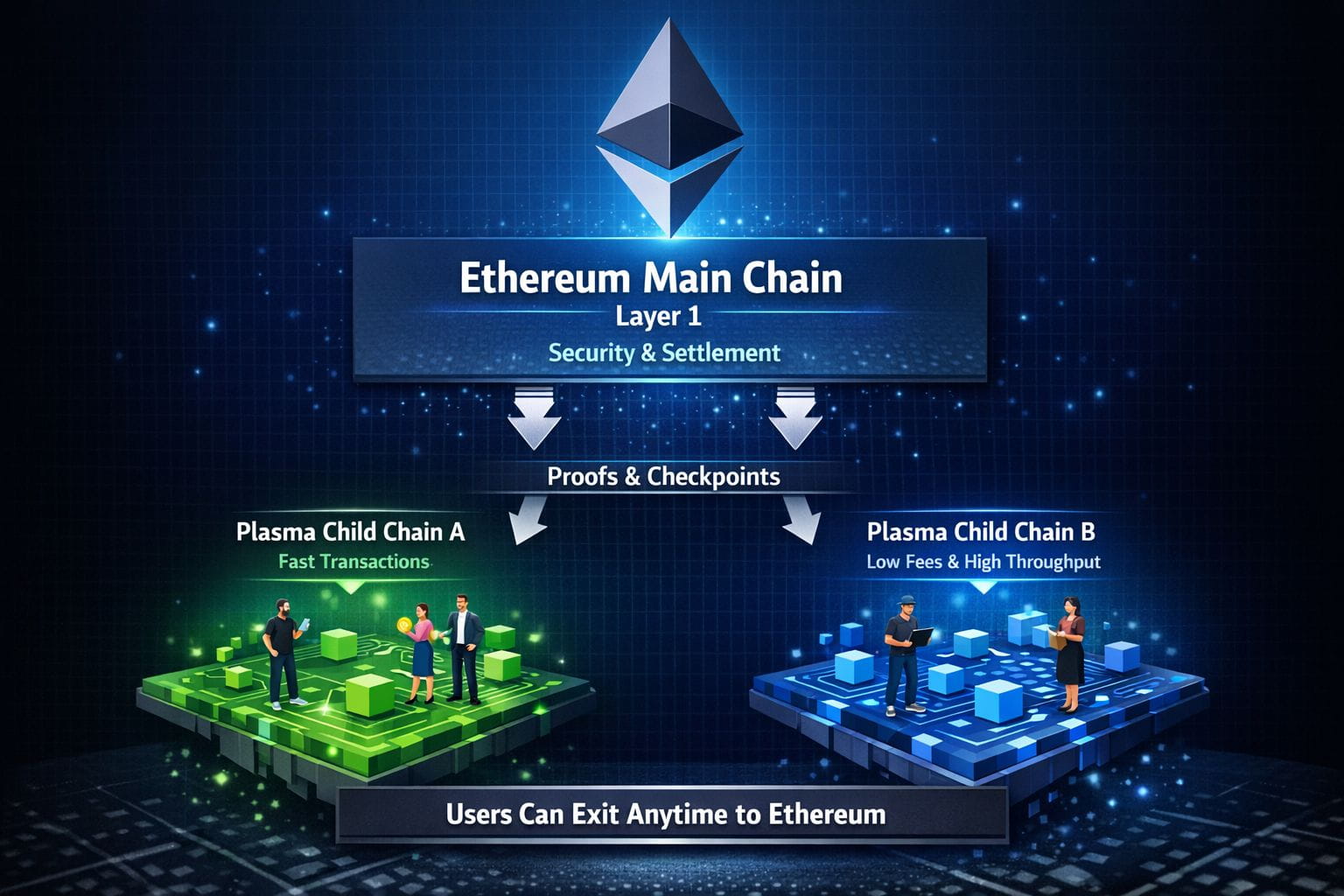
Plasma is a Layer-2 scaling framework designed to offload transactions from Ethereum’s main chain while still anchoring security to it. Instead of processing every transaction on Layer-1, Plasma creates child chains that handle activity independently and periodically submit proofs back to Ethereum.
HOW PLASMA WORKS
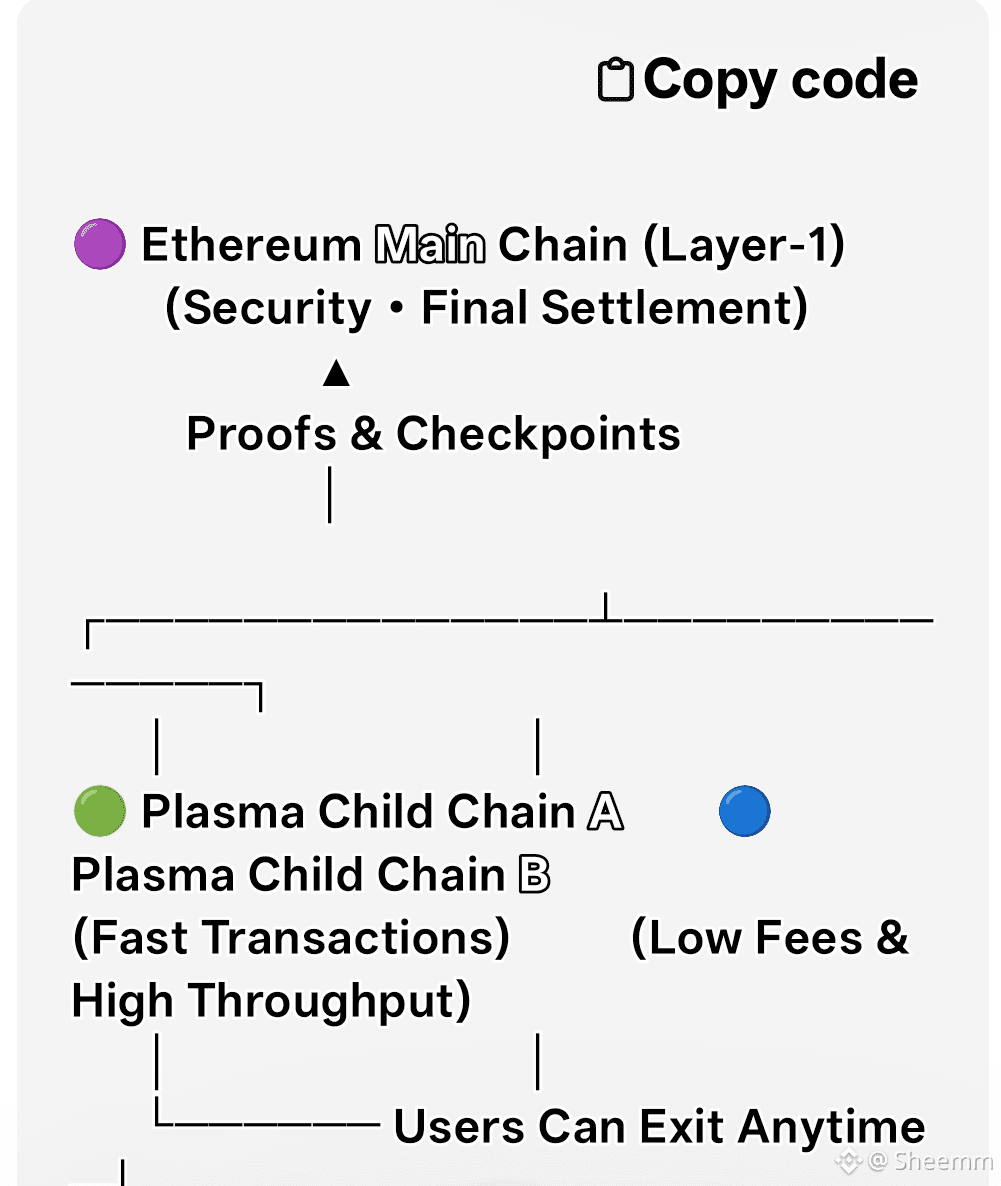
Plasma operates through smart contracts on Ethereum that manage multiple child chains. These chains process transactions faster and at a lower cost. Only summarized data or cryptographic proofs are committed to Ethereum keeping Layer-1 light and secure.
A key feature of Plasma is its exit mechanism. Users can always withdraw their assets back to Ethereum if something goes wrong, ensuring trustless security even if a child chain becomes malicious or inactive.
WHY PLASMA STILL MATTERS
Plasma introduced the foundation for many modern Layer-2 ideas. It proved that scaling doesn’t require sacrificing decentralization. While newer solutions like rollups evolved further, Plasma remains a crucial stepping stone in Ethereum’s scaling journey.
Its design is especially useful for high-volume applications like payments, gaming, and asset transfers where speed and cost efficiency are critical.
IN THE END
I WANT TO SAY THAT Plasma represents one of Ethereum’s earliest and most important scaling breakthroughs. It showed the ecosystem how to grow without breaking trust. Even today Plasma’s concepts continue to influence Layer-2 innovation and help shape a more scalable efficient blockchain future.


