These days everyone talks about data. We create it every second. Photos videos documents app activity our lives are basically digital now. But very few of us stop and ask a simple question. Walrus is one of the projects trying to answer that differently.
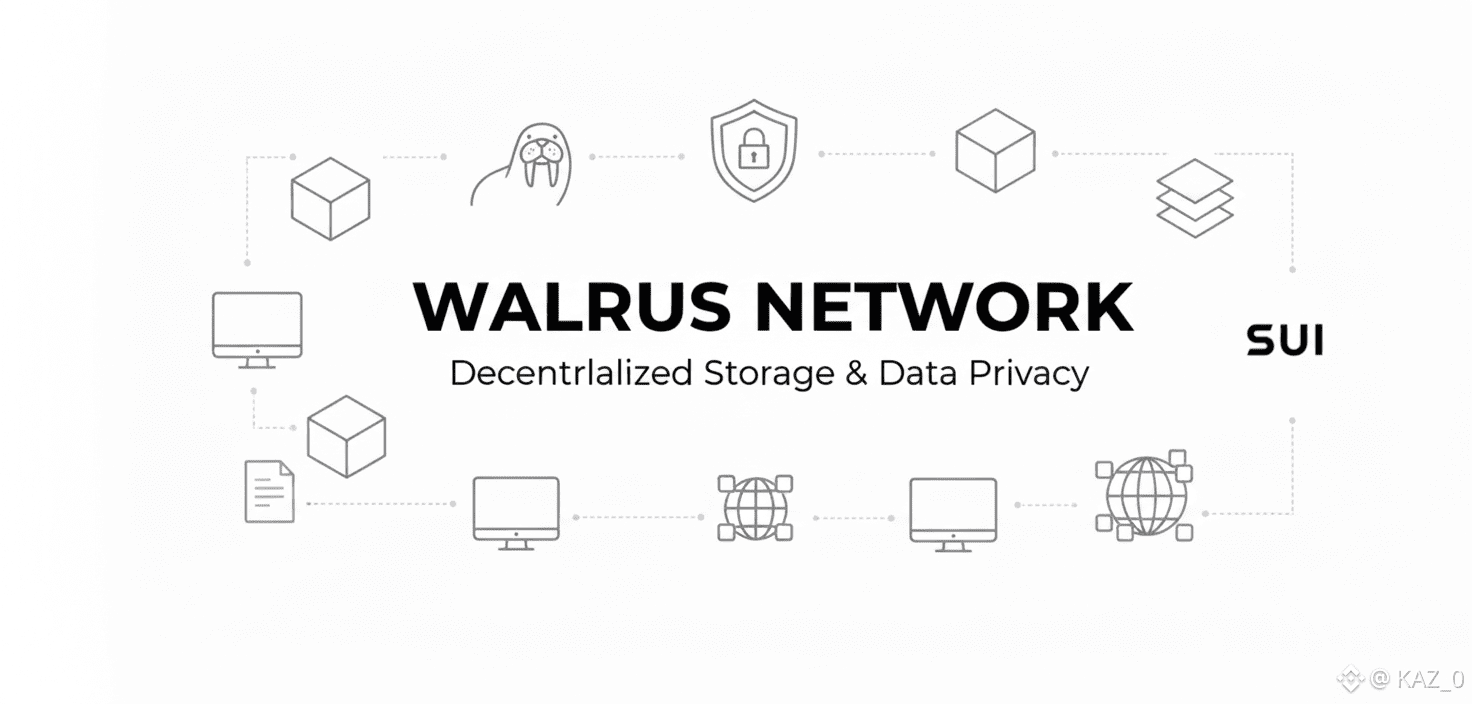
Walrus is a decentralized storage network connected to the Sui blockchain. In plain terms it’s trying to build a system where files don’t live inside the servers of one giant company. Instead data is spread across many independent computers around the world. No single owner. No central switch that someone can turn off.
That sounds great in theory. But let’s slow down for a second.
Right now companies like Google and Amazon dominate cloud storage because they are fast reliable and easy to use. Walrus is trying to offer an alternative that is more open and censorship-resistant. The idea is simple: break files into small pieces distribute them across a network and make sure the system can rebuild the file even if some parts go missing. It’s a smart design. Still smart design and real-world dominance are two very different things.
Walrus works closely with the Sui blockchain which helps manage payments storage agreements and proof that data is still available. This connection makes storage more than just a place to dump files. Apps can actually check whether data exists react to changes and build services around stored content. That’s a big deal for developers who want fully decentralized applications not just decentralized tokens.
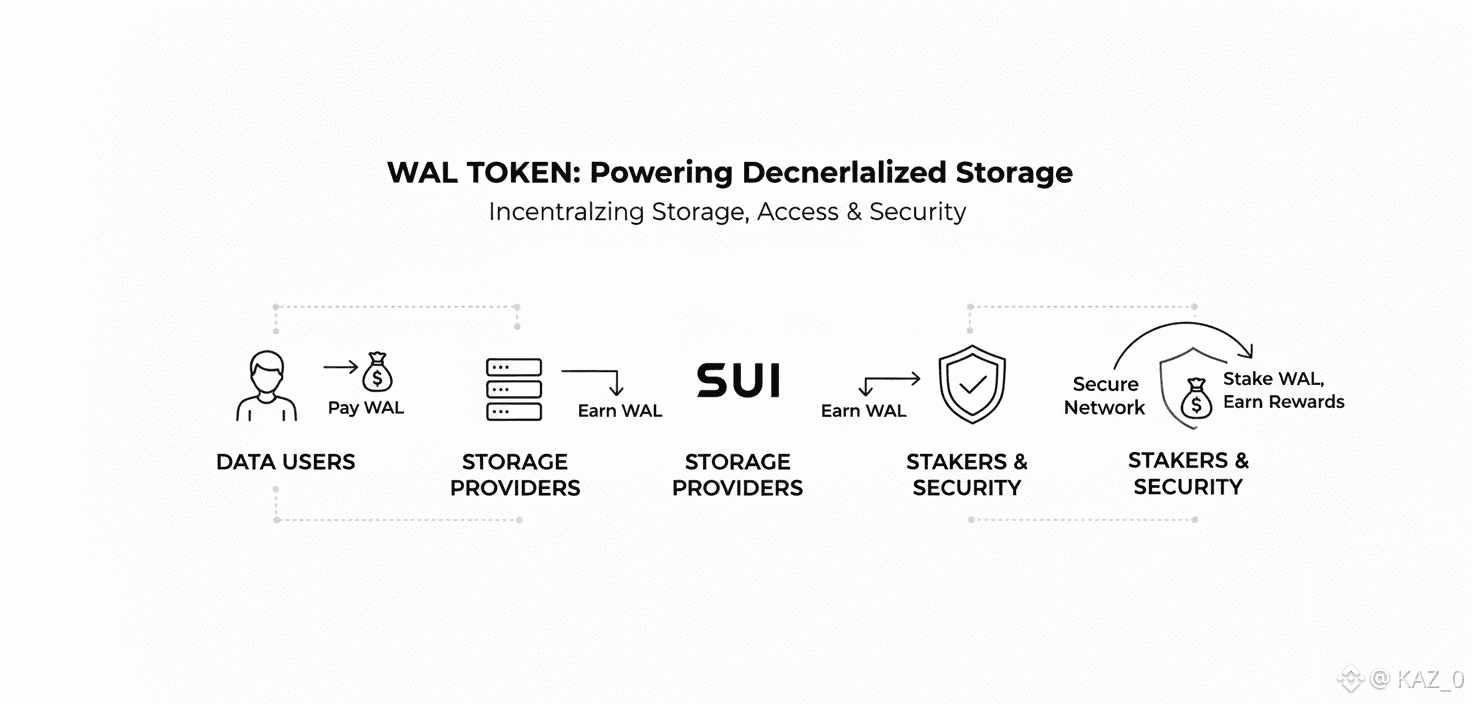
The WAL token is what keeps this system running. People use it to pay for storing and retrieving data. Storage providers earn it by offering space and keeping files accessible. There is also staking where token holders support nodes and help secure the network. In return they may receive rewards. It’s a typical crypto incentive model but applied to storage instead of just transactions.
Where Walrus gets interesting is in use cases that need large amounts of data. Think AI training datasets media libraries game assets or decentralized websites. These things are heavy. Traditional blockchains are not built to handle them directly. Walrus steps in as a storage layer that blockchains and apps can rely on.
But we should be honest here. Decentralized storage is not a new idea and adoption has always been the hard part. Developers care about cost and performance more than philosophy. Regular users care about convenience. So the real test for Walrus is not whether the tech sounds good on paper. It’s whether people actually choose to build and store things there.
Privacy is another point worth mentioning. Walrus focuses on keeping data available not automatically private. If someone uploads sensitive files without encryption that’s on them. So while the system protects against data loss and censorship users still need to handle confidentiality themselves.
I think Walrus represents a different way of thinking about internet infrastructure. Instead of trusting a few massive providers it spreads responsibility across a network of participants. That could reduce single points of failure and give developers more freedom. Or it could remain a niche solution if it fails to match the speed and simplicity of centralized clouds.
So can Walrus really compete with the giants of cloud storage Honestly it’s too early to say. The vision is strong. The architecture makes sense. But technology only wins when people actually use it at scale. That part of the story is still being written.
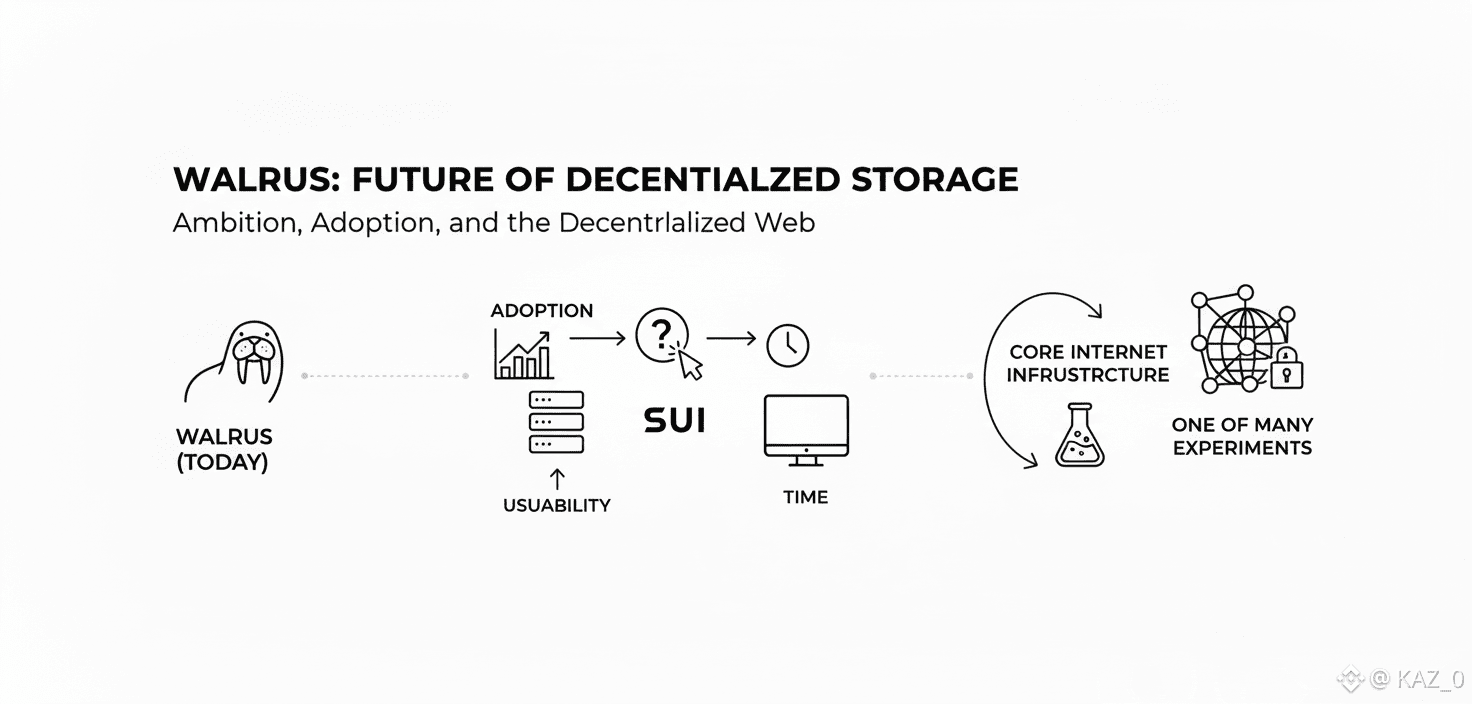
For now Walrus stands as an ambitious attempt to make storage part of the decentralized web not an afterthought. Whether it becomes a core piece of future internet infrastructure or just one experiment among many will depend on adoption usability and time.