

While decentralized storage often focuses on general file hosting, Walrus Protocol is taking a different approach: it’s optimizing for high-demand applications like AI, big data, and interactive Web3 experiences. In a world where data is growing exponentially traditional cloud storage struggles to keep up with both cost and decentralization. Walrus fills this gap by offering a scalable secure and trustless storage solution that can handle complex workloads without compromising speed or reliability.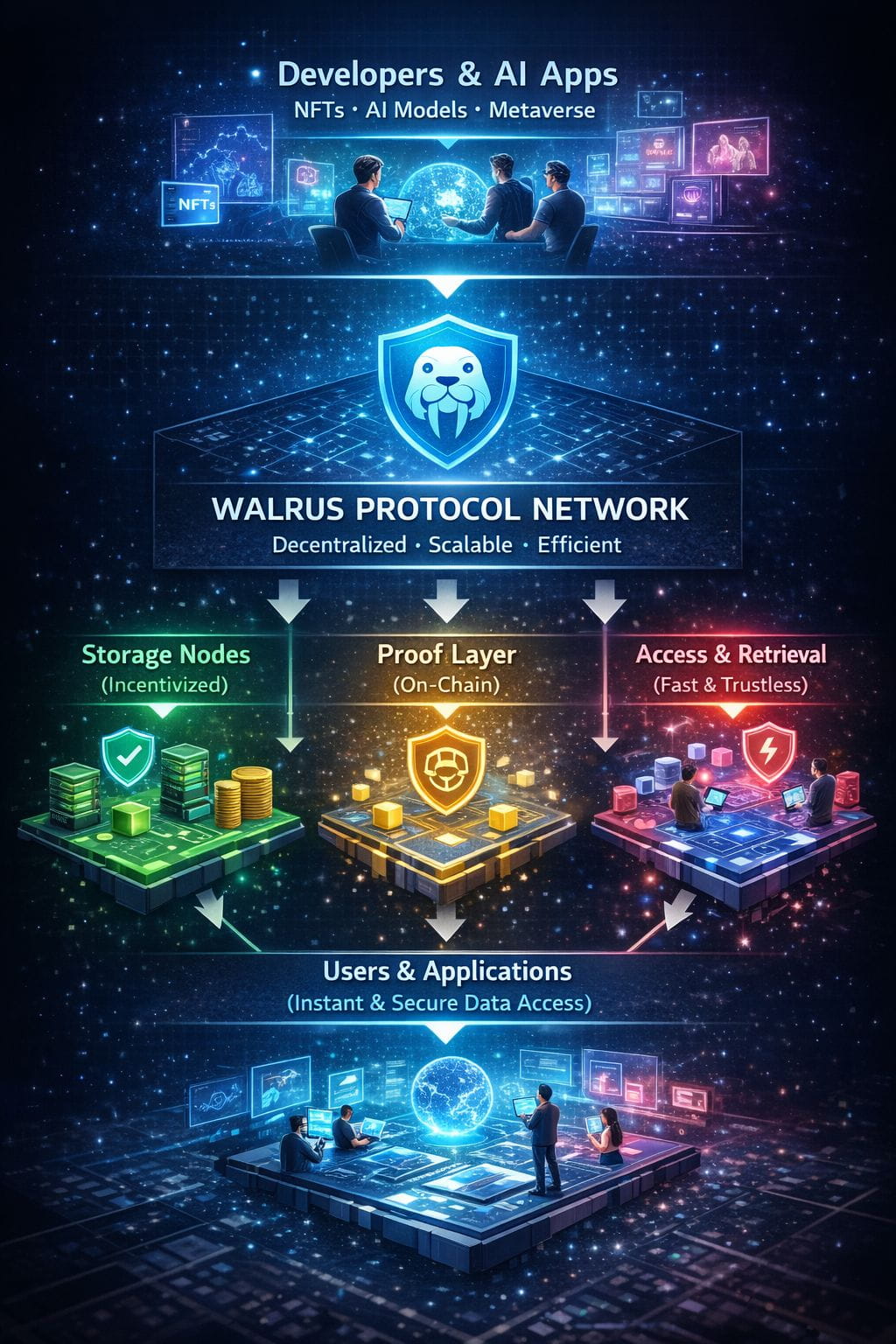
DATA BEYOND SIMPLE STORAGE
Walrus isn’t just about storing files it’s about enabling data driven applications. For AI models large datasets need fast reliable access; for metaverse projects digital assets require instant retrieval for NFT platforms metadata integrity is crucial. Walrus provides layered architecture that allows data to be stored, verified, and accessed efficiently all while remaining decentralized. This ensures developers don’t have to sacrifice performance for trustlessness.
THE TECHNICAL EDGE 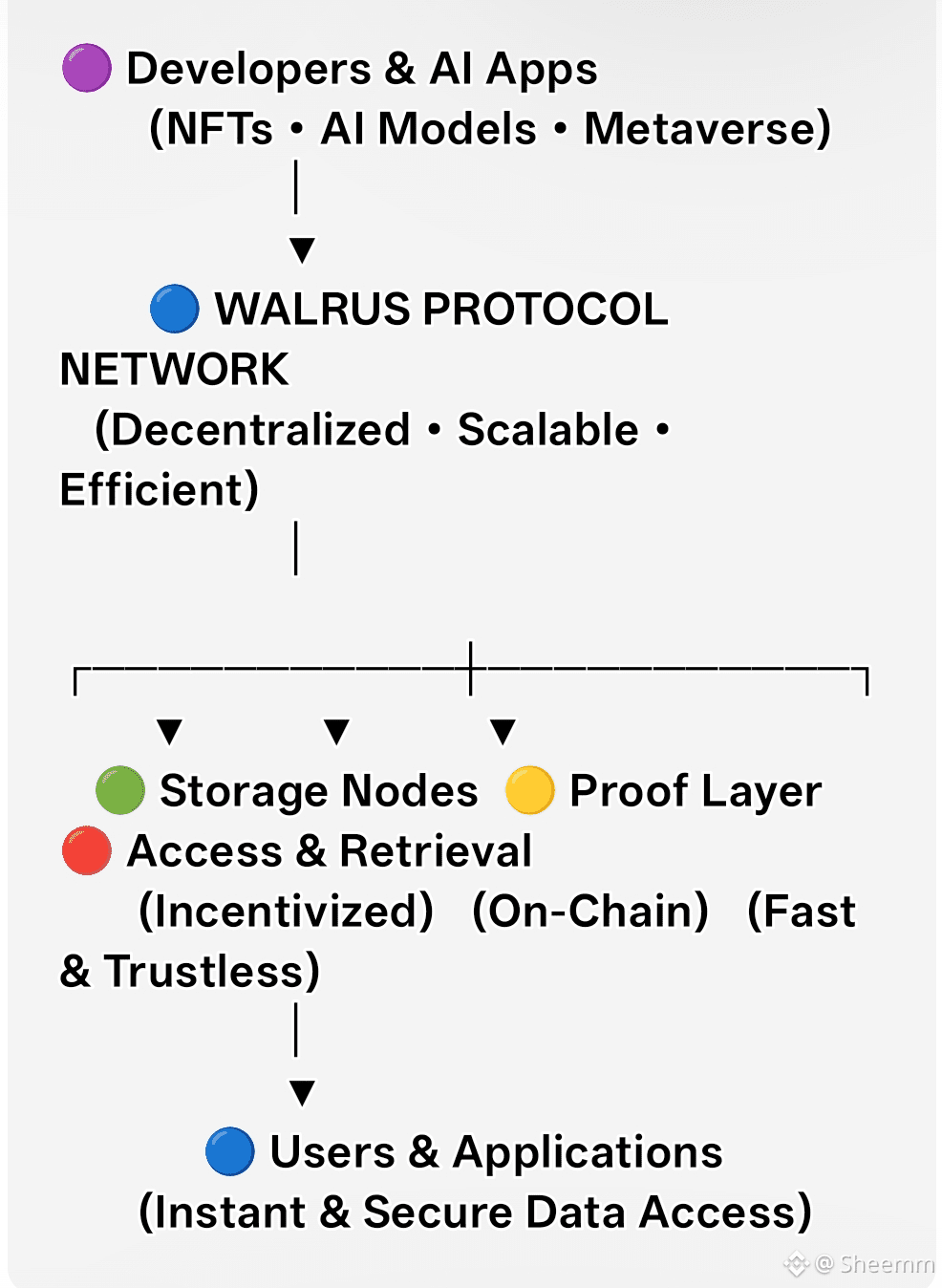
Walrus Protocol leverages advanced consensus mechanisms and content addressable storage to optimize data retrieval. Unlike traditional blockchains that store everything on chain Walrus uses a hybrid approach: essential proofs live on chain for verification, while actual data resides off chain in a distributed network. This model drastically reduces storage costs while keeping security and immutability intact.
INCENTIVIZED THE ECOSYSTEM
A strong ecosystem is key to decentralized storage. Walrus encourages participants to stake resources and provide storage nodes, rewarding them with protocol tokens. This not only strengthens the network but also ensures high availability and redundancy for critical datasets. Users can trust that their data is always accessible even if some nodes go offline.
WHY WALRUS MATTERS?
With the rise of AI IoT and the metaverse data is no longer static—it’s interactive dynamic and massive. Centralized providers can’t scale efficiently without high costs or privacy risks. Walrus Protocol offers a new paradigm: decentralized storage built specifically for modern, data heavy trustless applications. It bridges the gap between blockchain security and real-world data demands, making it a strong contender in the next generation of Web3 infrastructure.

