

I want to start this in the same way most realizations actually happen, quietly and without ceremony. It was not during a market pump or a big announcement. It was during a normal day scrolling through updates, reading developer notes, watching how people were talking about Plasma instead of how they were selling it. Somewhere in that moment it hit me that Plasma had crossed a line. Not a price line. A maturity line. It stopped feeling like a concept being tested and started feeling like a place things were actually happening.
Most of us came here with different expectations. Some were curious about the tech. Some were burned by other projects and looking for something steadier. Some just followed conversations and stayed because the tone felt different. Plasma never really tried to be the loudest voice in the room. It took a slower path, one that does not always get rewarded immediately in this space, but over time that patience starts to show its strength.
Over the last stretch of development the network itself has changed in ways that are easy to miss if you are only watching surface level metrics. Underneath, the infrastructure has been steadily reinforced. Recent protocol upgrades focused heavily on consistency and execution quality. Transaction processing has become smoother, not just faster on paper but more predictable in real usage. Finality feels tighter, meaning actions settle with more confidence and less uncertainty. For users this shows up as trust. For builders it shows up as peace of mind.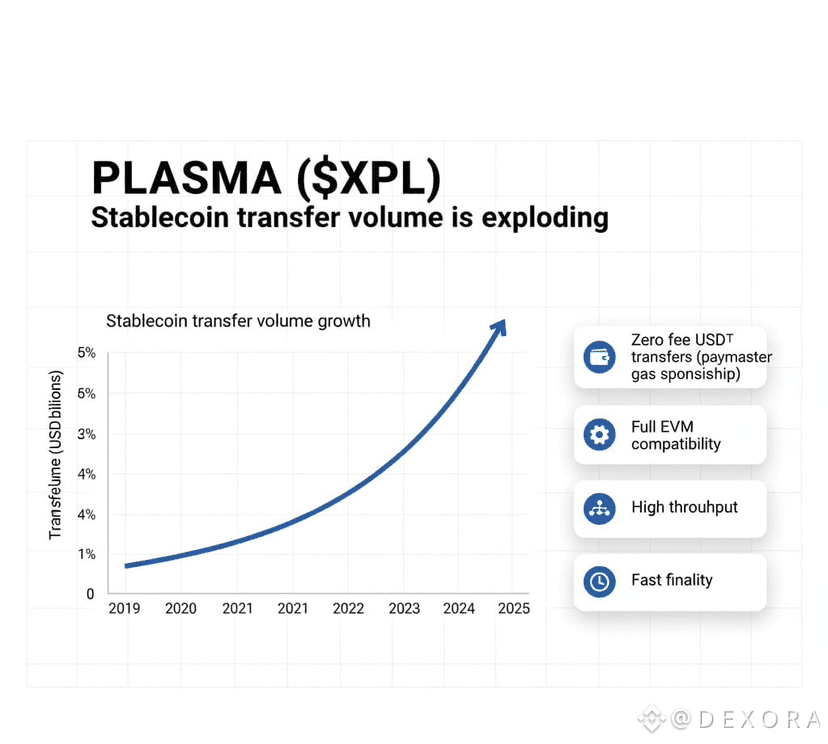
One of the most important things Plasma has done recently is lean fully into its identity. Instead of trying to be a catch all chain that promises everything to everyone, it has clarified its role as dependable infrastructure. That might not sound exciting at first, but infrastructure is what everything else stands on. Without it, ecosystems collapse under their own weight. Plasma is focusing on being the layer people rely on rather than the layer people speculate on.
A lot of work has gone into improving how the network behaves under real world conditions. Load handling has improved. Resource usage across nodes has been optimized so operators are not constantly dealing with spikes or instability. These changes reduce friction across the ecosystem. When validators can operate more smoothly, the network becomes healthier. When the network is healthier, developers are more willing to build. It is a chain reaction that starts with fundamentals.
Interoperability has also moved from being a talking point to something more concrete. Plasma has been refining how it connects with other environments, making asset movement and data communication more efficient. This matters because the future is not isolated chains competing in silos. It is networks working together, each doing what it does best. Plasma positioning itself as a reliable execution and settlement layer within that broader landscape is a strategic move that feels increasingly intentional.
Now let us talk about the $xpl token, because this is where intent becomes visible. Tokens reveal what a project values. Over recent updates the role of $xpl has become more grounded in actual network activity. Fee mechanisms have been adjusted to reflect usage more accurately. Incentive structures for validators and participants have been refined so rewards align with contribution rather than passive presence. This creates an environment where engagement matters.
What stands out is the absence of forced narratives. There have been no dramatic supply stunts or artificial excitement triggers. Instead the token economy is slowly aligning with how the network is used day to day. As applications generate activity, $xpl flows naturally through the system. As validators secure the chain, $xpl sustains them. As governance evolves, $xpl increasingly represents influence and responsibility rather than just numbers on a screen.
Community behavior has shifted along with the tech. Early discussions often revolved around potential and speculation. Lately the tone feels more grounded. People are talking about tooling improvements, network performance, integrations, and real use cases. Builders are sharing lessons learned. Node operators are exchanging optimization tips. Users are giving feedback based on experience rather than expectation. This is usually what happens when a project moves from theory into practice.
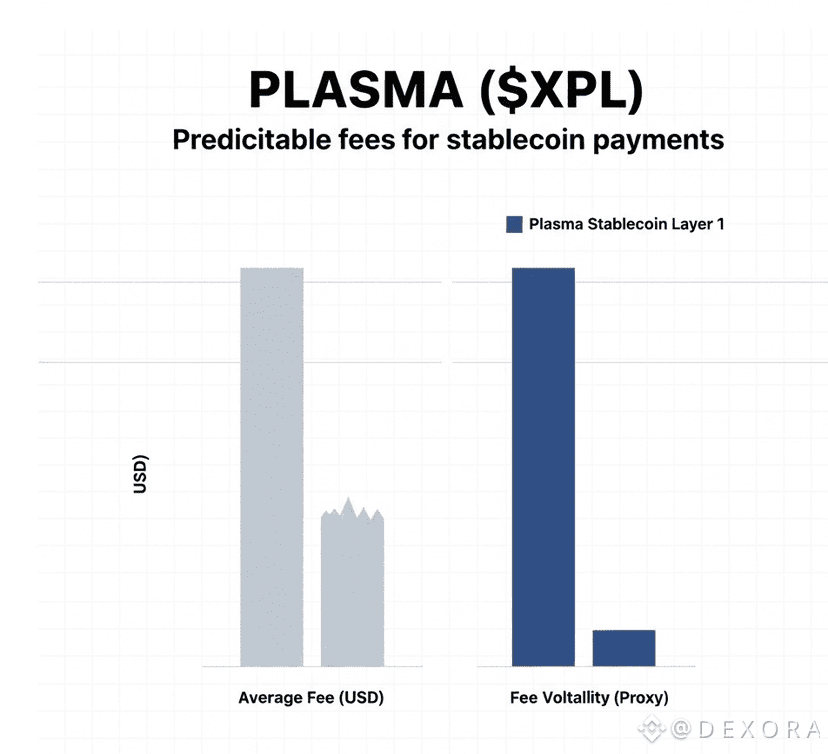
Developer experience has quietly improved as well. Recent releases focused on simplifying deployment and maintenance. Tooling has become more intuitive. Documentation has been refined to focus on practical guidance rather than abstract explanations. This lowers the barrier for new builders and makes it easier for existing ones to scale their work. When developers feel supported, they stay. When they stay, ecosystems grow organically.
Security has remained a steady priority throughout these changes. Instead of rushing features, Plasma has taken time to test and harden upgrades. Monitoring systems have been improved. Network safeguards have been strengthened. These decisions do not always generate excitement, but they prevent disasters. A chain that grows without breaking trust is rare, and Plasma seems to understand that protecting reliability is as important as adding features.
What I personally appreciate is the emotional tone of the project. There is no sense of panic. No desperate attempts to chase the latest narrative. Progress feels calm and deliberate. That usually signals confidence. Teams that believe in what they are building do not rush to prove themselves every week. They let the work speak over time.
It is also worth noting how Plasma is being discussed outside its immediate circle. Conversations are shifting from what Plasma might become to how it fits into broader systems. That is a subtle but important change. When a project starts being evaluated as infrastructure rather than opportunity, it means people are thinking about dependency and trust. Those are hard things to earn and easy things to lose.
Looking forward, the path ahead feels like a natural extension of what is already in motion. Execution layers will continue to be refined. Interoperability will deepen. Governance mechanisms are expected to mature so the community has a stronger voice in shaping direction. These are not radical pivots. They are logical next steps for a network that has focused on getting its foundation right.
I want to be honest here. Plasma is not finished and it does not pretend to be. There are challenges ahead. Adoption still needs to grow. Competition will not disappear. Market conditions will fluctuate. But what gives me confidence is that the hard work is happening before the spotlight arrives. Infrastructure is being built before hype. Reliability is being prioritized before scale. Usage is being earned rather than manufactured.
If you are here only for fast outcomes, this journey might feel slow. Plasma rewards patience more than impulse. But if you are here because you care about systems that last, this phase is exactly where value is created quietly. These are the chapters people skip when they look back later and wonder how something became essential.
As a community, we are watching Plasma settle into itself. It is becoming less about what it promises and more about what it delivers consistently. That transition does not come with fireworks, but it comes with something better, credibility. And as the ecosystem continues to mature, as more builders arrive and more users interact, the groundwork being laid now will shape everything that comes next.
The future for Plasma feels less like speculation and more like momentum. Not explosive, but steady. And if this trajectory continues, we may look back on this period as the moment Plasma stopped being talked about and started being relied on.

