
There comes a moment for many developers when building on Web3 feels like assembling a puzzle with missing pieces. You write smart contracts that handle logic well enough, yet adding real intelligence—something that can process meaning, recall context, or adapt decisions—often means bolting on separate tools that slow everything down. Vanar Chain offers a different approach: a modular layer-one blockchain engineered from the start around AI workloads rather than retrofitted later.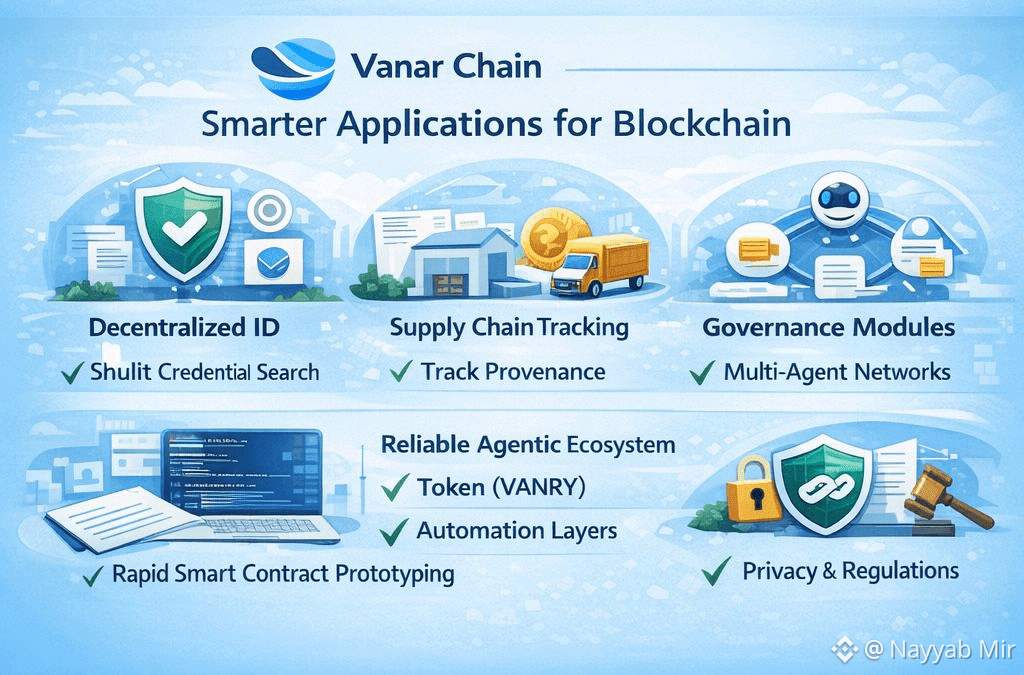
At its base, the chain runs EVM-compatible code but optimizes for AI-specific tasks like vector embeddings and semantic-aware transactions. This means a contract can directly evaluate similarity between data points or interpret intent embedded in a transaction, without needing external indexing services. Developers report simpler workflows when embedding these primitives because the network itself supports fast similarity searches and distributed inference at low cost.
What stands out in practice is how the stack encourages thoughtful integration. The JavaScript, Python, and Rust SDKs let teams prototype features quickly—perhaps starting with a basic query that pulls related records across a dataset and returns reasoned summaries. One developer I spoke with described testing a governance module that flags inconsistent voting behavior by analyzing historical patterns within the same transaction flow. It felt less like forcing AI into blockchain and more like the two were designed to work together.
The broader ecosystem reflects steady, measured growth. Builders are exploring applications in decentralized identity, supply chain tracking, and data marketplaces, where the ability to reason over compressed knowledge units adds practical value. Recent gatherings in the Middle East highlighted conversations around bridging traditional finance systems with these capabilities, focusing on reliability rather than speed-to-market hype. The native token, VANRY, plays a functional role here: it covers fees, participates in governance votes, and supports staking for network security, with its fixed supply encouraging long-term alignment among participants.
Looking ahead, the next phase could prove defining. Planned automation layers aim to allow agents to execute multi-step processes based on live insights, such as dynamically adjusting parameters in DeFi protocols or coordinating across different dApps. Industry-specific modules in development might tailor these tools for sectors like logistics or healthcare records, where compliance and context matter deeply. Broader convergence seems likely—imagine multi-agent networks where specialized components collaborate on-chain to handle complex workflows, from risk assessment to automated reporting, all while maintaining verifiable audit trails.
Yet this path carries real considerations. As capabilities expand, maintaining consistent performance across growing datasets will require careful optimization. Privacy-preserving techniques for sensitive queries will need refinement to meet enterprise standards. Regulatory frameworks around autonomous decision-making are evolving unevenly across regions, which could influence adoption timelines. Responsible deployment remains essential: the technology must balance innovation with safeguards against unintended outcomes from imperfect data or edge cases.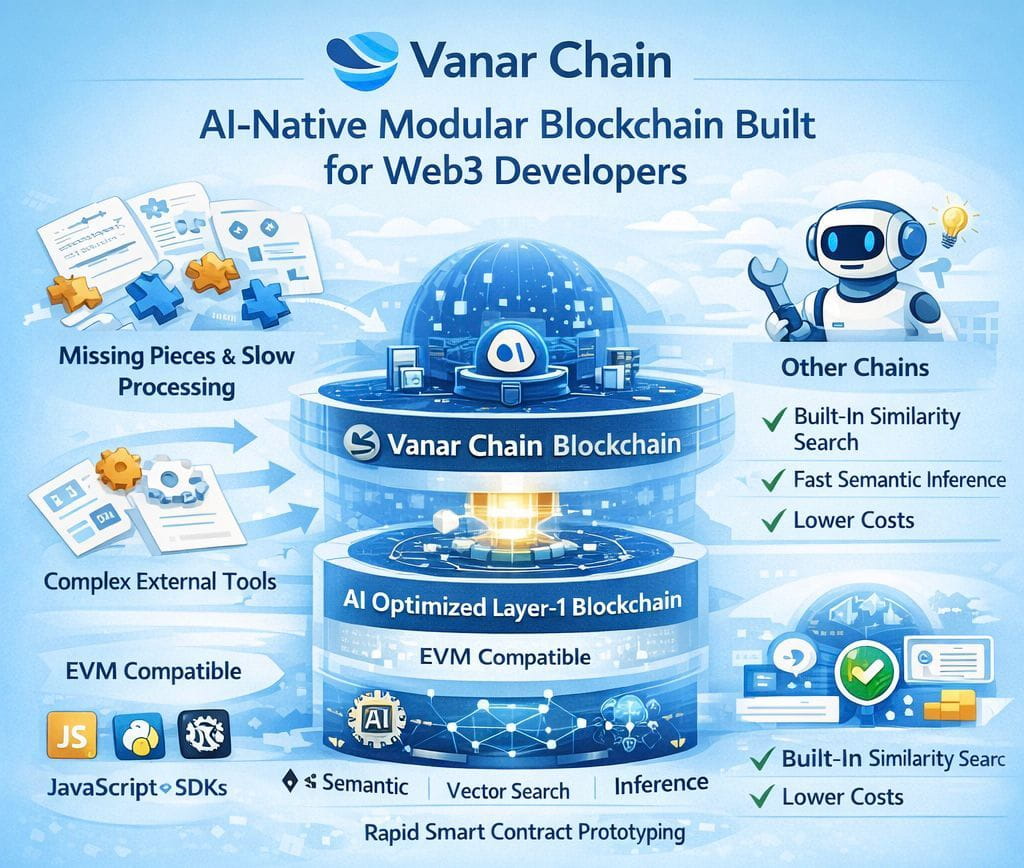
In the end, Vanar Chain represents a thoughtful step in Web3’s maturation. It suggests that intelligence in blockchain need not mean complexity for users or developers, but rather clearer, more context-aware systems. Whether this leads to widespread transformation remains to be seen, yet the direction feels grounded in practical needs and incremental progress.
