
Introduction to Interoperability
Interoperability is one of the most important ideas in modern blockchain development. It refers to the ability of different blockchains to communicate and work together smoothly. Without interoperability, blockchains act like isolated islands, each with its own rules and limitations. Walrus addresses this challenge by focusing on connection rather than separation. Its goal is to help users experience Web3 as one unified environment.
For everyday users, interoperability means convenience and flexibility. Instead of learning multiple systems separately, users can interact more smoothly across networks. Walrus simplifies this concept by designing tools that reduce friction. This approach makes blockchain technology feel more connected and approachable. Interoperability becomes less about technical complexity and more about practical usability.
Why Interoperability Matters
Blockchains were originally designed as independent systems. While this ensured security and specialization, it also created silos. Users often found themselves limited to one network at a time. Walrus recognizes that true Web3 growth requires collaboration between chains. Interoperability allows value and information to move freely.
Think of interoperability like international travel with a single passport. Without it, every border requires extra effort. Walrus works toward smoother movement between blockchains. This saves time and reduces confusion. A connected ecosystem encourages exploration and learning across networks.
How Walrus Approaches Connectivity
Walrus approaches interoperability with simplicity in mind. Instead of overwhelming users with technical steps, it focuses on seamless experiences. Connections between blockchains are designed to feel natural. Users can interact without needing deep technical knowledge.
This approach is similar to using a smartphone that connects to multiple networks automatically. The user enjoys the service without managing the infrastructure. Walrus hides unnecessary complexity while maintaining transparency. This balance empowers users to explore confidently.
Reducing Fragmentation in Web3
Fragmentation has been a long-standing challenge in Web3. Different chains often operate independently, limiting collaboration. Walrus aims to reduce this fragmentation by encouraging compatibility. Its systems are designed to work alongside other blockchains.
Reducing fragmentation creates a healthier ecosystem. Users are not forced to choose one network over another. Walrus promotes coexistence rather than competition. This mindset supports long-term innovation and inclusivity.
User Experience at the Center
Interoperability should not come at the cost of usability. Walrus places user experience at the center of its design. Interfaces are clear and actions are explained simply. This helps users understand what is happening during cross-chain interactions.
Good user experience builds trust. When users feel comfortable, they explore more freely. Walrus treats clarity as a core feature. This makes interoperability accessible even to beginners.
Security and Transparency
Connecting multiple blockchains requires careful attention to security. Walrus emphasizes transparent processes so users understand interactions. Clear confirmations and visible steps reduce uncertainty. This openness helps users feel safe.
Security is explained in simple terms rather than technical jargon. Walrus avoids fear-based messaging. Instead, it promotes awareness and understanding. This approach builds long-term confidence in interoperable systems.
Simplifying Cross-Chain Interaction
Cross-chain interaction often feels complicated. Walrus simplifies this by streamlining processes. Users can move between systems without unnecessary steps. This reduces mental effort and frustration.
Simplification does not mean oversimplification. Walrus ensures users remain informed. Think of it as guided navigation rather than autopilot. Users stay aware while enjoying smoother experiences.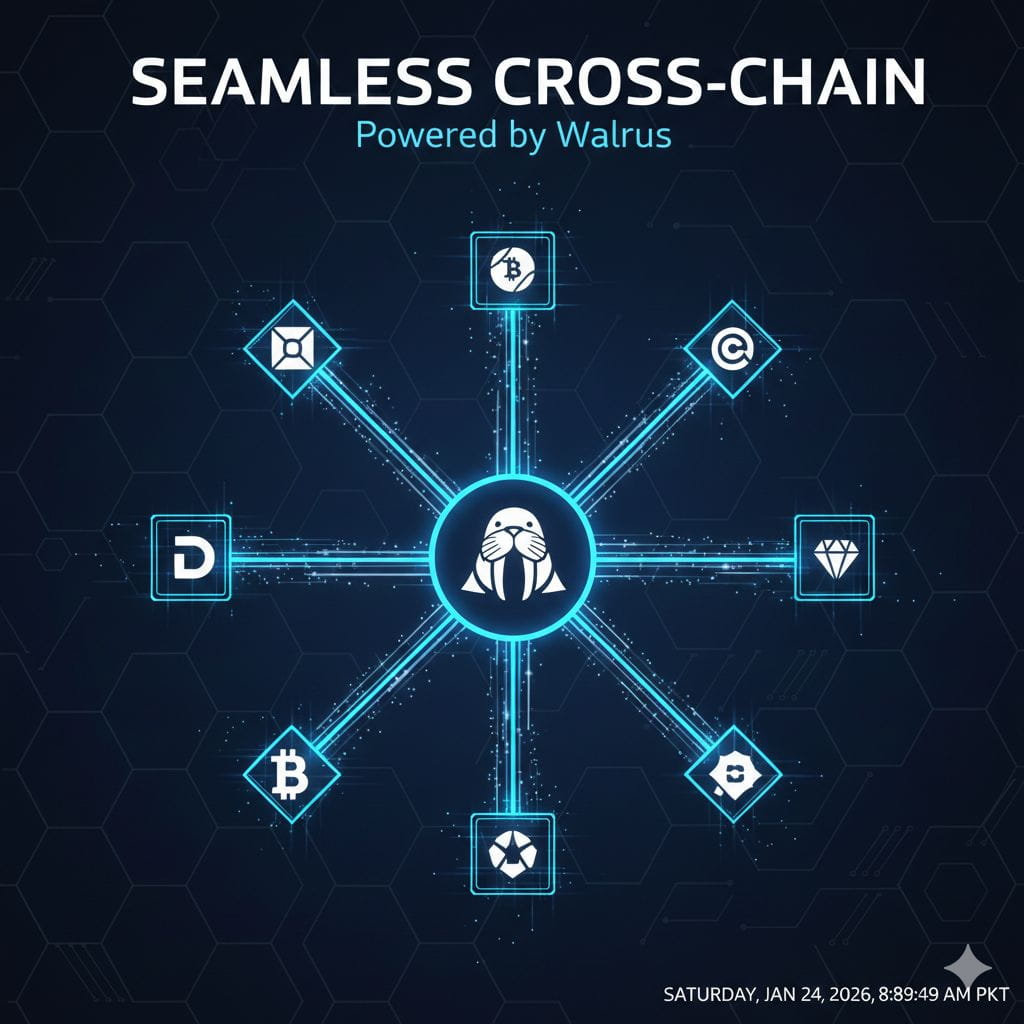
Encouraging Exploration Across Networks
Interoperability encourages exploration. Walrus makes it easier for users to experience different blockchain environments. This broadens understanding and curiosity. Users learn how various systems function together.
Exploration leads to education. Walrus supports this by removing barriers. When users explore freely, Web3 feels less intimidating. This openness drives adoption naturally.
Supporting Developers and Builders
Interoperability benefits not only users but also builders. Walrus creates an environment where developers can think beyond single-chain limitations. This encourages innovation and collaboration. Builders can focus on functionality rather than restrictions.
A connected ecosystem sparks creativity. Walrus supports this by enabling communication between systems. Developers gain flexibility while maintaining clarity. This benefits the broader community.
Real-World Implications
Interoperability has real-world implications beyond theory. It supports smoother digital interactions and broader participation. Walrus helps translate complex infrastructure into usable experiences. This makes blockchain more relevant to daily digital life.
When systems connect seamlessly, users feel empowered. Walrus bridges gaps between technology and practicality. This alignment supports meaningful adoption.
Education Through Design
Walrus teaches interoperability through design rather than documentation alone. Users learn by interacting. Each step is intuitive and explained clearly. This experiential learning builds confidence.
Learning by doing is effective. Walrus understands this and applies it thoughtfully. Users gain understanding without pressure. Education becomes part of the journey.
Community and Shared Understanding
Interoperability strengthens community connections. Walrus encourages shared understanding through accessible tools. Users discuss and learn together. This collective growth supports healthier ecosystems.
Community learning reduces isolation. Walrus values open discussion and collaboration. Shared experiences build trust. This sense of unity reinforces adoption.
Scalability and Future Growth
Interoperability supports scalability. As Web3 grows, systems must handle increased interaction. Walrus designs with future expansion in mind. Flexibility ensures long-term relevance.
Scalable systems prevent bottlenecks. Walrus balances growth with usability. This prepares users for evolving technology. Future-ready design supports confidence.
Avoiding Overcomplexity
Complexity can discourage users. Walrus actively avoids unnecessary complications. Interoperability is presented as a benefit, not a burden. Users remain in control.
By simplifying without hiding information, Walrus maintains balance. Users understand enough to feel confident. Overcomplexity is replaced with clarity. This supports thoughtful participation.
Interoperability as a Foundation
Interoperability is not an extra feature. Walrus treats it as foundational. Connection enables innovation and collaboration. Without it, ecosystems remain limited.
Walrus builds systems with this foundation in mind. Users benefit from connected experiences. This approach aligns with Web3’s broader vision.
Long-Term Perspective
Walrus focuses on sustainable interoperability. Short-term solutions are avoided. Instead, systems are built for adaptability. This long-term view benefits users and builders.
Patience supports progress. Walrus encourages steady growth. Interoperability evolves alongside the ecosystem. This stability fosters trust.
Why Walrus Interoperability Matters
Walrus matters because it prioritizes connection over isolation. By simplifying interoperability, it makes Web3 more accessible. Users gain freedom to explore. Builders gain room to innovate.
As blockchain ecosystems mature, connectivity becomes essential. Walrus contributes thoughtfully. Its user-centered approach supports meaningful adoption. Interoperability becomes a shared benefit.

