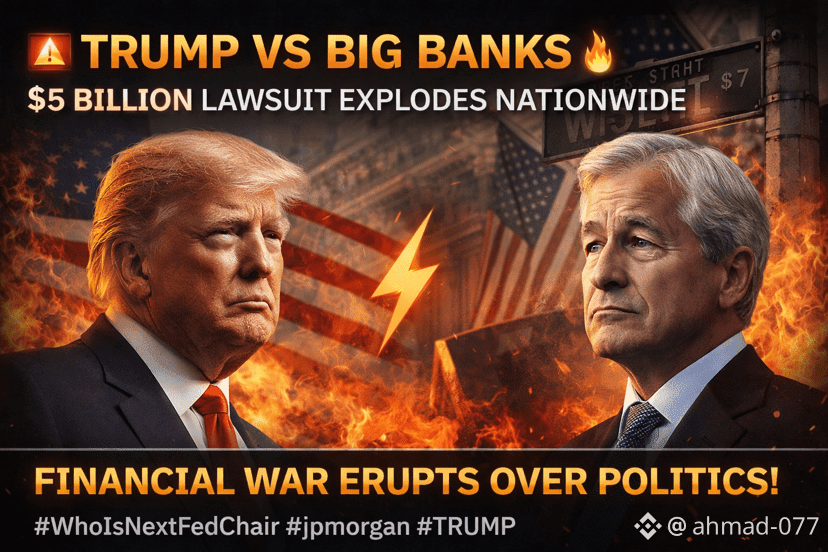
What’s unfolding now goes far beyond party lines or political theater. This is a direct confrontation between institutional financial power and political influence—and it could redefine how access to money works.
🇺🇸 Donald Trump has launched a $5 billion lawsuit against JPMorgan Chase, the largest bank in the United States, along with its CEO Jamie Dimon. The claim is not about standard banking disputes, fees, or breached agreements. Instead, it centers on a far more serious allegation: financial exclusion.
Trump argues that he was deliberately “debanked”—cut off from essential financial services—not due to risk concerns, but for political reasons. According to the lawsuit, once JPMorgan withdrew access, other financial institutions followed suit, not independently, but out of caution and pressure.
JPMorgan has firmly denied the allegations. Still, the case has ignited a wider debate across financial and crypto communities.
⚖️ Why this case matters
At the heart of the issue is a fundamental question:
Who controls access to money?
If major banks can decide who participates in the financial system, money stops being neutral. It becomes conditional. Permission-based. Potentially political.
When financial institutions move from service providers to gatekeepers, they gain enormous influence—without elections, court rulings, or public oversight. Accounts can be frozen. Transactions halted. Economic participation quietly removed.
That’s why this lawsuit is sending shockwaves through markets and policy circles alike.
🌍 Bigger than one individual
This case isn’t just about Trump. Supporters and critics alike agree on one point:
If financial access can be restricted for one high-profile figure, the precedent could extend far wider—to businesses, organizations, or individuals who challenge the status quo.
Once money becomes a tool of influence rather than a neutral medium, trust erodes, systems shift, and market confidence weakens.
🔥 Bottom line:
This is more than a legal battle. It’s a defining moment in the struggle over who ultimately controls financial access—banks, governments, or the people themselves.
The outcome could have lasting implications for traditional finance, digital assets, and the future of economic freedom.