
Plasma is one of those projects that quietly shifts how you think about moving money around, especially when it’s tied to stablecoins. Imagine you’re sending a small payment to a friend overseas—maybe covering part of a shared bill or helping with groceries back home. On most blockchains, even the smoother ones, you pause for a second: will this take minutes? Will the fee eat into it? Plasma tries to remove that hesitation entirely.
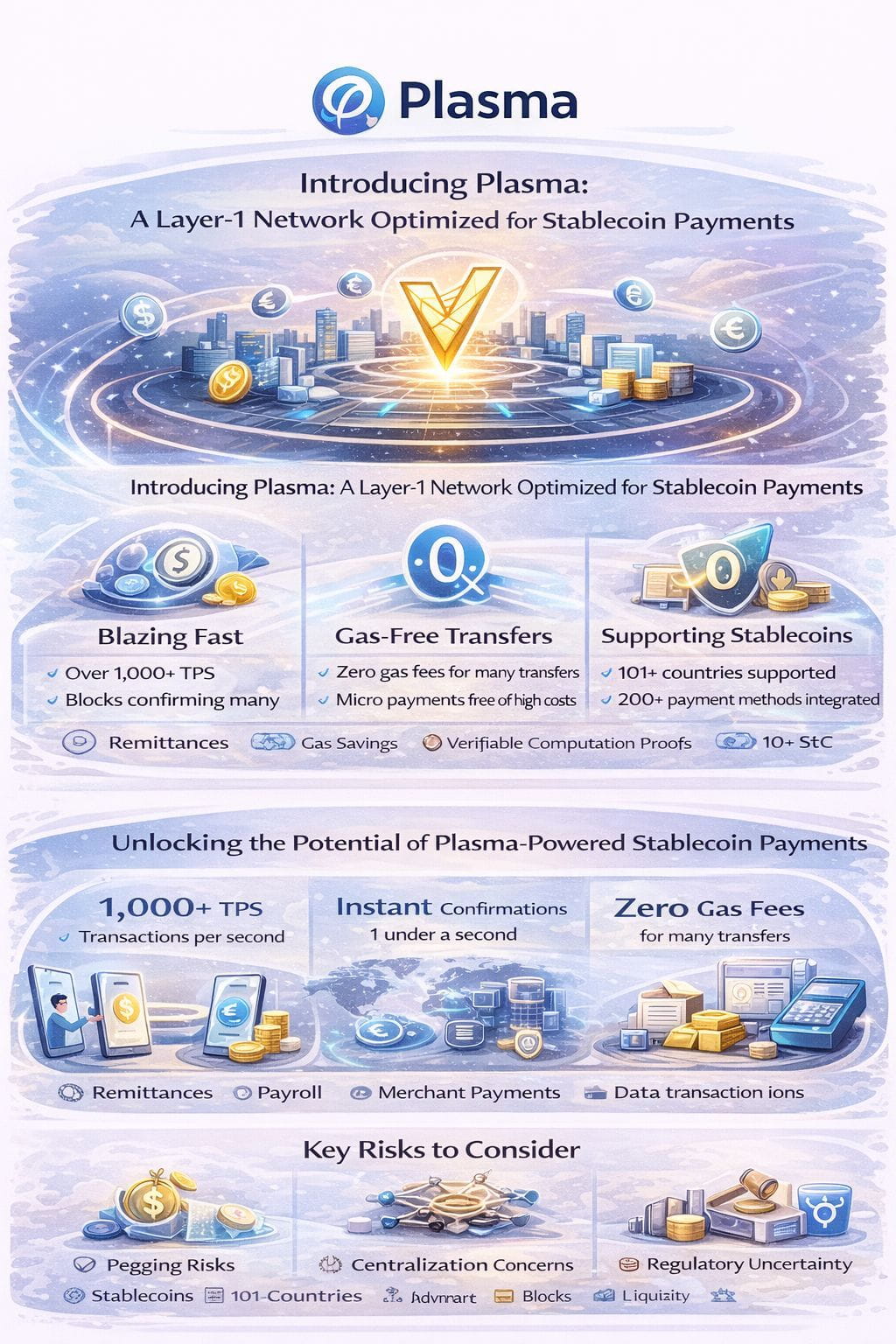
It’s a layer 1 chain built from the start around stablecoins, the idea being that if these digital dollars (or euros, or whatever pegged asset) are going to become everyday money, the underlying rails should feel almost invisible.
The numbers sound straightforward enough. It handles more than a thousand transactions every second, with blocks confirming in under a second. Transfers are meant to carry zero gas fees in many cases, which changes the math when you’re moving value frequently or in small amounts. Think of it like upgrading from an old dial-up connection to something that just works without you noticing the wait.
Developers get tools to build around this—support for over a hundred countries, currencies, and a couple hundred payment methods—so apps for remittances, payroll, or merchant settlements can plug in without fighting the infrastructure.
Yet nothing in this space is without its shadows. Stablecoins themselves carry the risk of depegging, even briefly, which can turn a reliable transfer into a sudden loss. A chain optimized for them inherits some of that fragility—if the peg wobbles across the ecosystem, usage drops fast. Then there’s the question of how truly decentralized the network stays over time.
High performance often comes from trade-offs: maybe fewer validators or more centralized components early on to keep things fast and secure. Audits help, and institutional-grade security is the claim, but any blockchain can face exploits if a vulnerability slips through. Regulatory uncertainty hangs over the whole stablecoin world too—rules shift country by country, and what feels seamless today could face restrictions tomorrow, especially in places pushing hard for control over digital money.
Still, the appeal is in the simplicity it chases. Picture a small business owner in a busy market, accepting payments in stable value without watching fees stack up or waiting for confirmations during rush hour. Or someone sending money home regularly, knowing it arrives almost as soon as they hit send.
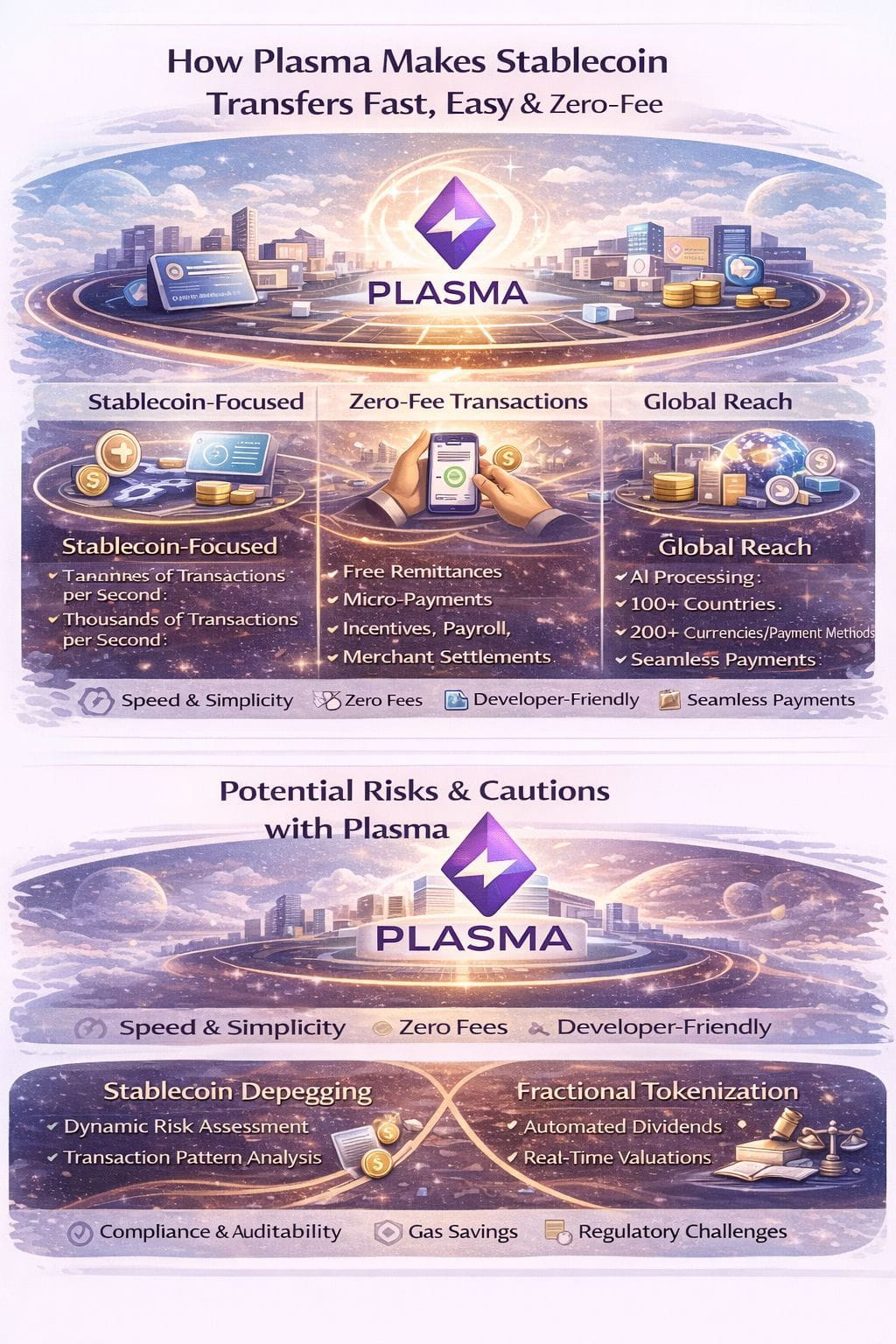
Plasma isn’t promising to fix every problem in finance; it’s narrowing in on one pain point—the friction in stablecoin movement—and trying to smooth it out enough that people stop thinking about the blockchain at all.
In the end, projects like this remind you that technology rarely arrives perfect or risk-free. It just edges a little closer to feeling ordinary, and sometimes that’s the real change.

