
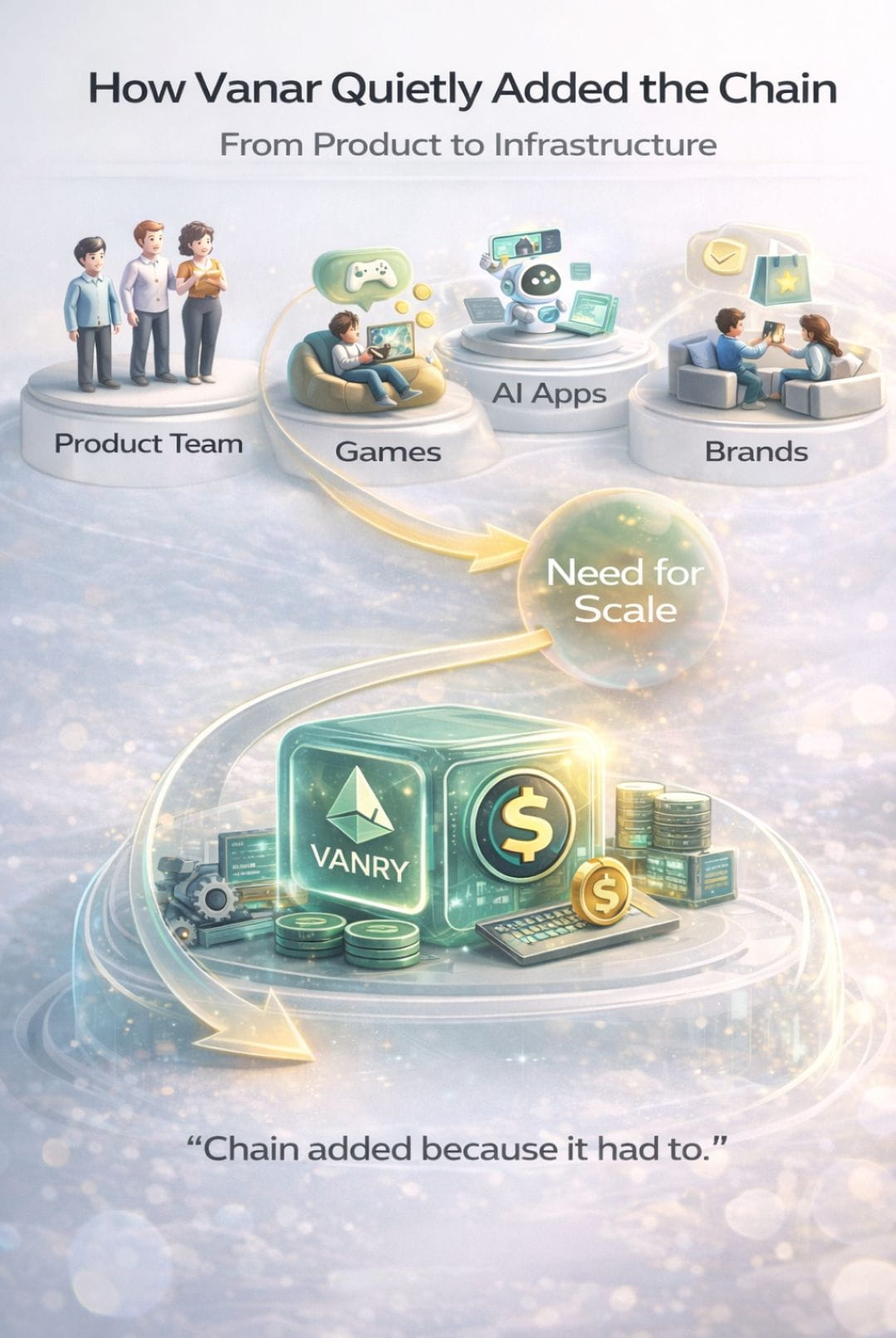
Vanar doesn’t present itself the way most blockchain projects do. It doesn’t lead with grand claims about decentralization, revolutionary consensus, or being “the fastest.” Instead, it feels like a product team that started with a simple problem: how do we build digital experiences that people actually enjoy using every day? The blockchain appears almost as a necessity rather than a selling point, added because certain things—ownership, coordination, persistence—eventually require it.
That mindset changes everything.
Most Layer 1s are designed from the bottom up. First comes the chain, then the token, then the ecosystem, and only later do teams ask how real users might interact with it. Vanar seems to reverse that order. Games, AI-driven tools, entertainment platforms, and brand experiences come first. The chain exists to support those products quietly and reliably, not to demand attention for itself.
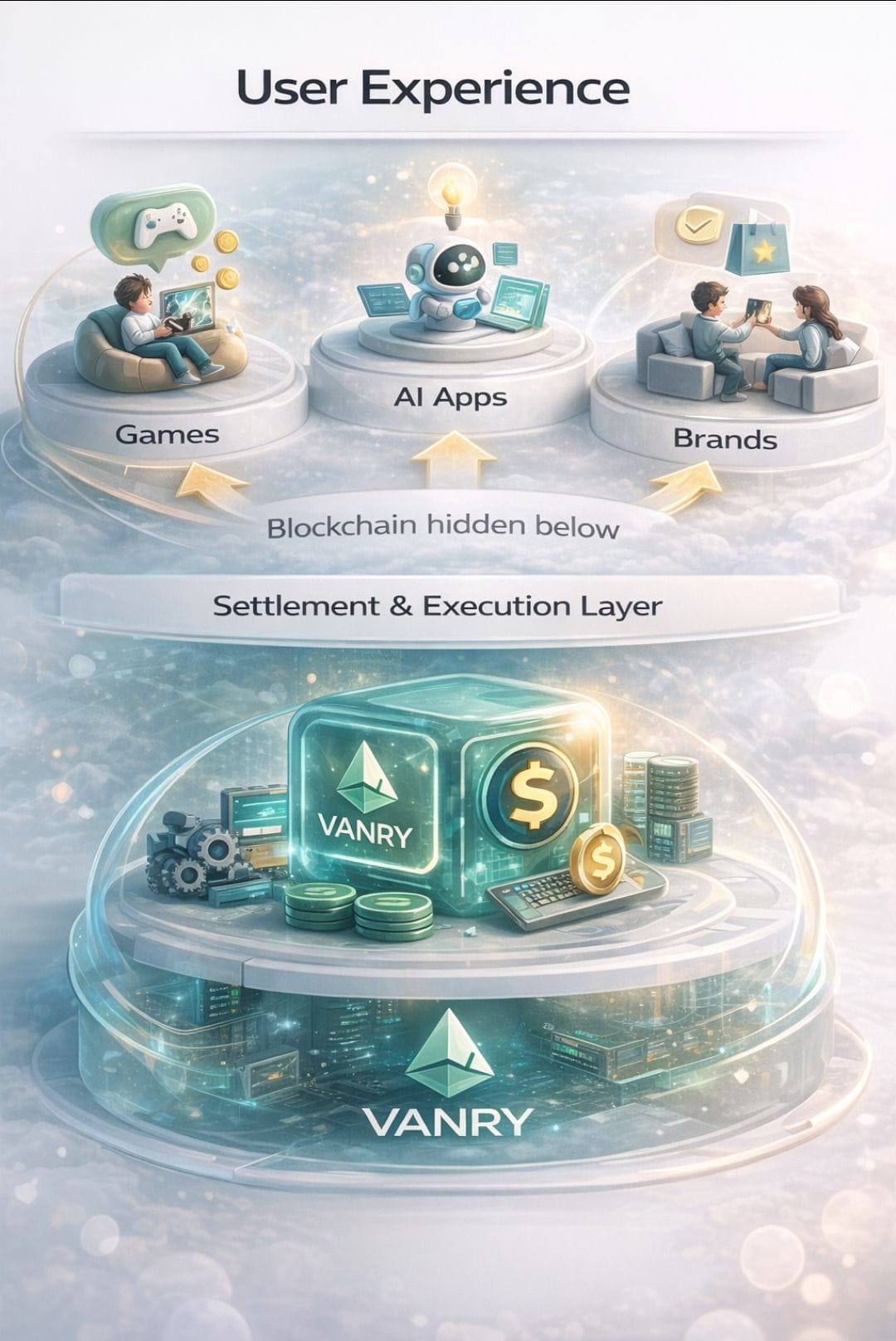
This is why Vanar’s adoption story feels different. It’s not about convincing users that blockchain is exciting. It’s about making sure users don’t have to think about blockchain at all. It should be easy and obvious what will happen when someone plays a game, unlocks digital material, or talks to an AI assistant. Fees shouldn't go up.. Confirmations shouldn’t interrupt flow. Ownership shouldn’t require tutorials. If those things work, the user stays. If they don’t, the user leaves—usually without saying why.
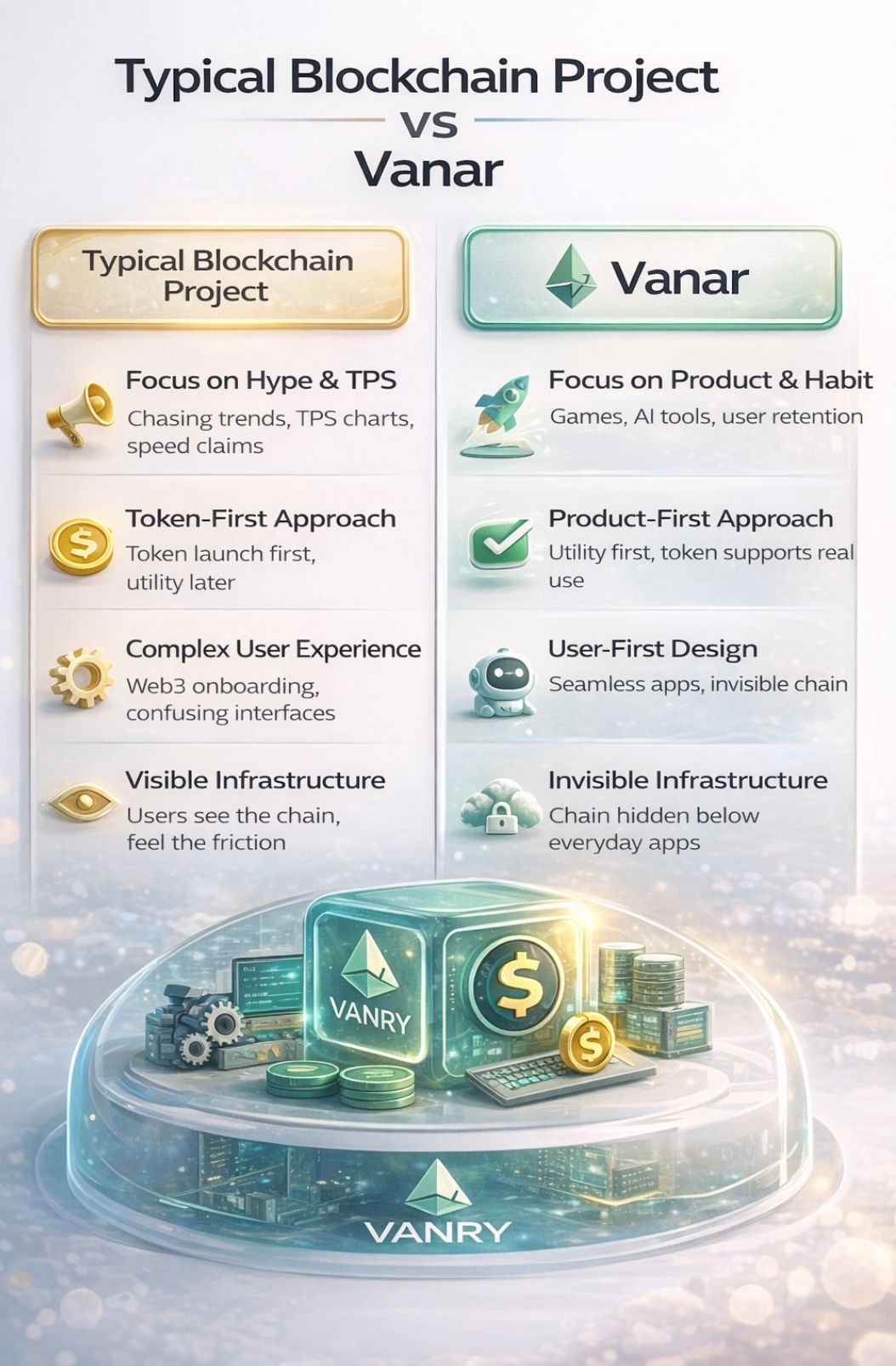
VANRY’s role fits neatly into this philosophy. It’s not positioned as a speculative centerpiece, but as infrastructure fuel. It pays for execution, secures the network through staking, and aligns incentives behind the scenes. If Vanar succeeds, many users will never consciously “use” VANRY. They’ll simply benefit from systems that work, while the token quietly handles settlement, security, and coordination underneath.
That invisibility is risky from a narrative perspective. Hype-driven markets reward loud stories and obvious catalysts. Vanar is betting on something slower and harder: habit. Products people return to. Workflows that feel normal. Interactions that fade into routine. Technology history suggests this is how real adoption happens. The most impactful infrastructure is rarely celebrated—it’s relied upon.
The real question, then, isn’t whether Vanar can scale technically. It’s whether its products become part of everyday behavior. If users keep coming back for games, AI tools, and brand experiences without thinking about the chain at all, VANRY will already be doing its job.
And if that happens, Vanar won’t feel like a blockchain project anymore. It will feel like something much more durable: software people trust enough to forget.
#vanar #Vanar $VANRY @Vanarchain
