Introduction: The Evolution of the Creator Economy
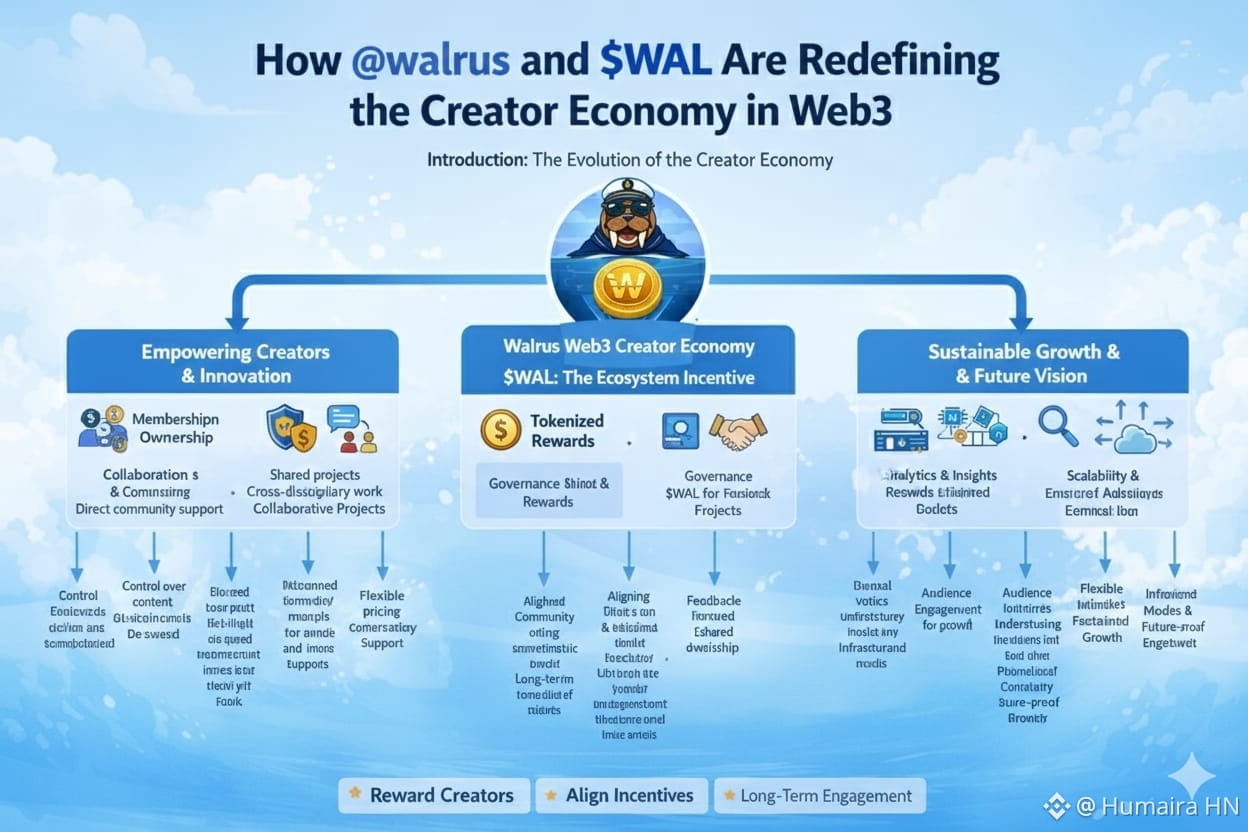
When I first started exploring the Web3 space, I was fascinated by how decentralized technologies could empower creators. Traditional platforms have always imposed constraints, monetization models, content ownership, and audience engagement are often controlled by centralized intermediaries. This limits how creators interact with their communities and monetize their work. In my experience, the creator economy needed a solution that empowered both creators and their supporters, without restricting innovation.
This is where I found @Walrus 🦭/acc . Unlike many platforms that focus solely on token distribution or NFT marketplaces, Walrus is building a full ecosystem for creators. It combines tools for monetization, collaboration, and audience engagement into a single platform. For me, this represents a shift from isolated creative work toward a sustainable, communit driven digital economy.
The $WAL token plays a central role in this ecosystem. It is not just a currency for transactions; it is a mechanism for rewarding creators, collaborators and communities, aligning incentives across the platform. By integrating tokenized rewards directly into the creator workflow, Walrus makes it possible for the economy to grow organically as creators and supporters participate.
Empowering Creators Beyond Traditional Platforms
One of the first things that impressed me about Walrus is how it gives creators control over their work and audience. Unlike conventional social or content platforms, creators are not bound by centralized rules regarding monetization or engagement. They can decide how they want to reward contributors, price their content, and interact with their communities.
I’ve noticed that this type of empowerment changes the way creators approach projects. Instead of focusing solely on exposure or one-time sales, they start thinking about long term engagement and sustainable growth. Communities feel more valued because creators can directly incentivize participation and contribution using $WAL.
In addition, Walrus provides infrastructure that handles many of the technical challenges that usually burden creators. Payment distribution, analytics, collaboration tools, and audience management are all integrated into the platform. From my perspective, this allows creators to focus on their core craft hether that’s art, music, games, or other forms of digital content while the platform supports their growth.
Collaborative Projects: Building Together
One of the most innovative aspects of Walrus is its focus on collaborative projects. Traditionally, digital creation has been a solitary process, or collaboration has been managed through external tools that are often inefficient. Walrus changes this by providing a system where multiple creators can work on shared projects, track contributions, and receive fair rewards automatically.
I’ve seen firsthand how this transforms the dynamics of creative teams. Contributors feel recognized and motivated because the platform ensures transparency and fairness. The blockchain-based structure removes ambiguity about who contributed what and ensures that rewards align with actual work.
Collaborative projects also foster innovation. Artists, developers, writers, and designers can combine their skills to create cross disciplinary works that would be difficult to manage on traditional platforms. By tying WAL to project success, the platform incentivizes creators to support each other rather than compete, creating a thriving, cooperative ecosystem.
Monetization Beyond Simple Sales
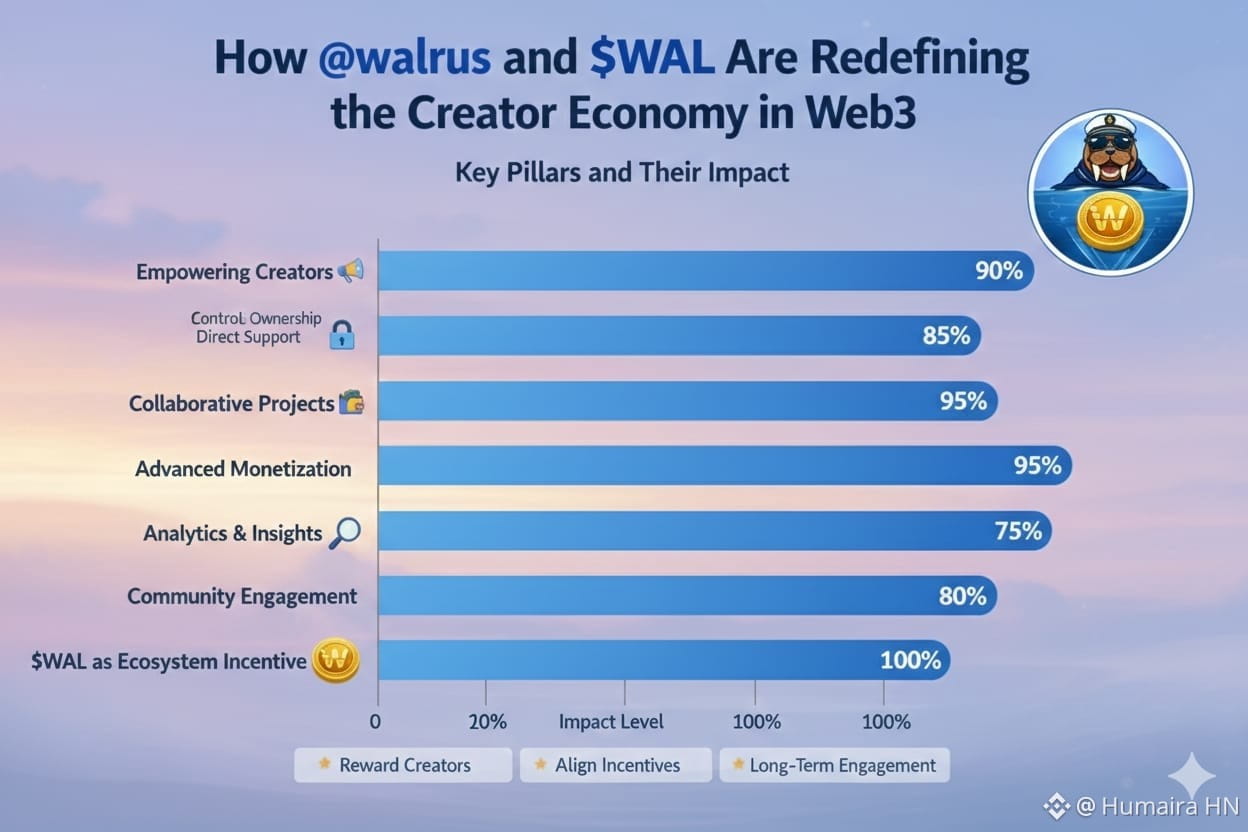
Another feature that sets Walrus apart is its advanced monetization tools. Instead of relying solely on one-time sales or tips, creators can design tokenized memberships, subscriptions, and reward programs that engage their communities in meaningful ways.
From my perspective, this flexibility is essential for sustainable growth. Creators can tailor revenue models to their audience’s preferences, providing recurring value in exchange for participation. Fans can support projects while benefiting from rewards or access to exclusive content, creating a win-win ecosystem.
Additionally, the integration of $WAL ensures transparency and security in all transactions. Creators and communities can track contributions and rewards in real time, making revenue distribution fair and accountable. This level of transparency fosters trust and encourages long-term engagement, which is crucial for building robust digital economies.
Analytics and Audience Insights
Walrus doesn’t just focus on monetization; it also provides analytics tools that help creators understand their audience. Metrics such as engagement levels, contribution patterns, and content reach allow creators to make informed decisions about project direction and community management.
I’ve found that these insights are invaluable. Many independent creators struggle to grow because they lack data on how their audience interacts with their work. Walrus bridges this gap by providing actionable insights without compromising user privacy.
This combination of analytics, monetization, and tokenized incentives makes Walrus a full-stack platform for the modern creator. In my experience, ecosystems that provide creators with tools for growth, engagement, and reward distribution tend to thrive, while platforms that offer only publishing functionality often fail to sustain active participation.
Fostering Community Engagement
Community engagement is one of the most critical aspects of Web3, and Walrus excels in this area. The platform allows creators to involve their audiences directly in decision-making, project direction, and governance, creating a participatory environment.
I’ve observed that communities engaged in governance and feedback loops are more loyal and active. They feel ownership over the content and projects they support. By using $WAL as a reward mechanism, the platform encourages participation and reinforces positive behavior, strengthening the ecosystem over time.
This approach also allows creators to experiment with innovative community models, such as voting on project themes, collaborative storytelling, or co-creation contests. In my view, this turns the creator economy into a mutually beneficial network, where success is shared among both creators and participants.


Scalability and Flexibility
One of the challenges in the creator economy is scaling projects efficiently. Walrus addresses this by providing flexible infrastructure that grows with the community. Projects can start small with a few contributors and scale to involve large, decentralized teams without performance or management issues.
I’ve noticed that scalability is often a barrier for creators on traditional platforms. As projects grow, tools often become cumbersome or insufficient. Walrus anticipates this need by designing infrastructure that adapts to both small and large-scale operations.
The flexibility also extends to monetization, collaboration, and engagement. Whether a creator wants to launch a subscription program, a collaborative project, or a community-driven campaign, Walrus supports it. From my perspective, this makes WAL not just a token, but a foundation for sustainable digital ecosystems.
WAL as an Ecosystem Incentive
The WAL token is central to the platform’s vision. It’s not only a medium of exchange but also a tool for governance, reward distribution, and ecosystem growth. By participating in projects, engaging with content, or contributing to development, users and creators alike benefit from a transparent incentive system.
I’ve observed that tokens aligned with network activity perform better in the long term than purely speculative assets. WAL’s utility is tied directly to platform participation, creating a healthy feedback loop that encourages sustainable growth.
For me, this alignment of incentives is one of Walrus’ strongest features. It ensures that creators, collaborators, and community members all have a stake in the ecosystem’s success, creating shared responsibility and long term engagement.
The Long Term Vision
Looking ahead, I see Walrus shaping the future of the creator economy in Web3. By integrating monetization, collaboration, analytics, and tokenized incentives, the platform provides a complete ecosystem for digital creators.
I believe this approach will set a new standard for how Web3 projects support creativity. Instead of relying on centralized platforms that limit flexibility, creators will have tools to manage communities, revenue, and projects in a transparent and fair environment.
For me, Walrus represents a paradigm shift. It’s not just a platform or a token, it’s a framework for sustainable, community-driven digital creation. As the ecosystem grows, I expect WAL to play a pivotal role in empowering creators worldwide.
Conclusion
After exploring Walrus, I am convinced that the platform is more than just a tool it’s a full-stack solution for the modern creator economy. By combining advanced monetization tools, collaboration infrastructure, analytics, and tokenized incentives, it empowers creators to grow sustainably while engaging their communities.
WAL ties the ecosystem together, aligning incentives and enabling transparent, fair, and efficient operations. In my experience, platforms that integrate these elements tend to foster innovation, loyalty, and long term sustainability, making Walrus a standout in the Web3 creator landscape.
For anyone building, collecting, or participating in Web3 creative projects, Walrus is not just a platform, it’s a new paradigm for digital creation and community engagement.