

Picture yourself curled up by a window on a rainy afternoon, watching the droplets race down the glass, each one curving and merging with others to form intricate patterns. This is much like how AI and blockchain, two separate domains, are now coming together, finding ways to connect and evolve into something new. Vanar Chain is at the forefront of this intersection, playing a pioneering role in blending these technologies in a way that reimagines what both can achieve. Rather than merely using blockchain as a ledger to record transactions, Vanar Chain seeks to transform it into a dynamic system, one where intelligent, adaptive processes can unfold and evolve.
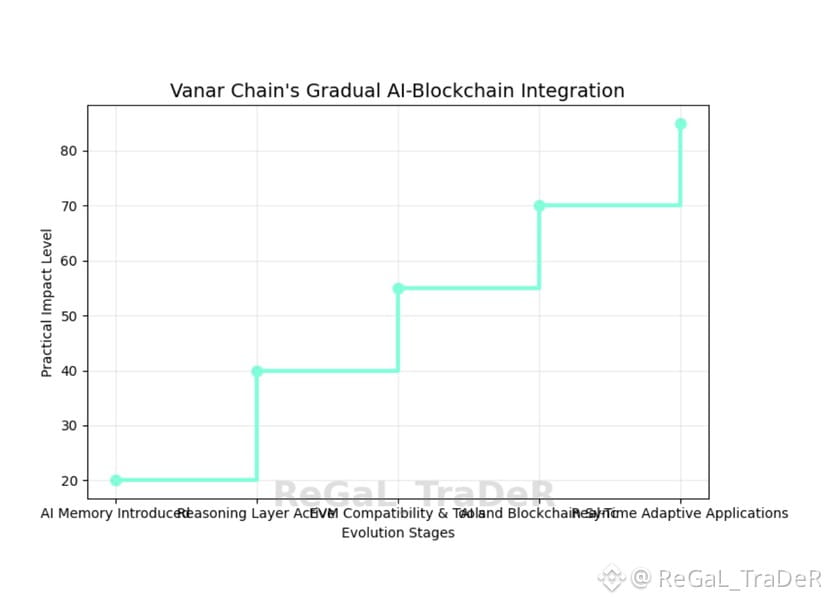
Historically, blockchains have excelled at securing data in a tamper-proof, decentralized way. They’re like an ironclad notebook where everything is written down and cannot be altered—perfect for securely recording transactions. But when you try to integrate AI into this framework, the process becomes far more complex. AI thrives on data—it needs context, continuity, and the ability to learn and adapt from past interactions. However, traditional blockchain networks often store data in isolated pockets, requiring constant fetching from external sources. This not only slows down the process but also increases costs. Furthermore, AI models need to maintain a memory of past events to make informed decisions, yet traditional systems often “forget” crucial details as soon as a transaction is completed. It’s like trying to bake a cake with ingredients scattered across various rooms, each ingredient requiring a trip back to fetch it before the next step can be completed.
Vanar Chain steps into this complex space with a unique and thoughtful design. At its core is Neutron, a layer that compresses raw data into manageable “Seeds”—tiny, self-contained bundles of knowledge that the AI can query efficiently without needing to pull everything off-chain. Imagine how your brain works: rather than remembering every single detail of every conversation, your mind stores key moments, ready to recall them when necessary. This compression makes data processing on Vanar Chain faster and more cost-effective. It eliminates the need for constant data retrieval, allowing AI systems to access essential information when needed, much like an efficient memory bank.
Then there’s Kayon, which takes on the reasoning aspect of AI. Kayon sifts through on-chain data, helping to predict outcomes and automate decisions based on the patterns it sees. This is where AI’s “thought” processes are harnessed to interact with the blockchain, creating a feedback loop that empowers smart contracts and decentralized applications to evolve intelligently. These systems don’t just follow set rules—they learn and adapt based on the data they process, offering an edge that traditional blockchains can’t provide.
The beauty of Vanar’s architecture lies in its modular Layer 1 design, which remains compatible with Ethereum’s tools. This means that developers don’t have to start from scratch when integrating AI functionality into their projects. Instead, they can leverage existing tools and infrastructure, making the transition to more intelligent blockchain systems smoother and more approachable. By keeping transaction costs low and ensuring fast processing speeds, Vanar is able to strike that delicate balance where AI workloads don’t weigh down the network. This, in turn, helps to ensure scalability—one of the most significant challenges in the blockchain space.
But, like any emerging technology, Vanar Chain faces its fair share of challenges and risks. As the system grows and scales, there may be technical glitches that arise, such as AI layers encountering limitations in the vastness of the data they’re processing. Furthermore, regulatory uncertainty in the crypto world poses a significant challenge. As AI becomes more deeply entwined with blockchain technology, it will inevitably come under greater scrutiny. Governments and regulatory bodies are already tightening their grip on AI and blockchain, and future regulations may present unforeseen hurdles that could complicate the adoption of Vanar Chain.
The road to mass adoption of any new blockchain technology is never smooth. Developers who are already comfortable with well-established chains might be hesitant to make the switch to Vanar, especially if they don’t fully understand the benefits of this new system. There’s always the risk of sticking with what’s familiar, even if it’s not as efficient. Security is another significant concern. While blockchain technology is inherently secure, the addition of AI layers introduces new vulnerabilities. AI systems, if not properly tested or secured, could open the door to potential exploits that are not yet fully understood. However, these risks, while real, are not deal-breakers. They are simply part of the natural process of evolving technology.
In practical terms, Vanar Chain opens up a world of possibilities. Take, for example, finance apps that don’t rely on static rules to execute transactions. In Vanar’s system, payments could become “agentic”—that is, they could adapt to real-time data. Imagine a situation where a payment is paused if something suspicious is detected, like a fraud alert or a sudden change in spending patterns. Similarly, in entertainment, Vanar’s tokenized assets could evolve with user interaction, creating dynamic experiences that learn and grow based on feedback from the community. Developers will also find the tools they need to integrate AI into their applications seamlessly. SDKs in familiar languages like JavaScript or Python make it easy for developers to add intelligent features to their apps without needing to become AI experts themselves. The barrier to entry is lower, meaning that more developers can contribute to this emerging ecosystem.
Behind this ambitious project is a team with deep roots in the tech and payment industries. Saiprasad Raut, for example, plays a crucial role in guiding the infrastructure side of things. His expertise ensures that the technical foundation of Vanar Chain remains solid as the system evolves. Additionally, the community around Vanar is engaged and excited, actively discussing ways to build persistent AI agents that don’t lose their context over time. It’s a reminder that, at its core, technology is about people. Vanar’s success will depend not just on the technology itself but also on the people who support and build upon it.
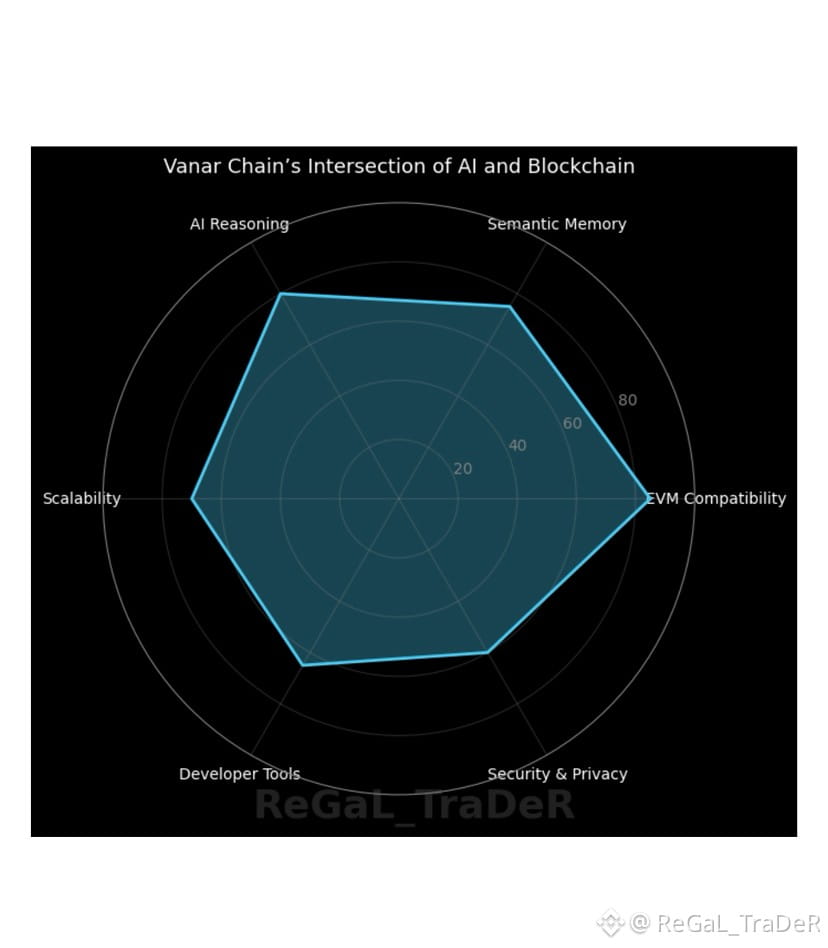
As the lines between AI and blockchain continue to blur, Vanar Chain offers a glimpse of the future—systems that don’t just execute commands but think and adapt in a way that mirrors human learning and decision-making. It’s about creating smarter, more responsive systems that are grounded in the transparency and security that blockchain provides. While the road ahead is filled with challenges, Vanar is taking quiet, deliberate steps toward shaping a future where AI and blockchain work hand-in-hand. It’s not a loud, dramatic revolution; it’s a steady, thoughtful evolution, one that could change the way we interact with both technologies.
In the end, the journey is not about flashy promises or immediate results. Instead, it’s about small, incremental changes that add up over time—like those raindrops merging into a stream, creating a force that, though subtle, has the power to reshape the landscape. And in that quiet progress, Vanar Chain is positioning itself as a leader in the next wave of technological innovation, one where AI and blockchain seamlessly work together to unlock new possibilities for a more adaptive, intelligent future.