Macro data surprises play a powerful role in driving 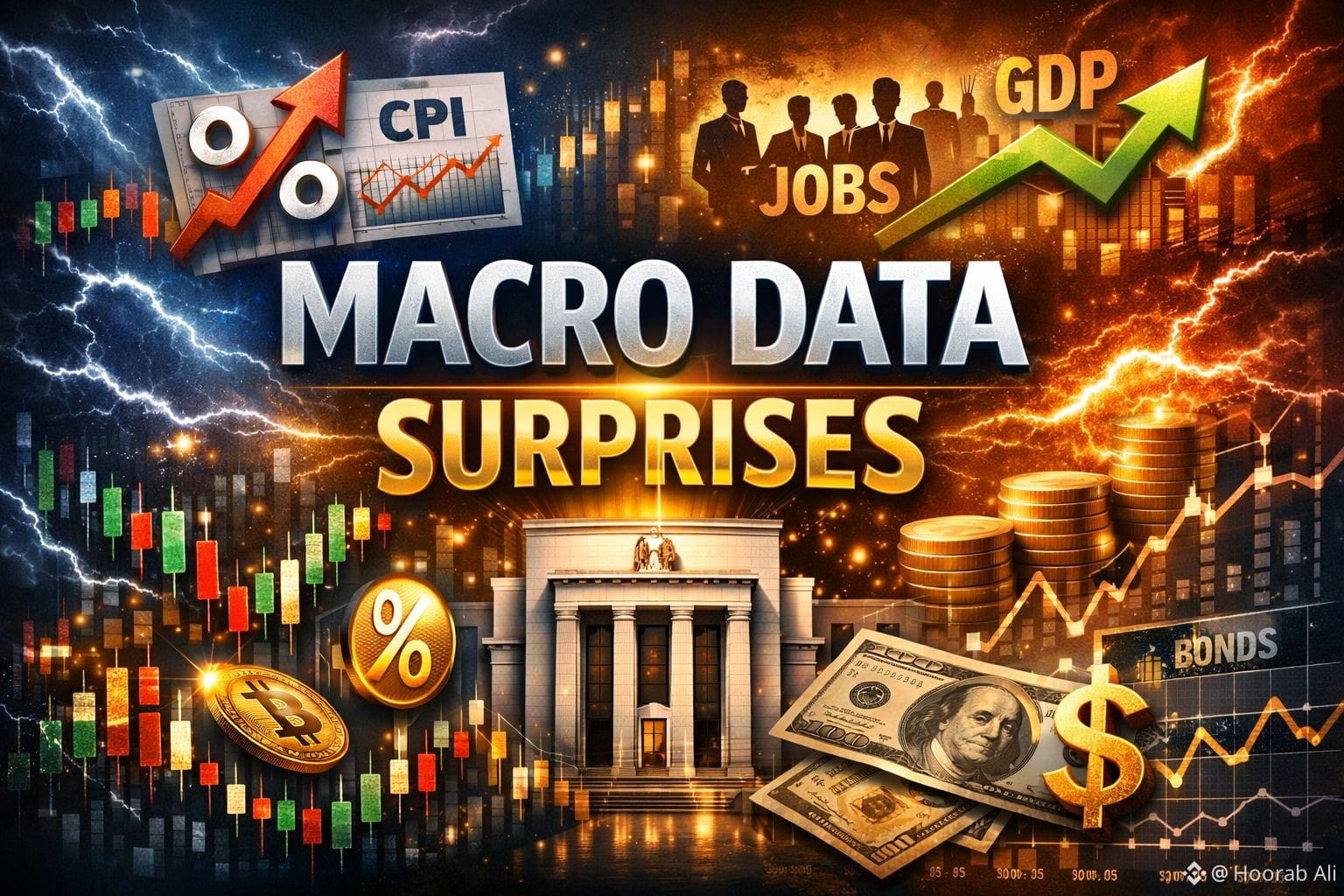 financial markets by influencing investor expectations, sentiment, and asset allocation decisions. A macro data surprise occurs when important economic indicators such as inflation, employment figures, GDP growth, retail sales, or central bank guidance differ from market forecasts. Stronger-than-expected data often signals economic resilience, prompting investors to price in tighter monetary policy or delayed interest-rate cuts, which can strengthen the US dollar, push bond yields higher, and create short-term pressure on gold and other non-yielding assets. On the other hand, weaker-than-expected data may raise fears of an economic slowdown or recession, increasing demand for safe-haven assets like gold while weighing on equities and risk-sensitive currencies. Inflation data remains especially influential, as unexpected increases can revive concerns about prolonged high interest rates, while softer readings may fuel optimism around policy easing. Labor market surprises, including sudden changes in job creation or wage growth, can also rapidly shift market sentiment. In today’s highly data-driven environment, traders and investors closely monitor economic releases and react quickly, often leading to sharp volatility, temporary corrections, and changes in market trends. As a result, macro data surprises have become one of the most important short-term drivers of global financial markets.

Artikel
MACRO DATA SURPRISES
Haftungsausschluss: Die hier bereitgestellten Informationen enthalten Meinungen Dritter und/oder gesponserte Inhalte und stellen keine Finanzberatung dar. Siehe AGB.
0
1
64
Bleib immer am Ball mit den neuesten Nachrichten aus der Kryptowelt
⚡️ Beteilige dich an aktuellen Diskussionen rund um Kryptothemen
💬 Interagiere mit deinen bevorzugten Content-Erstellern
👍 Entdecke für dich interessante Inhalte
E-Mail-Adresse/Telefonnummer