
I’ve been using stablecoins for years. Not for trading, not for farming, just for moving value. Paying someone, shifting funds between platforms, settling things that don’t need drama. And yet, every time I sent USDT, I caught myself watching the screen a little too closely.
The problem wasn’t fear of loss. It was uncertainty.
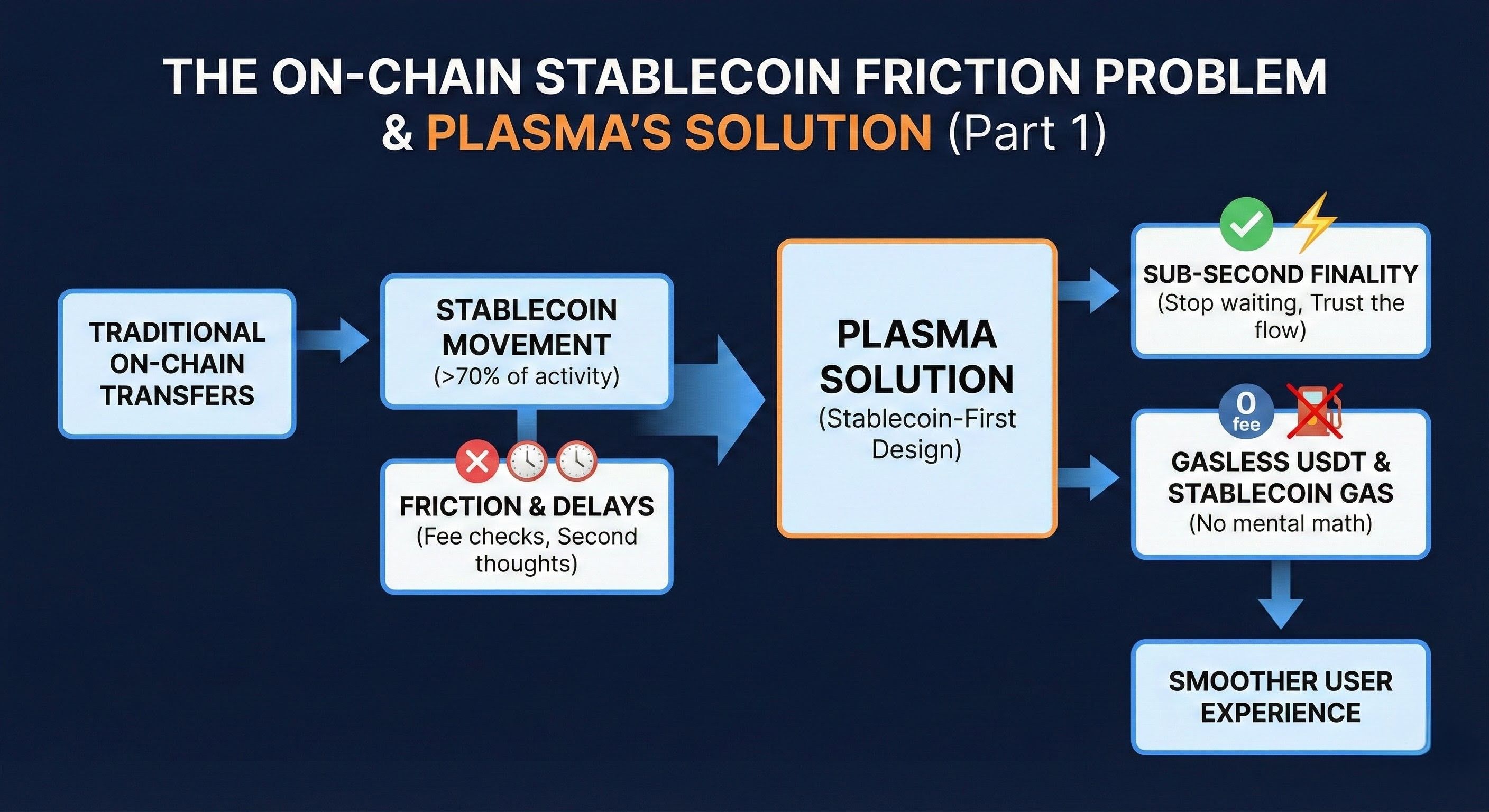
Gas fees changing mid-transaction. Confirmations that took just long enough to make me wonder if I should have waited. Messages like “pending” that don’t mean anything but still demand your attention. Stablecoins are supposed to reduce stress, but the process of moving them often does the opposite.
A data point I came across recently made this feel more serious: stablecoins now represent over 60% of total on-chain transaction volume. That means most real crypto activity isn’t speculation, it’s people and institutions just trying to move stable value. And yet the infrastructure still feels like it was designed with other priorities in mind.
That’s where Plasma entered my radar.
My first interaction with Plasma wasn’t a test or an experiment. I was simply sending USDT, expecting the usual routine. What stood out immediately was how little I had to do. No gas calculations. No second attempt. The transaction finalized so quickly that my instinct was to refresh the page just to be sure.
That calm was new.
Plasma being a Layer 1 tailored specifically for stablecoin settlement explains a lot. Sub-second finality through PlasmaBFT changes the experience of waiting or rather, removes it. Gasless USDT transfers and stablecoin-first gas take away the small decisions users are forced to make every time elsewhere. You stop managing the transaction and start trusting it.
The solution here isn’t complexity. It’s focus.
What made me look deeper was Plasma’s Bitcoin-anchored security model. For payments and finance, neutrality and censorship resistance aren’t buzzwords, they’re requirements. Anchoring to Bitcoin signals long-term thinking, especially for institutions and users in high-adoption markets where stablecoins are already part of daily life.
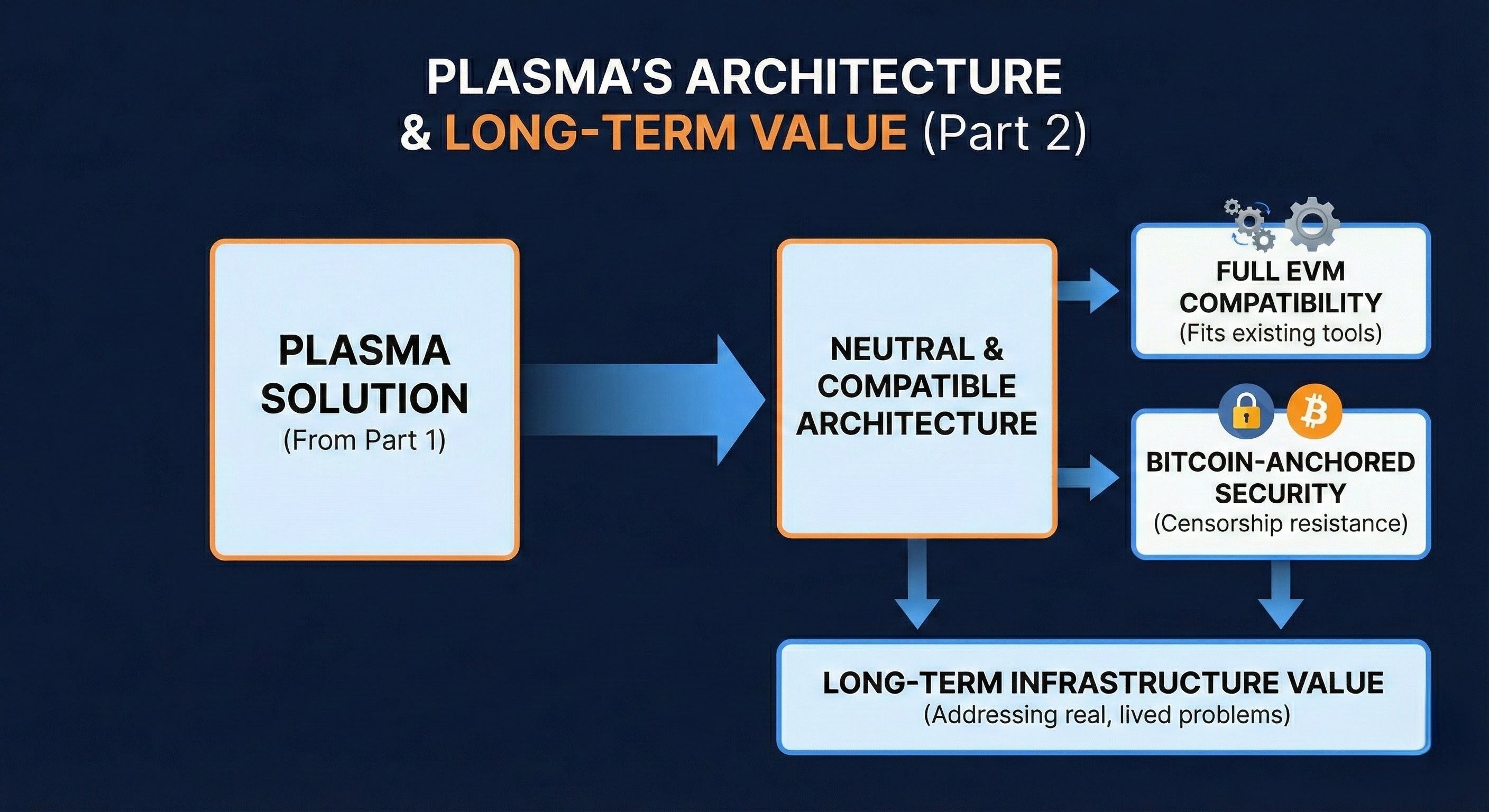
I’m not claiming Plasma solves every problem in crypto. But it clearly addresses one we’ve all normalized: stablecoins shouldn’t feel fragile to move. They should feel predictable, boring, and fast.
That’s why I’m paying closer attention to @Plasma and $XPL now. When a network quietly removes stress instead of adding features, you notice it through use not announcements.
And once you feel that difference, it’s hard to go back.