
I didn’t start paying attention to Vanar Chain because of a chart, an influencer, or a viral thread.
It happened slowly.
I noticed @Vanarchain being mentioned in places where blockchains usually aren’t.
Gaming discussions.
Brand experiments.
Conversations about digital experiences that weren’t framed as “crypto products.”
That alone made me curious.
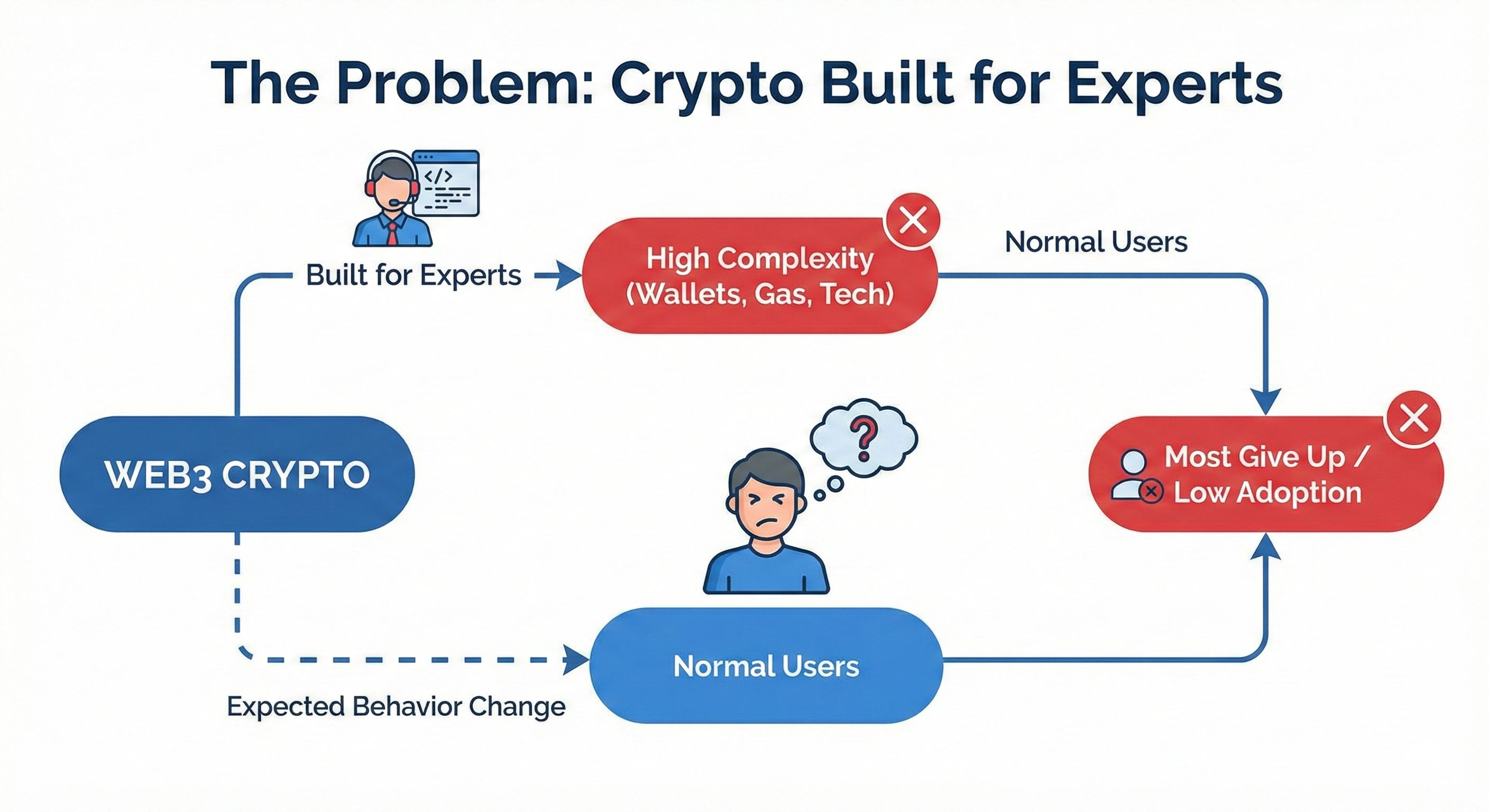
One really put things into perspective for me: more than 3 billion people globally interact with games and digital entertainment, yet only a tiny fraction actively use Web3 products today. That’s not because people hate technology. It’s because most blockchains don’t feel like they were built for normal users.
That’s the core problem I see in Web3.
We keep building for insiders.
Wallets are confusing.
Interfaces feel intimidating.
And adoption is treated like something users must earn.
Vanar feels like it’s questioning that assumption.
What stood out to me about Vanar being an L1 is not performance claims or technical flexing, but intent. The team’s background in games, entertainment, and brand ecosystems shows in the way they approach adoption. They don’t seem interested in forcing blockchain into people’s lives. They’re embedding it where people already are.
When I explored Virtua Metaverse, it didn’t feel like a demo or a concept. It felt like a place designed to be returned to. The same goes for the VGN games network — it didn’t feel like “on-chain innovation,” it felt like gaming first, blockchain second.
And that’s rare.
The solution Vanar seems to be pursuing is simple, but hard to execute:
make blockchain invisible until it matters.
Instead of asking users to understand Web3, Vanar adapts Web3 to user behavior. Gaming, AI, eco initiatives, brand integrations — these are not niche experiments. These are mainstream verticals with existing audiences.
The $VANRY token fits into this quietly. It doesn’t feel like the product itself, but the connective layer that powers everything underneath. Less speculation-first, more ecosystem-first.
I’m not saying Vanar is perfect.
I’m not saying it’s guaranteed to dominate.
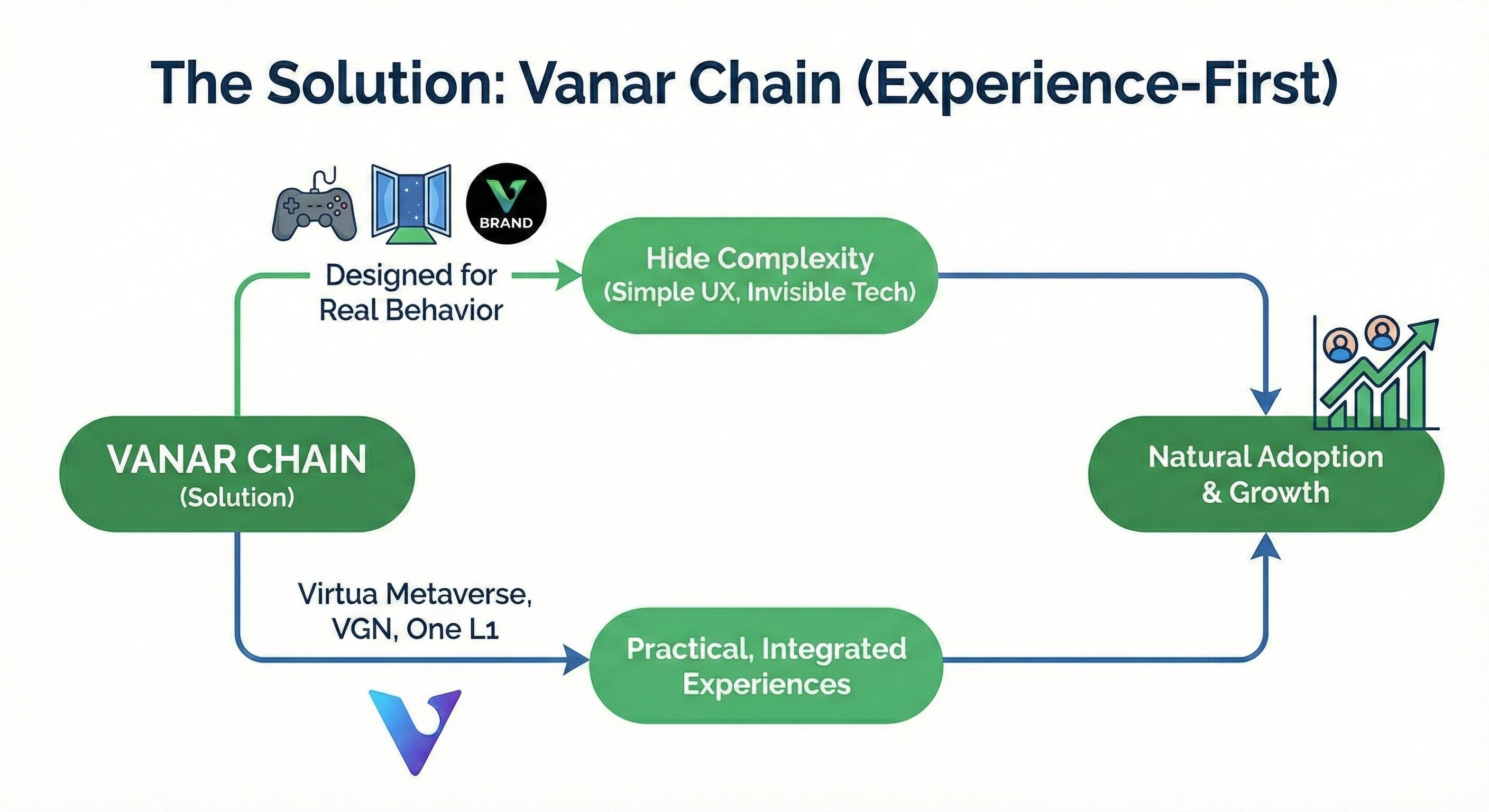
But from my personal experience, it feels grounded, patient, and realistic about how adoption actually happens. In a space that often mistakes complexity for progress, that mindset stands out.
Watching #Vanar right now feels like watching an L1 that’s building for people who don’t even know they’re becoming Web3 users yet — and honestly, that’s probably the smartest way forward.