
Vanar: The L1 That Wins by Disappearing
Vanar is one of those projects that becomes more interesting the longer you stare at it — not because it’s doing something outrageously new, but because it’s doing something that most of crypto has quietly avoided for years:
It’s trying to build an L1 for people who will never, ever call it an L1.
And that sounds like a small framing shift, almost like branding. But it isn’t. It’s actually a philosophical choice — and in this market, philosophy becomes architecture.
Because here’s the thing nobody likes saying out loud:
The average human being does not want Web3.
They don’t want “ownership.”
They don’t want “decentralization.”
They don’t want a manifesto.
They want something that works.
Fast. Cheap. Predictable. Invisible.
That’s it.
And it’s funny how often crypto people pretend they understand this, then immediately build the opposite. They build systems where the user is expected to become a part-time blockchain operator.
Learn seed phrases. Learn bridging. Learn gas. Learn networks. Learn why a transaction failed. Learn why it succeeded but still didn’t show up. Learn why the NFT you bought isn’t visible in the app you bought it for. Learn why your wallet is suddenly connected to something you don’t recognize. Learn why the UI has twelve buttons that all look like they do the same thing but somehow don’t.
And then, after building that mess, they go on Twitter and say “mass adoption is coming.”
No. It’s not.
Not like that.
Vanar feels like it’s built by people who have internalized that truth and decided to stop trying to “convert” users into crypto natives.
That’s the core idea that makes it stand out.
Not TPS claims.
Not consensus jargon.
Not the usual “we’re the future” theater.
It’s more like a quiet acceptance that Web3 doesn’t win by being loud.
It wins by being underneath everything.
And I know that’s not the sexy version of the story.
The sexy story is the chain that announces 1 million TPS and pretends it’s the only thing that matters. The sexy story is the ecosystem map with 400 logos and the implication that you’re already too late. The sexy story is the “next Solana” narrative.
But the truth is, those stories are mostly for traders — not users.
Users don’t wake up and decide they want a new blockchain.
They wake up and decide they want a new game. Or a new social platform. Or a better creator experience. Or a digital collectible that doesn’t feel like a scam. Or a fan economy that doesn’t trap them inside one app forever.
They wake up and decide they want entertainment. Identity. Status. Fun. Belonging.
And then, maybe — only maybe — blockchain can sneak in through the side door.
That’s why Vanar’s positioning in entertainment, gaming, creators, and mainstream digital experiences isn’t just a narrative angle.
It’s the only angle that actually makes sense if you’re serious about scale.
Because distribution isn’t a footnote.
Distribution is the whole war.
Crypto loves pretending tech wins.
It doesn’t. Not alone.
In the real world, the best product doesn’t automatically win. The product that reaches people wins. The product that feels normal wins. The product that doesn’t make you feel stupid wins. The product that doesn’t punish you for being new wins.
So when Vanar aligns itself with pipelines like Virtua Metaverse and VGN Games Network, I don’t read that as “partnership fluff” the way I’d read it in some random L1 deck.
I read it as go-to-market strategy.
And crypto desperately needs more of that — and less of the usual “we’re building developer tooling and hoping something happens.”
Because something doesn’t just happen.
People forget that.
They act like if you launch an L1, apps will magically appear, users will magically arrive, liquidity will magically stick, and suddenly you’ll be a “top chain.”
That’s the fantasy. That’s the loop crypto has been stuck in for years:
Build chain → launch token → attract mercenary liquidity → call it adoption → repeat.
It’s not adoption.
It’s tourism.
Vanar, at least in the way it’s trying to position itself, is making a bet against that tourism model. It’s basically saying:
Stop building for people who already understand the game.
Build for people who don’t care about the game at all.
Which sounds like common sense.
But in crypto, common sense is rare.
And it’s not just about surface-level UX either. It’s deeper than that. It’s about what kind of transactions you’re designing for.
Because consumer activity isn’t like DeFi activity.
DeFi users will tolerate friction if they believe the upside is worth it. They’ll sit through confirmations, they’ll bridge assets, they’ll pay weird fees, they’ll deal with clunky interfaces — because in their minds, they’re “doing finance.”
They’re already mentally prepared for complexity.
But gaming users? Entertainment users? Fans? People buying a skin or a collectible or a ticket or a membership badge?
They don’t expect complexity.
They expect delight.
And if you break that expectation even once, you lose them.
They don’t write a thread about it.
They don’t “give feedback.”
They just disappear.
They uninstall. They move on. They forget you exist.
That’s why speed and fees aren’t just technical features in consumer chains.
They’re survival requirements.
If your chain can’t do fast execution with low predictable cost, then it doesn’t matter how decentralized it is or how elegant your consensus mechanism looks on paper.
You won’t win the consumer layer.
Because consumer behavior is ruthless.
It’s not ideological.
It’s not loyal.
It’s impulsive.
It’s convenience-driven.
It’s emotional.
And this is where I think a lot of L1s misunderstand the entire point of the next wave.
They think “mainstream adoption” means more users doing what crypto users already do.
No.
Mainstream adoption means different users doing different things — and never calling it crypto.
It means the chain is not the product.
The chain is the plumbing.
Vanar seems to get that.
It’s building around high-frequency activity. Microtransactions. Digital assets that need to move smoothly inside experiences.
That alone tells you the target user isn’t a DeFi yield farmer.
It’s a gamer.
A collector.
A fan.
A creator.
And once you accept that, the whole “L1 wars” conversation starts to look childish — like watching people argue about who has the best engine when the real competition is who can build the car people actually want to drive.
The average person doesn’t care what engine is inside.
They care whether it starts when they turn the key.
That’s the vibe here.
Vanar is trying to build the chain that starts every time.
And then there’s the brand layer, which is even more important than crypto people admit.
Brands are not crypto natives.
Brands don’t want to explain wallets.
They don’t want to deal with customer support tickets about gas fees.
They don’t want to be exposed to volatility narratives that make their marketing team nervous.
They don’t want to accidentally step into regulatory landmines.
They don’t want the risk of looking like they partnered with something shady.
They want predictability.
They want a clean story.
They want an experience where the user doesn’t feel like they’re stepping into a casino.
And ESG, for better or worse, is part of that story now.
In crypto circles, people roll their eyes at it, because crypto culture tends to treat anything “corporate” as fake.
But corporate filters are real.
Boardrooms don’t make decisions based on vibes.
They make decisions based on risk frameworks.
So when Vanar emphasizes a carbon-friendly footprint, I don’t see it as a cute add-on.
I see it as a strategic requirement for the kind of partnerships they’re aiming for.
You can hate ESG all you want — but if you want to onboard brands, you don’t get to ignore it.
Brands don’t care what crypto Twitter thinks.
They care what their stakeholders think.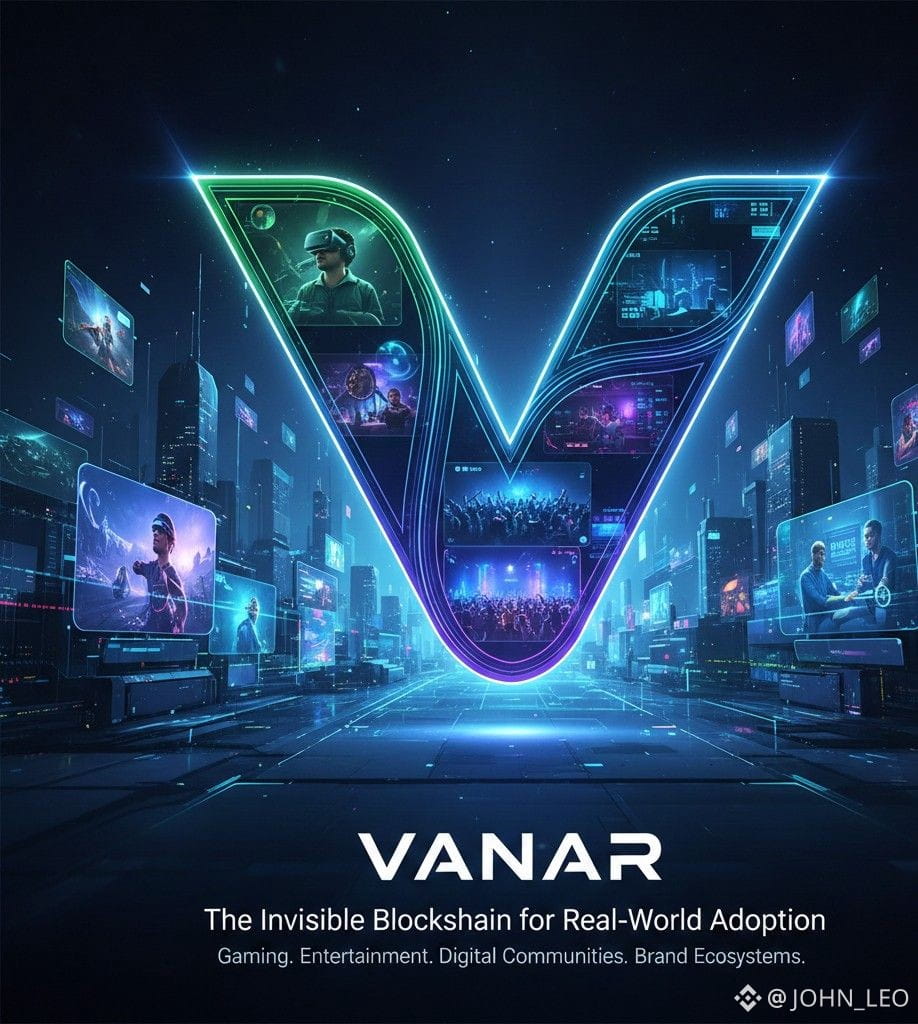
And this is where Vanar’s entire approach starts to feel less like “another L1 trying to get attention” and more like a quiet attempt to build consumer-grade infrastructure that can survive outside the crypto bubble.
Because the crypto bubble is forgiving in a way the real world isn’t.
Crypto users tolerate brokenness.
They tolerate chaos.
They tolerate beta experiences forever.
They tolerate complexity as long as there’s upside.
Mainstream users do not.
They demand the app works. Every time.
They demand it feels smooth.
They demand the cost is predictable.
They demand onboarding is simple.
They demand the experience doesn’t scare them.
And when Vanar talks about the “next 3 billion users,” that isn’t just a hype slogan.
That’s a brutal requirement list.
Because those users are not coming with patience.
They are not coming with curiosity.
They are not coming with respect for the technology.
They are coming with expectations.
Web2 expectations.
And Web2 expectations are unforgiving.
That’s why the invisible blockchain thesis matters so much.
If you want the next wave, blockchain can’t be a lecture.
It has to be a feature.
It has to be the backend.
It has to disappear.
Which leads naturally into VANRY — because if the chain is trying to disappear, then the token has to be designed differently too.
This is where a lot of projects still operate like it’s 2021. They think the token can just exist as an abstract symbol of the chain.
A ticker.
A narrative.
A speculation vehicle.
But the market has changed. The audience has changed. Even the traders have changed.
People are less patient now.
More cynical.
More ruthless.
A token has to have purpose that can survive outside the speculative cycle.
It has to have actual network gravity.
Something that ties it to usage in a way that isn’t forced.
Because the worst token designs feel forced — like someone stapled a token onto a product because they had to, not because it belongs there.
Users can smell that.
They might not articulate it, but they feel it.
If Vanar is really going after consumer ecosystems — gaming, entertainment, creator economies — then VANRY has to function inside those ecosystems in a way that makes sense for those users.
And those users don’t care about APR charts.
They don’t care about staking yields.
They care about rewards that feel meaningful.
They care about progression.
They care about earning something that has value inside the experience.
They care about being able to use it, trade it, show it off, or convert it without friction.
Gamers understand economies instinctively — but they hate feeling exploited.
That’s the paradox.
They’ll grind for hours for a skin, but they’ll quit instantly if they feel like the system is designed to milk them.
They’ll spend money on cosmetics, but they’ll revolt if the monetization feels predatory.
So VANRY can’t just be a DeFi-style token dropped into a gaming context.
It has to be part of an economy that feels fair.
Functional. Natural.
Creators are similar.
Creators don’t want complicated tokenomics.
They want monetization that works.
They want predictable payouts.
They want ownership that doesn’t require their audience to become crypto experts.
They want frictionless commerce.
They want fans to be able to participate without fear.
And brands?
Brands want the whole thing to feel clean.
Stable.
Not like gambling.
So the token’s role becomes more serious.
Less speculation — more infrastructure.
Network fuel. Transaction medium. Rewards mechanism. Potential governance.
If that’s done correctly, something interesting happens.
The token stops being “a token people trade” and starts being an economic bloodstream.
Not just liquidity — throughput.
Not just narrative — usage.
And usage is what most L1s don’t have.
They have activity, sure — but it’s often circular.
People moving money around to make more money.
Not wrong, but limited.
It doesn’t create cultural gravity.
It doesn’t create a reason for a normal person to care.
Consumer throughput is different.
It’s messy. Emotional. Social. Viral.
It scales without everyone being a financial engineer.
That’s the prize.
And that’s why Vanar’s “boring blockchain” approach might actually be the most aggressive strategy in the room.
Because boring, in this context, means reliable.
It means invisible.
It means the chain doesn’t demand attention.
It earns trust.
And trust is the only real currency in consumer products.
It’s not enough to have tech.
You need something that survives repeated use without breaking.
Something that feels normal.
Something that doesn’t make the user feel like they’re taking a risk just by participating.
So I circle back to the first point, because it’s the one that keeps haunting the whole industry:
The winners won’t be the chains that make the most noise.
They’ll be the chains that make blockchain disappear.
And that’s an uncomfortable idea for crypto culture, because crypto culture loves to be seen.
It loves to announce itself.
It loves to make everything about the chain. The token. The ecosystem. The community.
But mainstream doesn’t work like that.
Mainstream doesn’t want to join your movement.
Mainstream wants to use your product.
So Vanar’s bet is basically a bet against crypto narcissism.
A bet against the idea that users should care about infrastructure.
A bet against the belief that decentralization alone is a selling point.
It’s saying:
We’ll build the infrastructure — and we’ll let people live their digital lives on top of it without ever thinking about it.
That’s not glamorous.
It’s not a Twitter-friendly flex.
But it might be the only real path.
Because the next wave of adoption won’t look like crypto.
It’ll look like gaming.
Entertainment.
Creators.
Digital experiences that already exist — just upgraded with ownership and commerce that feels seamless.
And if Vanar can execute that — not just talk about it, but deliver the smoothness, the cost predictability, the speed, the integrations, the distribution — then it stops being “another L1.”
It becomes consumer infrastructure.
A different category entirely.
The kind of chain that doesn’t need users to care about L1s.
It just needs them to keep playing, collecting, creating, spending, and coming back.
Again and again.
Without friction.
Without fear.
Without thinking about it.
That’s what real adoption looks like.
Not a million TPS screenshots.
Not ecosystem charts.
Not TVL flexing.
Just people using it.
Because it works.
