 A Complete, Practical Guide to Starting Safely and Confidently
Cryptocurrency trading can feel overwhelming at first.
Charts move fast. Prices fluctuate constantly. Terminology sounds unfamiliar. And advice online often jumps straight into strategies without explaining the foundation. For beginners, this creates confusion rather than confidence.
Binance is one of the most widely used cryptocurrency platforms in the world, and for good reason. It combines accessibility for beginners with depth for advanced users. But to use it effectively, new traders need more than a signup guide — they need context, structure, and realistic expectations.
This guide is written for complete beginners who want to understand how Binance works, how trading actually happens, and how to approach it responsibly.
Understanding What Binance Really Is
At its core, Binance is a cryptocurrency exchange — a digital marketplace where buyers and sellers trade crypto assets with one another. Unlike traditional stock markets that operate during fixed hours, cryptocurrency markets run 24 hours a day, seven days a week.
Binance allows users to:
Buy cryptocurrencies using fiat currency (like USD, EUR, or INR)
Trade one cryptocurrency for another
Store digital assets securely
Access market data, charts, and analytics
Explore advanced tools as experience grows
What makes Binance especially suitable for beginners is its tiered experience. You can start simple and gradually unlock more complexity as your understanding improves.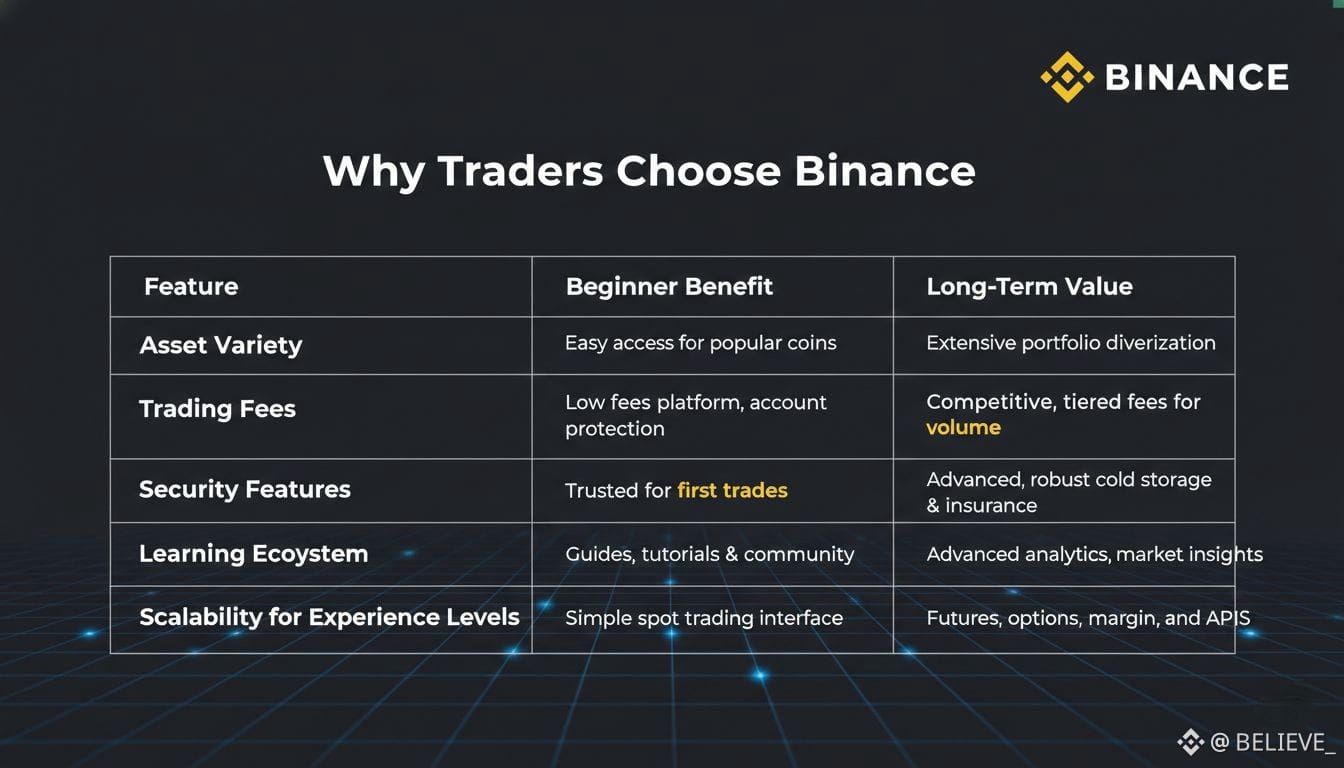
Why Binance Is Popular Among Beginners and Professionals
Binance’s popularity is not accidental. Several factors make it appealing across experience levels:
Wide Asset Selection
Binance supports hundreds of cryptocurrencies, from major assets like Bitcoin and Ethereum to newer projects. Beginners are not limited to just a few options.
Competitive Fees
Trading fees on Binance are among the lowest in the industry. This matters because frequent trading with high fees can quietly erode profits.
Strong Security Infrastructure
Features like two-factor authentication (2FA), withdrawal confirmations, device management, and cold storage significantly reduce risk when used properly.
Integrated Ecosystem
Binance is not just an exchange. It includes learning resources, staking options, market insights, and community features such as Binance Square.
Creating and Securing Your Binance Account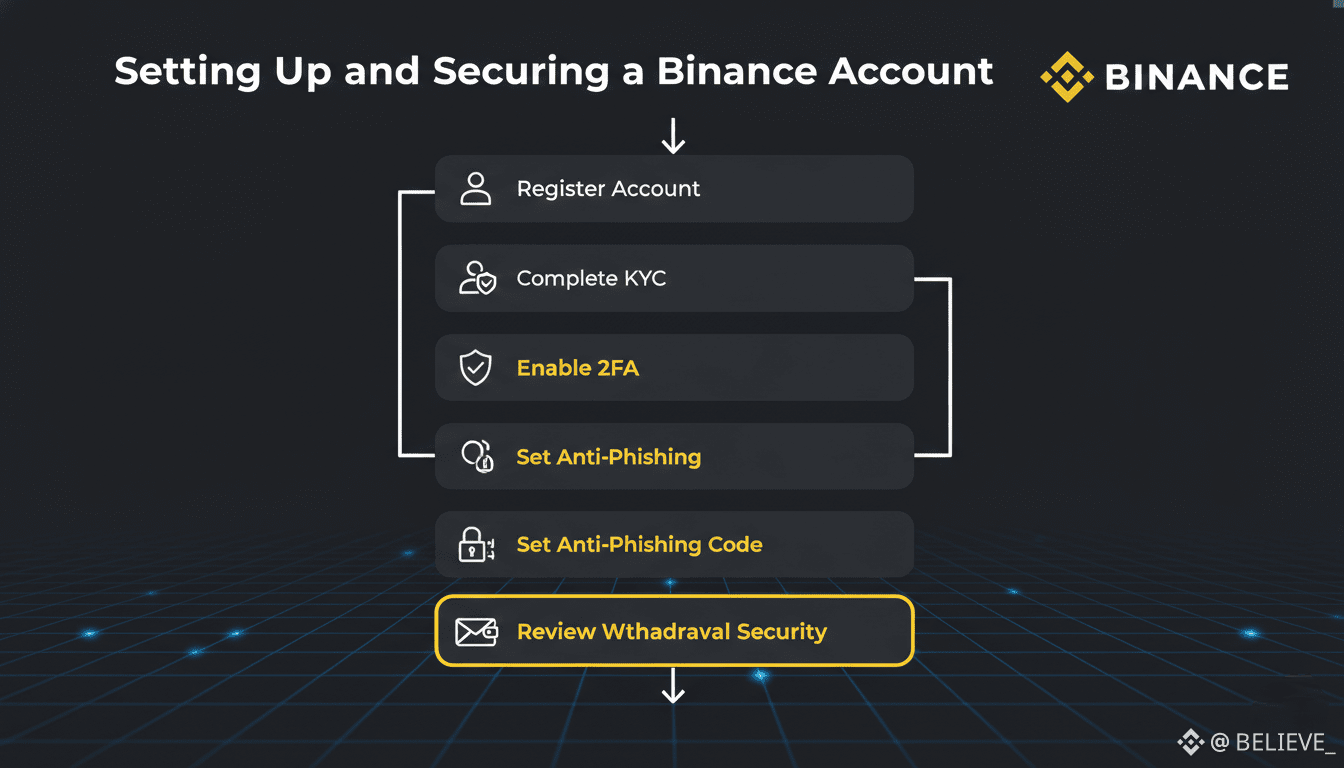
Step 1: Account Registration
You can create a Binance account using an email address or mobile number. Choose a strong password — unique, long, and not reused anywhere else.
Step 2: Identity Verification (KYC)
To comply with global regulations, Binance requires identity verification. This typically includes:
Government-issued ID
Facial verification
Basic personal information
Completing KYC unlocks higher withdrawal limits and full platform functionality.
Step 3: Account Security Setup
Security is not optional in crypto. Immediately after registration:
Enable two-factor authentication (2FA)
Set up anti-phishing codes
Review device management settings
Restrict withdrawal permissions if available
Most losses among beginners happen due to poor security, not bad trades.
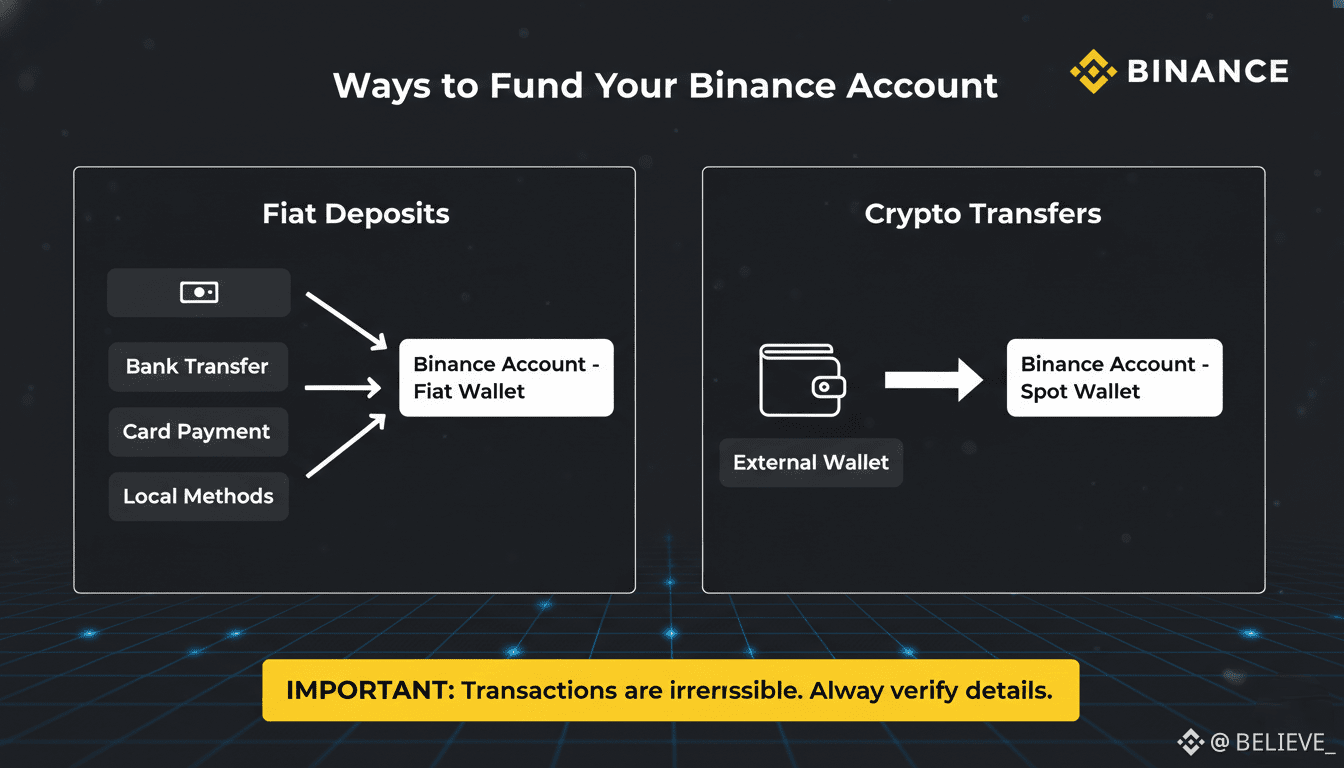
Funding Your Binance Account
Before trading, you need funds in your account. Binance offers several options depending on region:
Fiat Deposits
You can deposit money via:
Bank transfer
Debit or credit card
Local payment methods (availability varies)
Crypto Transfers
If you already own cryptocurrency elsewhere, you can transfer it to your Binance wallet using the appropriate blockchain network.
Always double-check wallet addresses and networks before sending funds. Crypto transactions are irreversible.
Understanding the Basics of Trading on Binance
Trading on Binance involves pairs. A trading pair shows which asset you are buying and which asset you are using to pay.
Example:
BTC/USDT means buying Bitcoin using USDT
ETH/BTC means buying Ethereum using Bitcoin
Order Types Every Beginner Must Understand
Market Orders
A market order executes immediately at the best available price.
Simple and fast
Useful for beginners
Less control over exact price
Limit Orders
A limit order lets you specify the price at which you want to buy or sell.
Offers price control
May not execute if price never reaches your level
Stop-Limit Orders
Used primarily for risk management.
Automatically triggers an order when price reaches a certain level
Helps limit losses or protect gains
Beginners should master these three order types before exploring anything else.
Reading Price Charts Without Overcomplicating
Charts intimidate many beginners, but you don’t need advanced indicators to start.
Focus on:
Price direction (up, down, sideways)
Recent highs and lows
Volume changes during price moves
Avoid adding multiple indicators early. Too many signals create confusion and emotional decisions.
Understanding Market Volatility
Cryptocurrency markets are volatile by nature. Prices can move significantly within minutes.
This volatility:
Creates opportunity
Increases risk
Beginners must accept that losses are part of learning, and no strategy eliminates risk completely.
The goal early on is survival and education, not maximum profit.
Risk Management: The Most Important Skill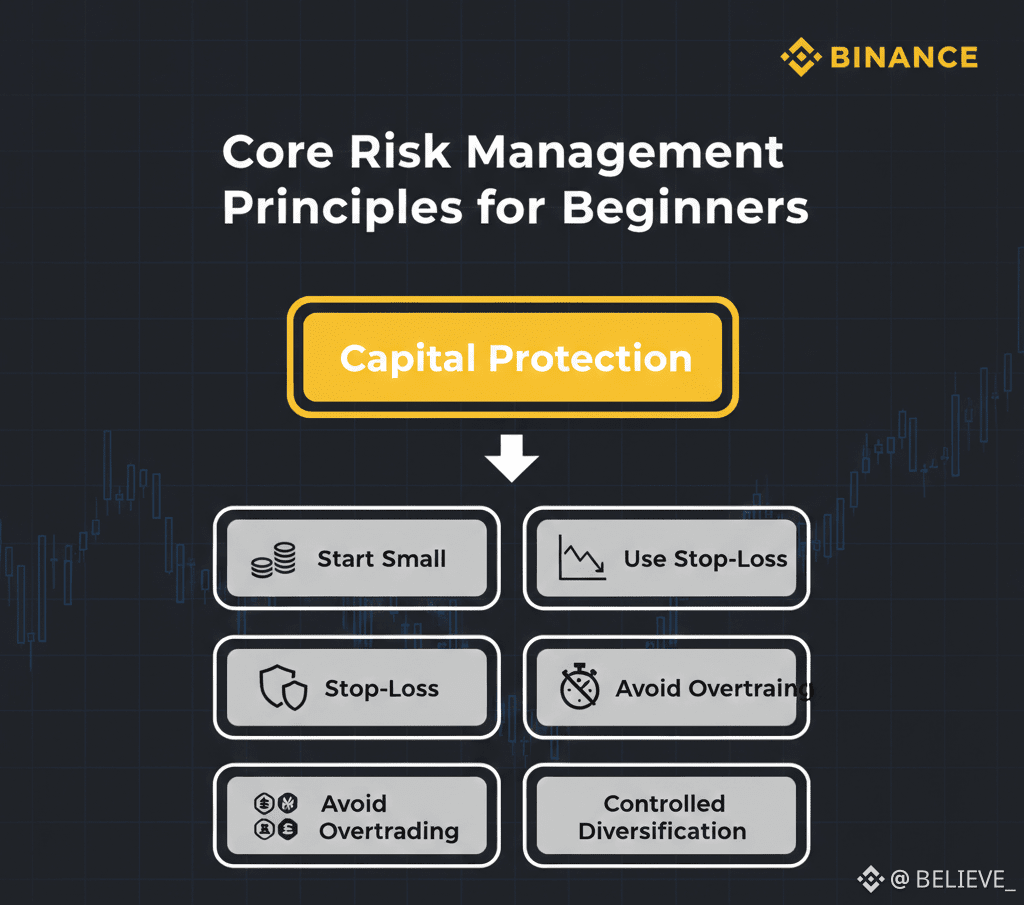
Many beginners focus on how to make money. Professionals focus on how not to lose too much.
Start Small
Trade with amounts that do not affect your emotional state. Stress leads to poor decisions.
Use Stop-Loss Orders
Stop-losses automatically exit trades when price moves against you. This protects your capital and prevents emotional panic.
Avoid Overtrading
More trades do not mean more profit. Quality decisions matter more than frequency.
Diversify Carefully
Holding multiple assets can reduce risk, but over-diversification creates management issues. Balance is key.
Understanding Binance Trading Fees
Binance charges a small fee on each trade, usually around 0.1%.
Ways to reduce fees:
Use Binance Coin (BNB) to pay fees
Increase trading volume over time
Avoid unnecessary trades
Fees seem small but compound over time, especially for active traders.
Common Beginner Mistakes to Avoid
Trading without understanding the asset
Following social media hype blindly
Ignoring risk management
Using leverage too early
Letting emotions control decisions
Most losses come from behavioral mistakes, not technical ones.
Using Binance as a Learning Environment
Binance is not just a trading platform — it’s a learning ecosystem.
Beginners should:
Observe markets before trading
Read discussions and commentary
Study how price reacts to events
Track trades and reflect on outcomes
Learning happens faster when observation comes before action.
Building Confidence Over Time
Confidence in trading doesn’t come from winning one trade.
It comes from:
Understanding why you entered
Knowing how you managed risk
Accepting outcomes without emotional extremes
Progress in trading is gradual. There are no shortcuts.
Final Thoughts
Binance provides beginners with powerful tools, but tools alone are not enough. Success depends on how thoughtfully they are used.
Start slow. Focus on learning. Protect your capital. Let experience accumulate naturally.
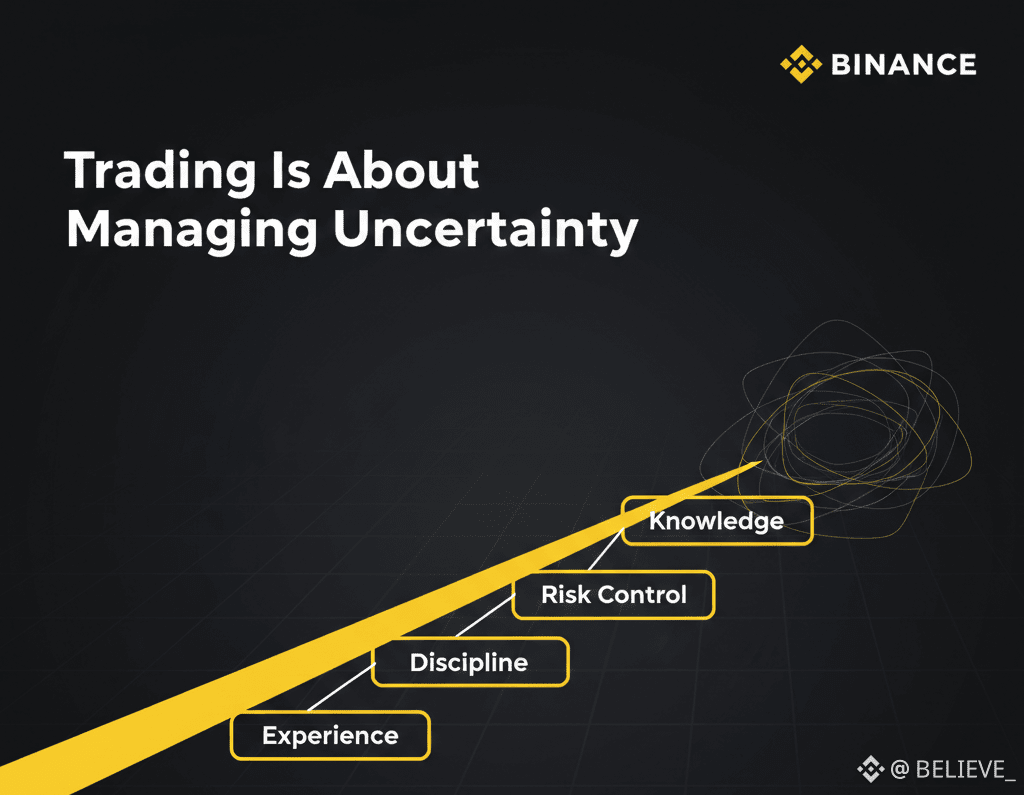
Trading is not about predicting the future — it’s about managing uncertainty with discipline.
Used responsibly, Binance can be a strong foundation for anyone entering the world of cryptocurrency trading.