Whenever markets fall sharply, the same questions surface again and again.
Is this the start of a crash? Should I sell everything and buy back lower? Should I step aside until things feel safer?
In reality, most of these questions don’t come from the market itself. They come from the investor’s psychological state.
Some panic. Some dump positions. Some freeze, afraid of making the wrong move. And then there’s a very small group that barely changes course — some even continue to accumulate. The difference isn’t intelligence. It’s preparation long before a downturn ever shows up.
This perspective is inspired by a recent thread from Oguz O, a well-known investor on X, on how he thinks about market crashes and investor behavior.
Where Are We in the Market Cycle?
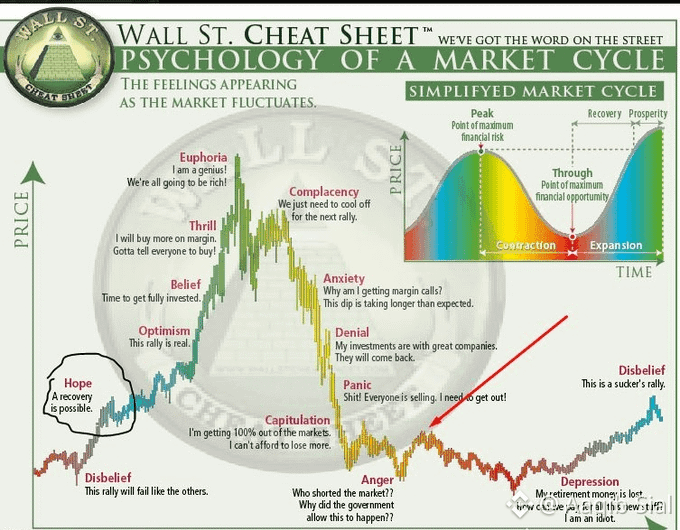
No one can consistently time markets with precision. Price movements often look random in the short term, which makes trying to predict exact tops and bottoms mostly pointless. What is possible, however, is understanding where we are in the broader economic and market cycle.
History shows that markets move in repeating phases: expansion, overheating, correction or recession, and then renewal. This pattern exists because human behavior swings between extremes — from excessive optimism to deep pessimism.
When valuations are stretched and sentiment remains complacent, history suggests the market is closer to the later stages of a cycle. That doesn’t mean an immediate crash is guaranteed. It does mean that risk has quietly overtaken reward.
Why Do Small Drops Trigger So Much Panic?
It’s not because people are weak. It’s because many investors subconsciously know they’re in a fragile position.
The strongest emotional reactions usually come from three groups.
The first group bought at prices that were simply too high. When prices fall, their fear isn’t just about losing money — it’s about admitting they were wrong. The longer they wait for a rebound to “get out even,” the heavier the psychological burden becomes.
The second group doesn’t fully understand what they own. They bought because others were buying, because prices were rising, or because the story sounded convincing. When prices fall, they have no framework to judge whether the asset’s fundamentals have changed. All they can look at is price — and price moves every day.
The third group, and the most dangerous situation of all, consists of people who tied their entire life to the market. When living expenses, emergency funds, or a child’s education are all invested, staying calm during volatility becomes impossible. This isn’t a lack of discipline. It’s basic survival instinct.
The Real Problem Isn’t the Crash
A market crash is just a catalyst.
What actually destroys investors is buying too high, not understanding what they own, and risking money they cannot afford to lose — all at the same time. When those three conditions exist, even a normal correction is enough to force selling at the worst possible moment.
So the real question isn’t how to avoid market crashes.
It’s how to make sure you’re still okay when they happen.
How Do You Survive a Market Decline?
You don’t need a holy grail strategy or advanced indicators. Avoiding a few core mistakes matters far more.
First, make sure your life exists outside the market. If prices fall sharply, can you live comfortably for one or two years without selling assets? If the answer is no, the issue isn’t market volatility — it’s asset allocation.
Second, only hold assets you genuinely understand. You don’t need to understand everything in the market, but you must understand everything you own. If you can’t confidently assess whether an asset will be stronger five years from now, or whether today’s price is cheap or expensive, you’ll have no anchor when prices fall.
Finally, have the courage to let go of positions that were bought incorrectly. “Hold at all costs” is not a virtue. Late in a cycle, almost everyone owns at least one investment that no longer makes sense on valuation alone. Holding onto it only drains mental energy. Selling early isn’t defeat — it’s freeing both capital and focus for better opportunities when markets truly reset.
Final Thoughts
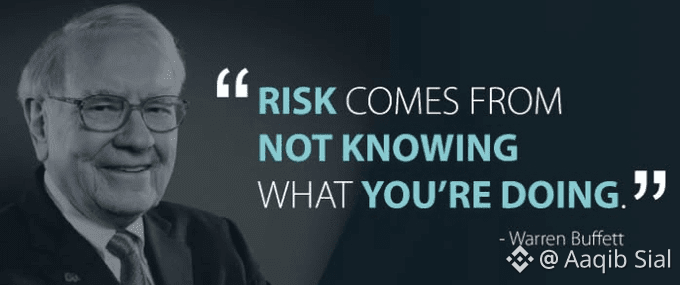
The market today carries real downside risk. That’s difficult to avoid. But whether you survive has little to do with predicting timing and everything to do with preparation.
Market crashes will come. They don’t have to be the end.
For those who prepare correctly, they often become the phase where the best opportunities are created.
#Binance #aaqibsial6 $BTC $ETH $BNB