Walrus (WAL) is the native token of the Walrus protocol, a project that takes a practical and long-term view of blockchain technology. Instead of focusing only on fast transactions or short-term market trends, Walrus is designed to solve real problems around privacy, data ownership, and decentralized infrastructure. By combining DeFi tools with decentralized storage, the protocol creates a flexible ecosystem that can support users, developers, and organizations alike.
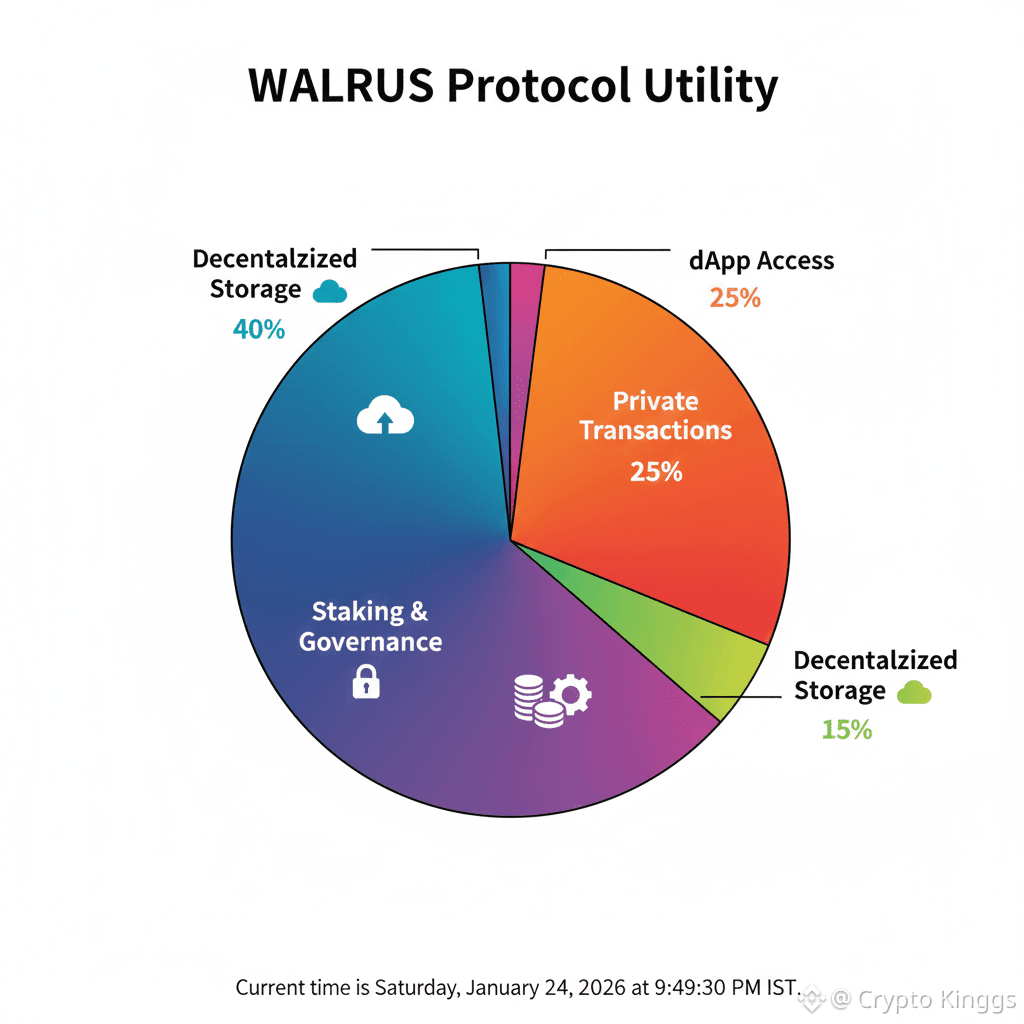
At the heart of the Walrus protocol is a strong focus on privacy. WAL is used to access decentralized applications, participate in governance, and stake within the network. The protocol supports private blockchain interactions, allowing users to engage with DeFi while reducing unnecessary exposure of personal or transactional data. As blockchain adoption grows, privacy is becoming less of a luxury and more of a requirement. Walrus addresses this shift by making privacy a core design principle rather than an afterthought.
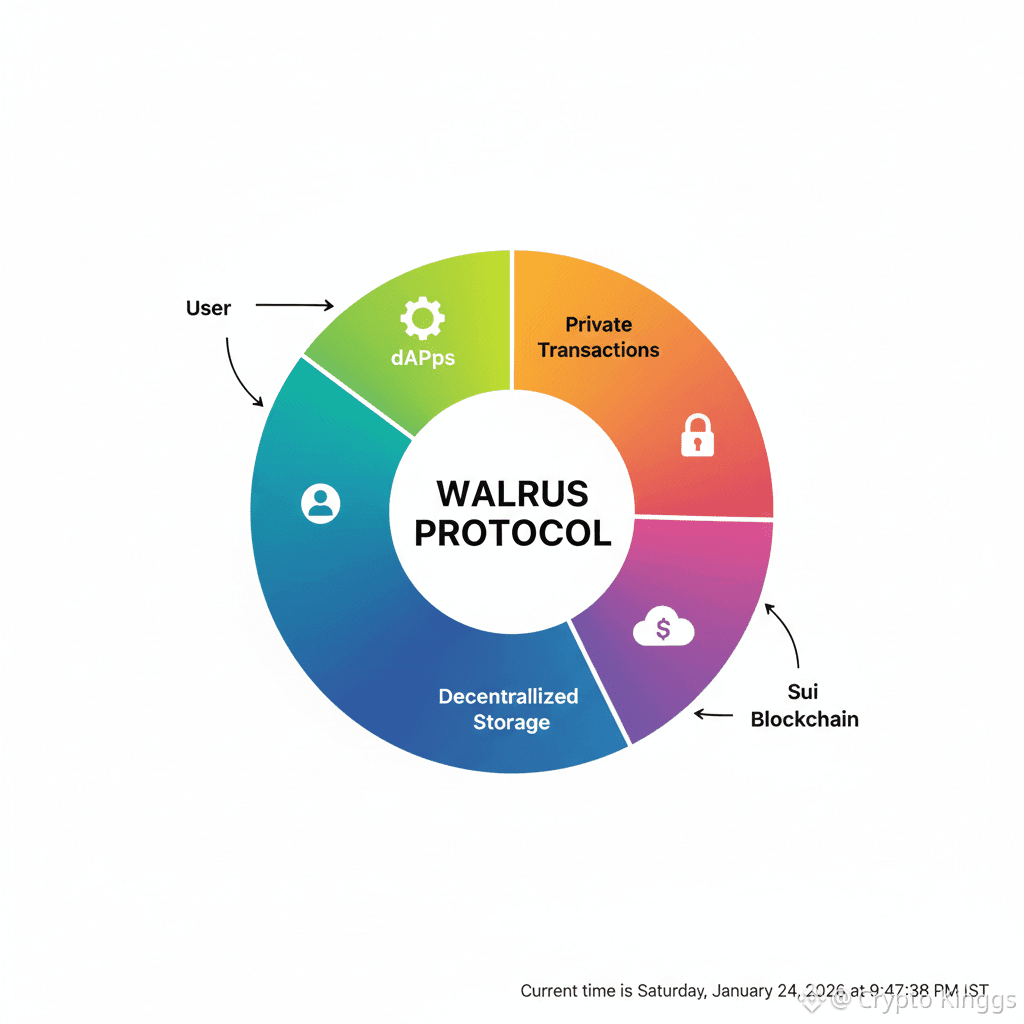
One of the most important features of Walrus is its decentralized storage architecture. Traditional cloud storage relies on centralized providers that control access, pricing, and availability. This model creates risks such as censorship, outages, and dependency on a single authority. Walrus offers a decentralized alternative by distributing data across a network of nodes. Using erasure coding, large files are split into smaller fragments and stored redundantly. Even if some nodes fail or go offline, the data can still be reconstructed safely. Blob storage allows the system to manage large volumes of data efficiently, keeping costs lower while maintaining performance.
Walrus is built on the Sui blockchain, which provides the speed and scalability needed for both financial transactions and data-heavy applications. Sui’s architecture enables fast execution and low latency, making it well suited for decentralized applications that require frequent interactions or large data transfers. By leveraging Sui, Walrus can scale without sacrificing reliability, which is essential for real-world adoption.
The WAL token plays a key role in aligning incentives across the ecosystem. Users can stake WAL to help secure the network and earn rewards, encouraging long-term participation. Governance is another major function of the token. WAL holders can vote on protocol upgrades, parameter changes, and future development plans. This ensures that the evolution of Walrus is guided by its community rather than a centralized authority. WAL is also used within applications built on the protocol, linking token demand directly to actual usage instead of speculation alone.
From a broader perspective, Walrus is positioned as an infrastructure layer for the next phase of Web3. Individuals can use it for private transactions and secure data storage. Developers can build dApps that rely on decentralized, censorship-resistant storage. Enterprises exploring blockchain solutions may find Walrus appealing as a cost-efficient alternative to traditional cloud services. This wide range of use cases gives the project a solid foundation for sustainable growth.
Rather than chasing hype, Walrus focuses on steady development and real utility. Its emphasis on privacy, decentralized storage, and scalable infrastructure reflects a mature approach to blockchain design. For users and builders who value long-term usefulness, data ownership, and decentralized control, Walrus and the WAL token represent a thoughtful and forward-looking project in the evolving Web3 landscape.@Walrus 🦭/acc