
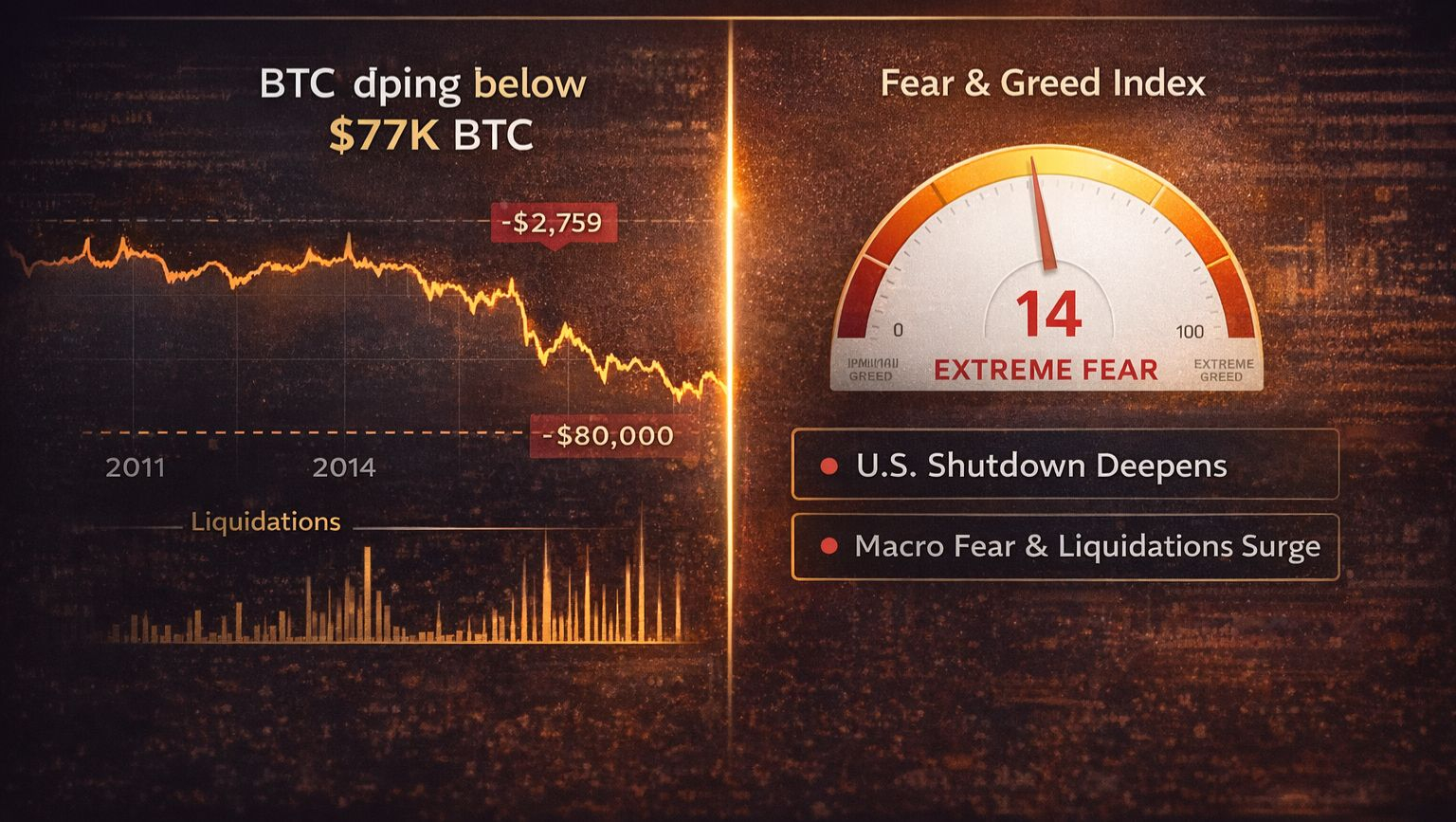
Right now, it's early February, … BTC is clinging around $77K–$78K after that brutal weekend slide below $80K. The charts look like a horror movie, liquidations keep ticking higher, the U.S. shutdown headlines won't quit, and the Fear & Greed Index is sitting at a screaming Extreme Fear level (14–15 range).
Surely you're feeling that familiar cocktail right now:
• A knot in your stomach every time you refresh
• That voice whispering "maybe sell and cut the bleeding"
• A flash of regret about not taking profits earlier
• A tiny spark of "what if this is the bottom?" that you immediately doubt
It's not just money dropping, it's your hope, confidence, and sometimes your peace of mind taking hits too.
Crypto dips don't just test your portfolio; they test your nervous system. One minute you're the genius who timed the market, the next you're wondering if you even belong here. The emotional swing is brutal, and it's completely normal. The goal isn't to become an emotionless robot, it's to learn how to ride the rollercoaster instead of letting it throw you off.
𝟭- 𝗧𝗵𝗲 𝗥𝗼𝗹𝗹𝗲𝗿𝗰𝗼𝗮𝘀𝘁𝗲𝗿 𝘀𝘁𝗮𝗴𝗲𝘀 𝘄𝗲 𝗮𝗹𝗹 𝗴𝗼 𝘁𝗵𝗿𝗼𝘂𝗴𝗵:
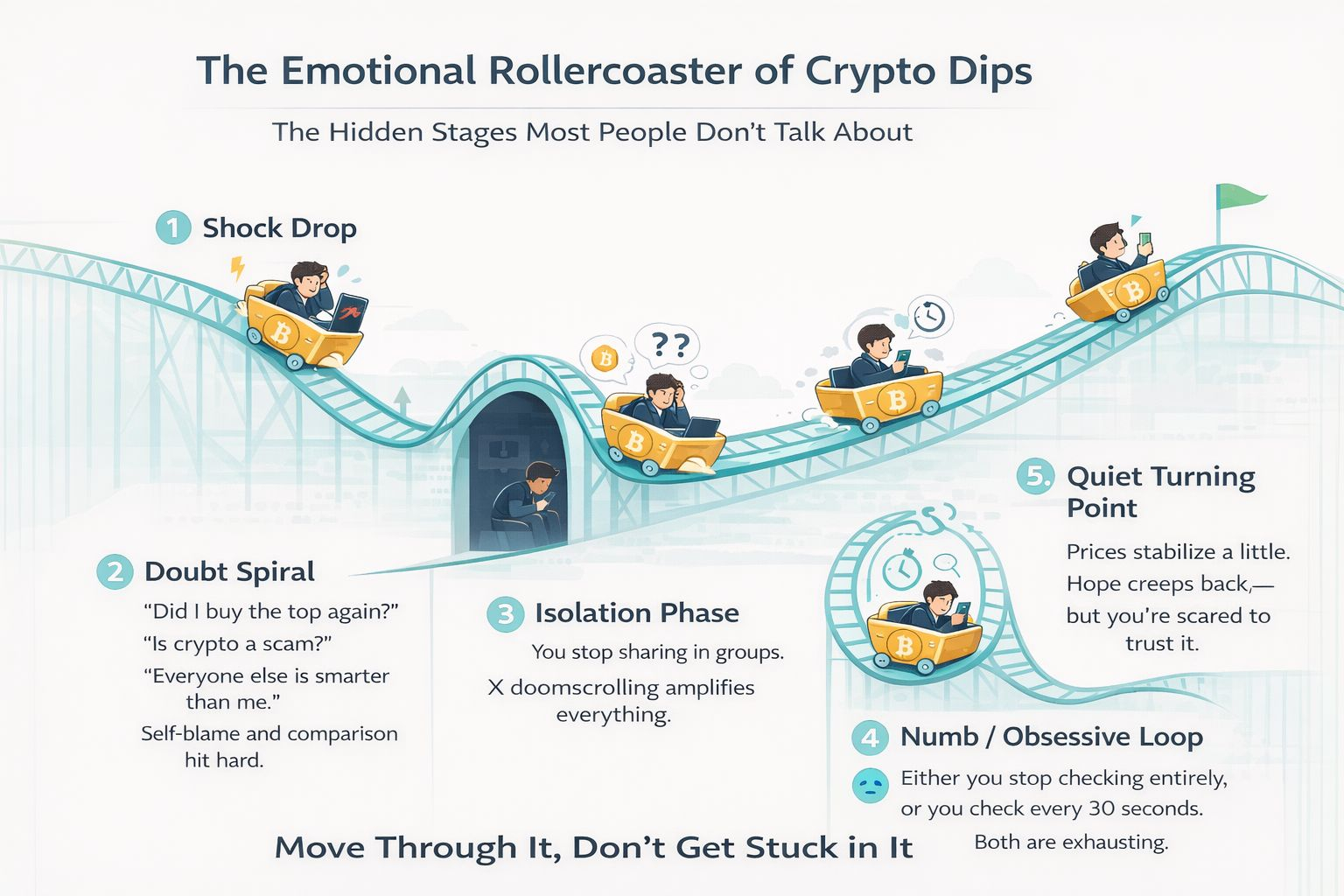
● The shock drop
The price falls fast. Your heart races. You feel physically tense. This is pure survival mode fight or flight kicking in.
● The doubt spiral
"Did I buy the top again?" "Is crypto a scam?" "Everyone else is smarter than me." Self-blame and comparison hit hard.
● The Isolation phase
You stop sharing in groups because you feel embarrassed. Or you doom-scroll X looking for hope, only to find more fear. Loneliness amplifies everything.
● The Numb / Obsessive Loop
Either you stop checking entirely (numbness), or you check every 30 seconds (obsession). Both are exhausting.
● The quiet turning point
Prices stabilize a little. A small green candle. A whale wallet shows accumulation. Hope creeps back but now you're scared to trust it.
Most people get stuck in stages 2–4. The ones who come out stronger learn to move through them faster.
𝟮- 𝗥𝗲𝗮𝗹 𝘄𝗮𝘆𝘀 𝘁𝗼 𝗽𝗿𝗼𝘁𝗲𝗰𝘁 𝘆𝗼𝘂𝗿 𝗺𝗶𝗻𝗱 (𝗡𝗼𝘁 𝗷𝘂𝘀𝘁 𝘆𝗼𝘂𝗿 𝘄𝗮𝗹𝗹𝗲𝘁)
These aren't fluffy tips, they're the things that actually help when you're in the thick of it.
📍Name the emotion out loud
Sounds silly, but say it: "I'm feeling intense fear right now." Naming it reduces its power (backed by neuroscience). Do it alone or in a voice note to yourself.
📍Create a "dip habit"
When the red hits hard, have a 5-minute routine:
• Close the app
• Take 10 deep breaths
• Read your "why I hold" note (write one now if you don't have it)
• Do something non-crypto (walk, stretch, call a friend about anything else)
Small habits interrupt the panic loop.
📍Limit the input
Set hard rules: no charts after 10 PM, no X during meals, mute certain keywords. Information overload turns fear into terror. Protect your attention like you protect your seed phrase.
📍Talk to someone who gets it
Not the hype accounts, someone who's been through dips before. DM a friend, post anonymously here, or join a small private group. Hearing "I've felt exactly that and it passed" is medicine.
📍Focus on "non-price wins"
Did you avoid panic-selling? That's a win. Did you stick to your plan? That's a win. Did you learn something new about a project instead of staring at red? Massive win. Celebrate those, they build mental muscle.
📍Remember the universal truth of cycles
Every single major dip in crypto history has ended. Every one felt permanent while you were in it. The only question is whether you'll still be here when the turn comes.
𝟯- 𝗪𝗵𝗮𝘁 𝘁𝗵𝗶𝘀 𝗺𝗼𝗺𝗲𝗻𝘁 𝗶𝘀 𝗿𝗲𝗮𝗹𝗹𝘆 𝘁𝗲𝗮𝗰𝗵𝗶𝗻𝗴 𝘆𝗼𝘂?
If you're feeling wrecked right now, that doesn't mean you're bad at this. It means you're invested, and care. The people who look calm on X? They've just been through more storms. They've learned the ride eventually levels out. This dip will pass. Maybe tomorrow, maybe next month, but it will. The question is who you'll be on the other side: more resilient, more disciplined, more confident in your own process.
And right now, you’re already doing the hardest part: you didn’t shut down, you didn’t blindly react, and you didn’t run. You stayed engaged. You chose to think. And that’s how resilience is built..
