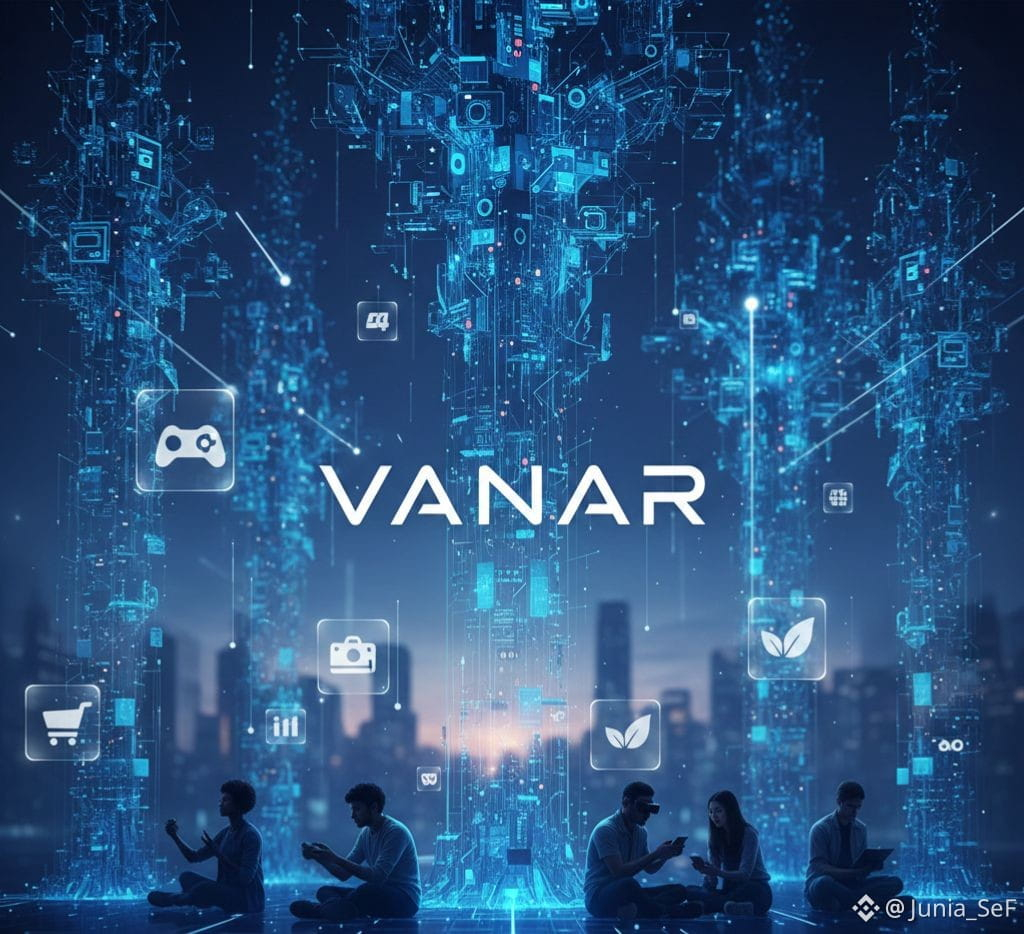
Blockchain has never lacked ambition. What it has consistently struggled with is relevance to everyday life. For most people, Web3 still feels distant, technically complex, financially risky, and disconnected from how they actually use digital products. Vanar approaches this challenge from a different direction. Instead of building technology first and searching for users later, it starts with real-world behavior and builds the blockchain around that reality.
Vanar is a Layer 1 blockchain designed specifically for mainstream adoption. Its core idea is straightforward but demanding. If blockchain is going to reach billions of people, it must work quietly in the background of products people already understand, such as games, entertainment platforms, digital worlds, and brand experiences. Vanar does not frame itself as a financial experiment or a speculative ecosystem. It positions itself as infrastructure meant to support familiar digital experiences at scale.
This perspective is shaped by the team behind the project. Vanar is not driven by contributors whose experience is limited to crypto-native environments. Its leadership and builders come from gaming, entertainment, and brand-focused industries, sectors where user experience determines success or failure. That background influences how decisions are made and how progress is measured. Rather than asking how decentralized a system can be in theory, Vanar asks whether a real user would enjoy interacting with it in practice.
From a technical standpoint, Vanar is a Layer 1 blockchain built with performance and scale as priorities. Consumer-facing applications demand fast transactions, predictable costs, and reliability under heavy usage. A blockchain that slows down during periods of high activity or introduces sudden fee spikes cannot realistically support games, virtual worlds, or large digital communities. Vanar’s architecture reflects these realities. The goal is not theoretical sophistication, but operational stability, technology capable of supporting millions of interactions without constantly reminding users that a blockchain is involved.
This philosophy becomes more tangible when examining the products built on the network. One of the most recognizable is Virtua Metaverse. Virtua is not positioned as an experimental playground for crypto insiders. It is a digital environment centered on entertainment, social interaction, and recognizable intellectual properties. Users explore immersive spaces and interact with digital collectibles in a way that feels familiar, even if they have never used a crypto wallet before. Blockchain plays a supporting role, enabling verifiable ownership and transparent asset management without dominating the experience.
The same design thinking extends to gaming. Through initiatives such as the VGN games network, Vanar targets one of the most established and culturally significant digital industries. Gamers already understand virtual items, in-game economies, and progression systems. What they are far less tolerant of is friction. Complicated onboarding, confusing wallets, and speculative mechanics that interfere with gameplay have historically limited the appeal of Web3 games. Vanar’s approach is to let developers focus on building compelling games, while the blockchain quietly handles ownership, interoperability, and value exchange behind the scenes.
This represents a subtle but important shift. Instead of designing games around blockchain features, Vanar enables blockchain features to serve the game itself. For mainstream audiences, this distinction matters. When players enjoy the experience first and only later discover the benefits of digital ownership, resistance to blockchain-based systems drops significantly.
Beyond gaming and virtual worlds, Vanar also extends into other mainstream verticals, including artificial intelligence, sustainability, and brand solutions. These areas are not arbitrary choices. They reflect domains where trust, transparency, and data integrity are increasingly important. In artificial intelligence, decentralized systems can help address questions around data ownership and accountability. In sustainability-focused use cases, blockchain can support transparent reporting and verifiable environmental initiatives. Vanar’s emphasis remains practical rather than ideological, applying decentralized technology where it offers measurable value rather than novelty.
Brand integration is another pillar of Vanar’s strategy. Established brands entering Web3 tend to move cautiously. They care about reputation, compliance, and user trust, and they are reluctant to expose customers to technical complexity or financial risk. Vanar provides an environment where brands can explore digital ownership, collectibles, and interactive experiences without sacrificing usability or control. For end users, this means encountering Web3 through familiar names and polished interfaces rather than abstract protocols.
At the center of the ecosystem is the VANRY token, which powers the network. Its function is primarily utilitarian, supporting transactions, staking, and participation in the network’s operation and evolution. While speculation is an unavoidable aspect of digital asset markets, Vanar’s design treats the token as infrastructure rather than a promotional instrument. Its long-term relevance is tied to genuine network usage and ecosystem growth, not short-term attention cycles.
Vanar’s ambition to help onboard the next three billion users into Web3 is ambitious, but it is grounded in a realistic understanding of how adoption actually occurs. Mass adoption does not come from educating everyone about blockchain mechanics. It comes from building products people want to use and allowing the underlying technology to fade into the background. The internet did not succeed because users understood its protocols. It succeeded because email, websites, and later social platforms solved everyday problems in intuitive ways. Vanar clearly draws from this lesson.
Regulatory awareness also plays an important role in this approach. As governments and institutions increase scrutiny of digital assets, blockchains that ignore compliance risk marginalization. Vanar’s focus on enterprise-ready solutions and brand partnerships suggests an intention to operate alongside existing legal frameworks rather than position itself in opposition to them. This pragmatic stance may not appeal to ideological purists, but it aligns with the realities of global, long-term adoption.
For developers, Vanar offers an environment that feels closer to traditional software platforms than to experimental crypto systems. By reducing complexity and prioritizing usability, it lowers the barrier for Web2 developers to build blockchain-enabled applications. This is a meaningful advantage, as the next wave of Web3 growth is likely to come from developers with experience in games, media, and enterprise software rather than from crypto-native communities alone.
For observers and investors, Vanar represents a different category of blockchain project, one focused less on abstract innovation and more on execution. Its success depends on the strength of its ecosystem, the appeal of its products, and the network’s ability to scale reliably as usage grows. This makes Vanar less about short-term narratives and more about sustained relevance over time.
Ultimately, Vanar’s significance lies in its restraint. It does not attempt to reinvent every aspect of the digital economy at once, nor does it promise instant disruption. Instead, it focuses on integration, quietly embedding blockchain into products people already enjoy. If Web3 is to become part of everyday digital life, it will likely do so through platforms that feel familiar, reliable, and useful. Vanar is built with that future in mind, treating real-world adoption not as a slogan, but as a design principle