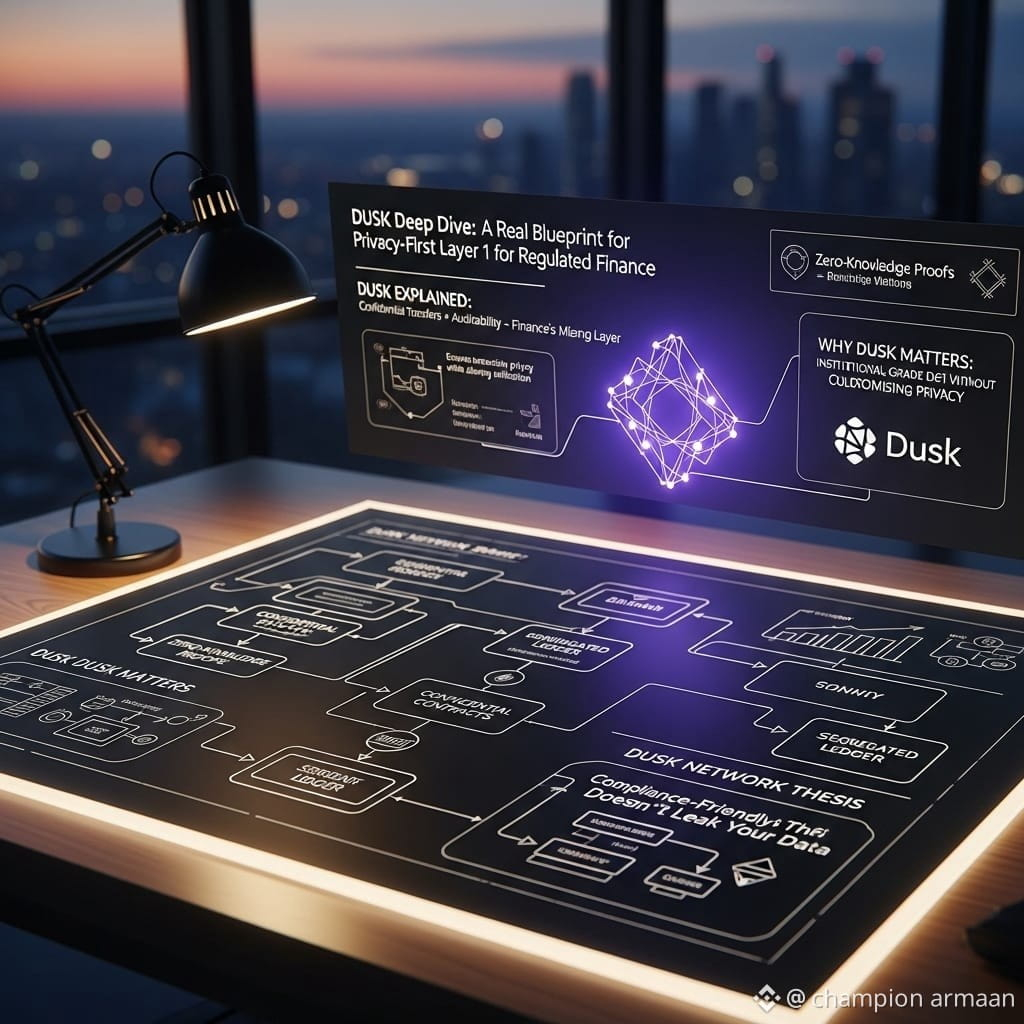
@Dusk was founded in 2018 with a clear and deeply human vision to build a blockchain that does more than chase trends, one that bridges the gap between the real world of regulated financial markets and the promise of decentralized technology. In a world where personal data and financial transactions are increasingly exposed, where institutions struggle to meet compliance requirements while protecting sensitive information, Dusk stands out as a solution that doesn’t force people or organizations to choose between privacy and regulation. Rather, it embraces both as essential foundations for the future of finance.
Many blockchains were built with transparency at their core, where everything is visible to everyone, and that can work well for open markets or simple asset transfers. But this approach doesn’t translate naturally to businesses, banks, or regulated financial systems, where confidentiality is not only preferred but required. Dusk recognizes that privacy is a right and that financial activities often involve deeply personal or strategically sensitive information. It brings advanced cryptographic tools, especially zero knowledge proofs, into every layer of its design so transactions can be confidential by default and yet still verifiable by the right parties when needed.
The technology behind Dusk is built in a thoughtful, modular way that reflects the complexity and needs of real markets. At its core, the network separates different functions into layers the settlement and consensus layer called DuskDS, the EVM‑compatible smart contract layer called DuskEVM, and specialized environments for privacy‑focused applications. This architecture means that different tools and standards can be used where they fit best, whether that’s secure settlement of regulated assets or flexible development of decentralized applications.
What makes Dusk feel truly human is its approach to privacy and identity. Advanced cryptography like zero knowledge proofs allows someone to prove that a transaction is legitimate without revealing the underlying details of that transaction. Think about how in everyday life you might prove your age without sharing all of your personal history. That idea of sharing only what’s necessary and keeping the rest private is at the heart of Dusk’s design, and it’s what allows individuals and institutions to interact on the blockchain without fear of exposing sensitive data.
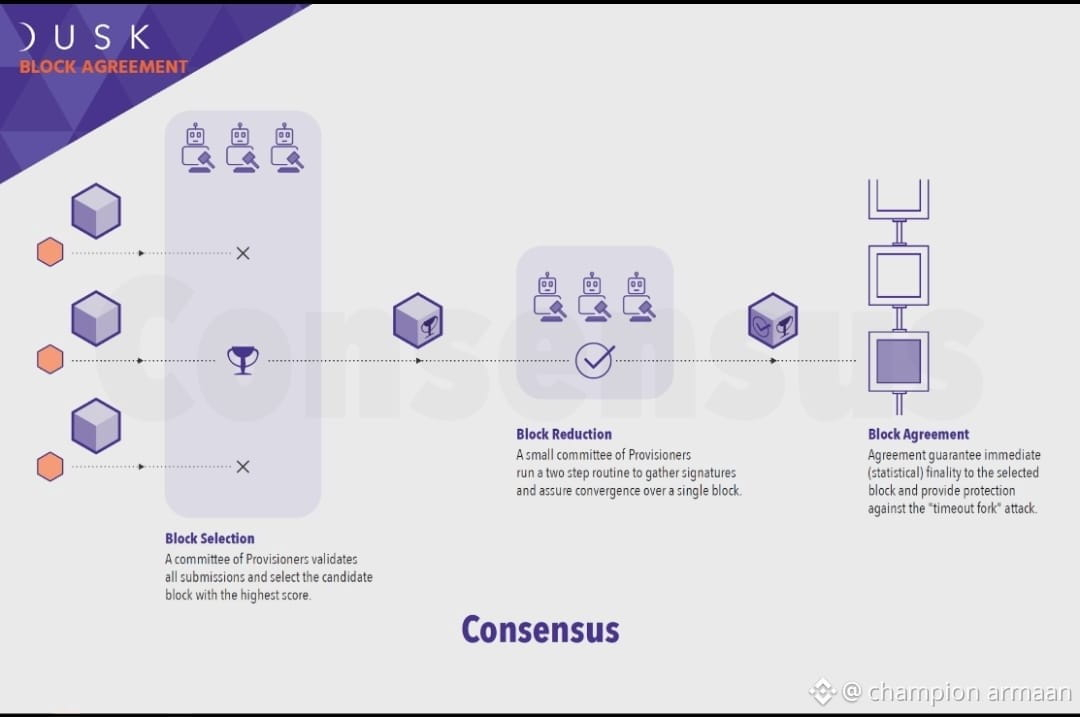
Regulated markets also need systems that recognize who participants are and that they meet legal obligations. Dusk includes tools for privacy preserved digital identity, enabling individuals and organizations to verify themselves without revealing unnecessary personal information. This is a core part of why traditional institutions feel more comfortable exploring blockchain with Dusk it doesn’t ignore regulations like KYC and AML, it builds them into the fabric of the network. Another significant innovation in Dusk is its consensus mechanism, often described as Succinct Attestation or a specialized proof‑of‑stake design. This mechanism aims for fast and deterministic finality so that once a transaction is recorded it stays recorded. There are no prolonged uncertainties or reversals, which is essential for high value asset transfers, settlements, and the tokenization of real world financial instruments that institutions depend on.
The ability to represent real world assets things like bonds, regulated securities, or other financial products natively on the blockchain is a powerful outcome of Dusk’s approach. Unlike simple tokenization that only puts part of an asset on chain, Dusk enables native issuance and management of these instruments, complete with compliance controls, privacy safeguards, and automated lifecycle processes like dividend payouts or voting rights. It’s a vision of finance where markets are faster, more accessible, and still respectful of the rules that protect investors. For developers, Dusk invites innovation without forcing compromise. With tools that work with familiar environments like Ethereum’s EVM and support for languages such as Rust via WASM, builders can create applications that benefit from privacy, performance, and regulatory readiness without starting from scratch. This blend of accessibility and advanced capability encourages both developers and institutions to explore new financial products with confidence that they still fit within the legal frameworks that govern traditional markets.
Dusk also senses the emotional realities of finance that people want control over their data, security in their transactions, and confidence that their financial systems respect both their privacy and the rules society expects. It doesn’t promise chaos or unchecked freedom. Instead, it promises a future where innovation and responsibility coexist, where individuals and institutions can interact in trusted ways, and where finance doesn’t have to force trade‑offs between transparency and privacy. Today, Dusk continues to evolve as a foundation for institutional decentralized finance and real world asset markets, quietly building infrastructure that responds to modern needs without losing sight of the human elements underneath. Whether it’s the design of its consensus mechanism, the way it preserves privacy with cryptography, or the way it builds compliance into the protocol itself, every piece of Dusk feels like a thoughtful step toward a future where finance is both innovative and respectful of the people it serves.