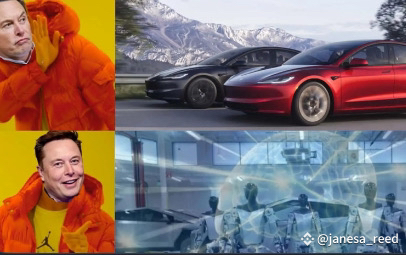
Elon Musk has mastered the art of selling the future, and Tesla’s trillion-dollar valuation proves it. But when it comes to Full Self-Driving (FSD), are we witnessing true innovation—or just a well-marketed illusion?
📅 A Decade of Unfulfilled Promises
🔹 2016: Musk claimed a Tesla would drive across the U.S. without human intervention by 2018. 🚘
🔹 2019: He promised 1 million robotaxis by 2020. 🤖
🔹 2025: Teslas still require constant human supervision, and fully autonomous driving remains a dream. 👀
Musk’s FSD ambitions have fueled Tesla’s stock and captivated investors, but AI experts, including Yann LeCun, argue that Tesla’s approach may not be as advanced as claimed. Unlike companies like Waymo and Cruise, which rely on LiDAR and mapped environments, Tesla insists on achieving autonomy using only cameras and neural networks—a method that continues to struggle with real-world unpredictability.
🚨 The Reality Check
Tesla’s FSD technology is impressive, but is it truly on the verge of making human drivers obsolete? Or is it just another example of Musk’s ambitious timelines outpacing reality?
Musk’s bold claims have kept Tesla at the center of the AI and EV revolution, but with regulatory challenges, safety concerns, and ever-moving deadlines, one question remains:
Is Tesla’s self-driving future a breakthrough—or just a mirage?
Drop your thoughts below! 👇
#StrategySmallestBTC #SUIETFcoming? #BNBChainOverSolanaInDEXVolume #USTariffs #TONRally