
When I first explored Plasma, I wasn’t drawn in by speed claims, TPS numbers, or any headline metric people love to highlight. What caught me off guard was how unconcerned it seemed about whether I grasped the mechanics beneath the surface. At first that felt like a flaw, but the more I thought about it, the more it seemed intentional.
What drew me toward plasma was not another promise of speed or scale. It was the quiet admission that stablecoins already carry most of the real activity in crypto. Payroll runs, remittances, treasury allocations, arbitrage desks, all of it moves in dollars. Yet the infrastructure beneath that flow is usually designed around a volatile native asset, as if stablecoins are guests in someone else’s house.
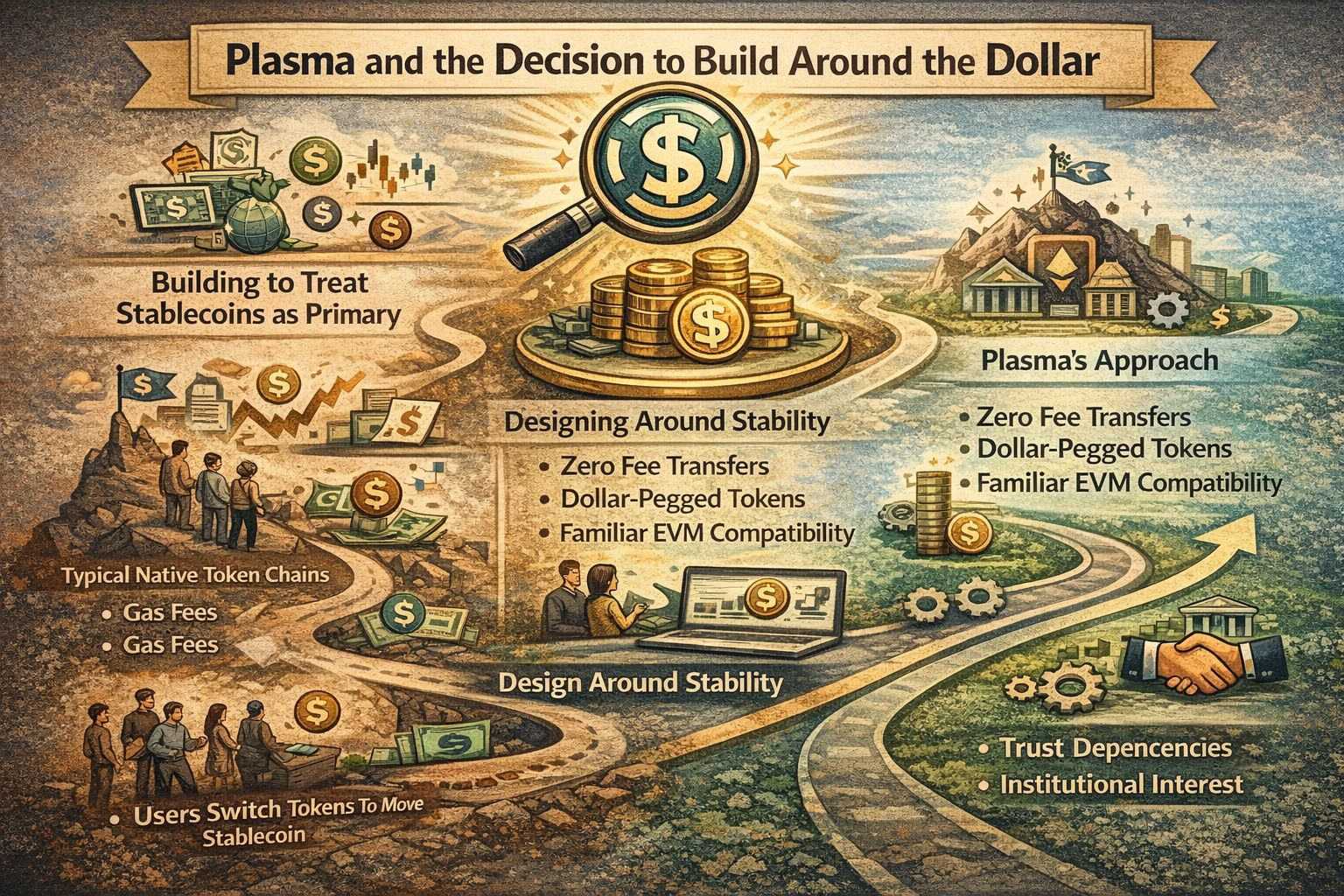
plasma reverses that hierarchy. It begins with the idea that stablecoins are not secondary. They are the core workload. That single assumption reshapes everything above it. Instead of asking dollar liquidity to bend around token economics, plasma organizes its design around assets that are meant to stay at one dollar. Zero fee transfers for stable assets, built in support for dollar pegged tokens, and familiar EVM execution are surface expressions of that deeper commitment.
The real shift is behavioral. plasma is not targeting users chasing price swings. It is built for people who move money because they have to. They care about funds arriving intact. They want confirmation to feel routine. They do not want to calculate gas in a separate token that can change value before settlement. By abstracting fees and reducing visible friction, plasma is making a clear bet. Reliable flow matters more than extracting marginal rent from every transfer.
Once users no longer need a volatile asset just to send dollars, stablecoins stop feeling like attachments. They become the unit of account for applications. Builders can price services directly in dollars without padding models for token volatility. Accounting becomes cleaner. Forecasting becomes simpler. As that friction fades, transaction velocity rises, and higher velocity is what gradually transforms a chain from a trading venue into infrastructure.
plasma’s architecture reflects this discipline. It does not merely allow stablecoins to exist. It assumes they will dominate activity. Contract logic, settlement expectations, and fee handling are structured around assets that aim to hold a constant value. That focus narrows ideological ambition but strengthens operational clarity.
There are tradeoffs. Stablecoin issuance is concentrated, and building around those issuers increases trust dependencies. Fee abstraction shifts cost somewhere else in the stack, and the model only works if meaningful volume sustains it. plasma does not hide from these constraints. It accepts them as part of building around existing money rather than trying to invent a replacement.
A broader divide is emerging across crypto. Some networks optimize for leverage, narratives, and token driven growth. Others prioritize settlement and reliability. plasma is clearly aligned with the second path. It does not claim its token should replace the dollar. It accepts that dollars already dominate and focuses on making them feel native on chain.
If that approach proves durable, the most important chains may not be the loudest ones. They may be the ones that made familiar money move naturally through decentralized rails. plasma is positioning itself there, not to redefine money, but to support it with infrastructure that feels predictable and steady.
