Crypto markets don’t just move because of news, technology, or macroeconomics.
They move because of human behavior.
Every local top is not just a price level it’s a psychological event. And more often than not, retail traders are the ones buying heavily at those exact tops.
Why does this keep happening?
Let’s break it down using behavioral finance principles and real crypto market structure
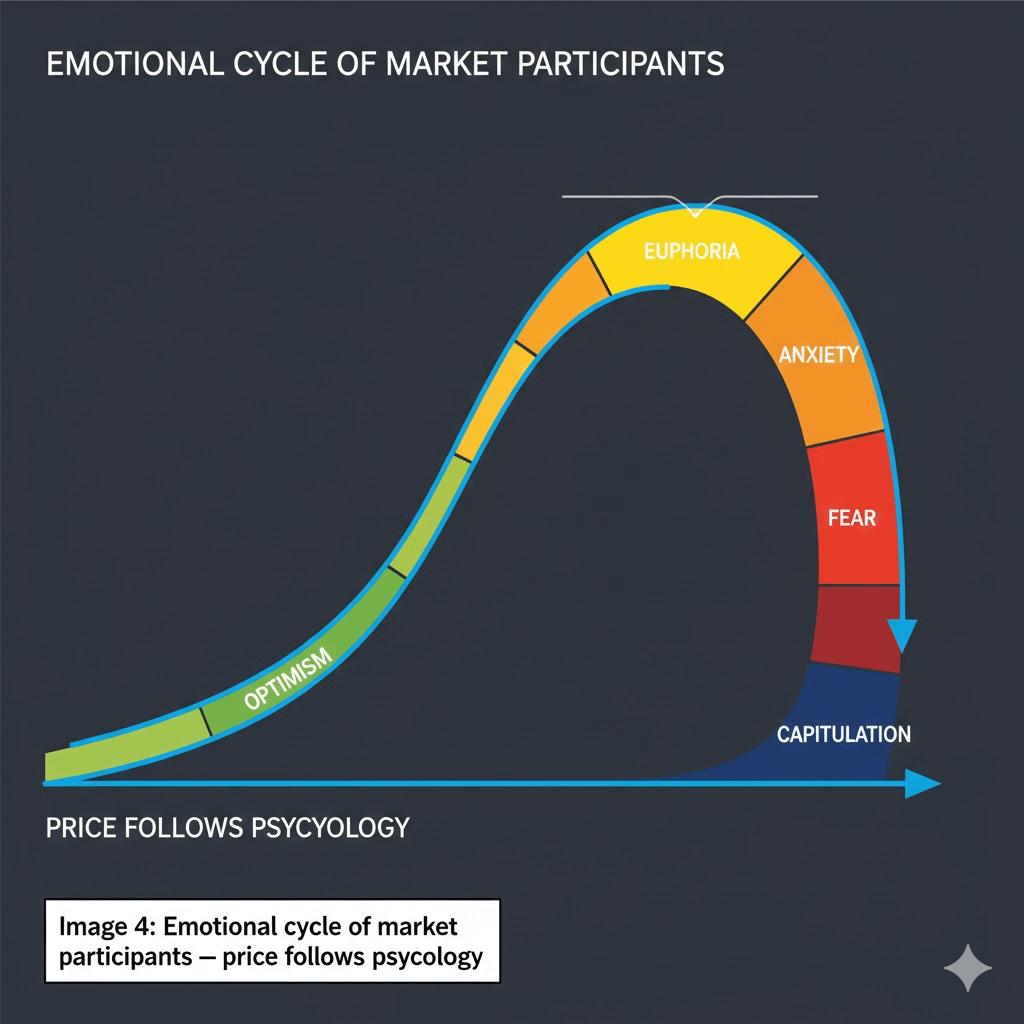
📈 Phase 1: The FOMO Phase (Euphoria Begins)
This is where the emotional cycle accelerates.
Price breaks a key resistance level.
Green candles stack aggressively.
Social media sentiment flips extremely bullish.
You see posts like:
“This is just the beginning.”
“Next stop: New ATH.”
“Don’t miss this opportunity.”
This is classic herd behavior.
When assets like Bitcoin or Dogecoin enter parabolic moves, early buyers are already sitting in strong profit. But late participants mostly retail start entering aggressively out of fear of missing out (FOMO).
What’s happening psychologically?
Recency bias: Traders assume recent gains will continue.
Social proof: If everyone is bullish, it must be right.
Greed activation: Quick profits seem guaranteed.
At this stage:
Volume spikes
Funding rates rise sharply
Leverage increases
Breakouts look “obvious”
Retail buys because price is moving not because risk/reward is attractive.
🏦 Phase 2: The Distribution Phase (Smart Money Exits)
This is the phase most beginners fail to recognize.
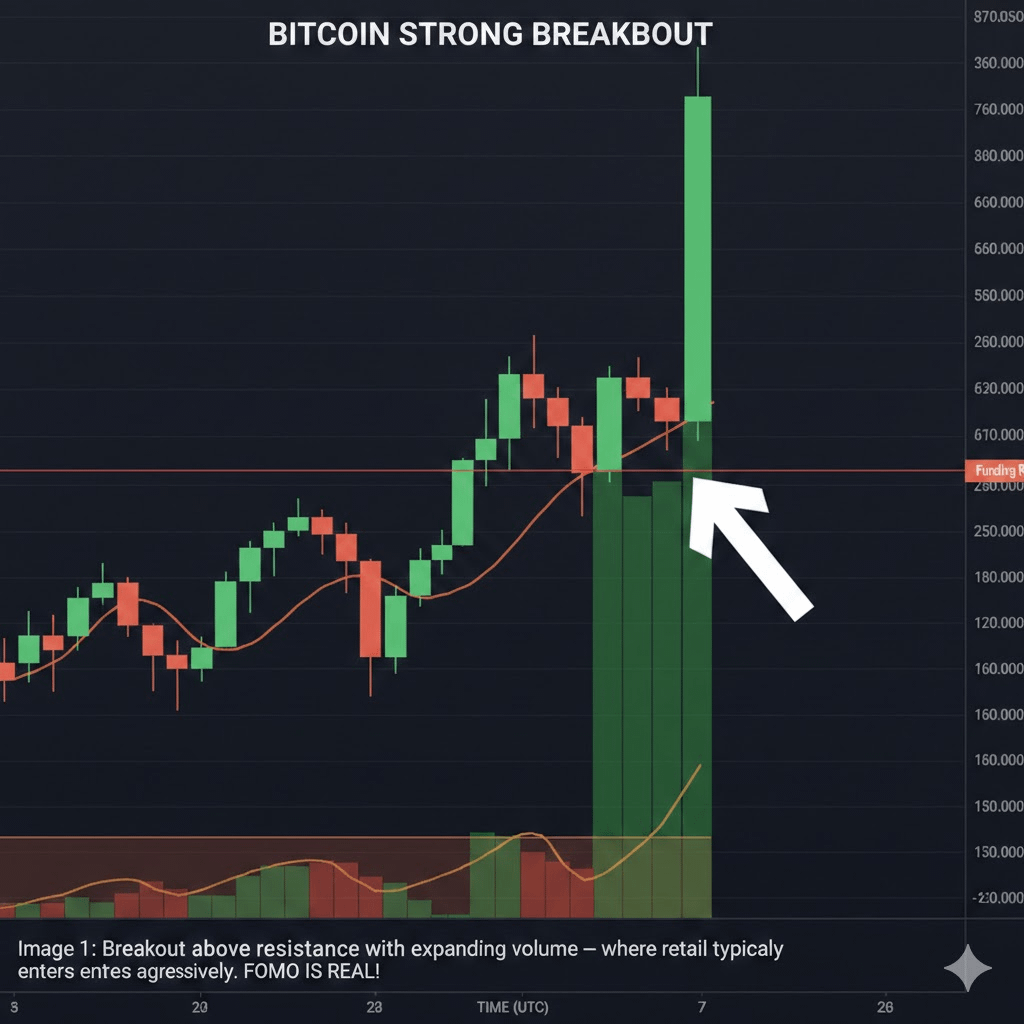
While retail enthusiasm peaks, experienced traders and institutions often begin to distribute into strength.
Distribution doesn’t look dramatic.
Instead, it often looks like:
Sideways consolidation
Repeated failed breakouts
Bearish divergences on momentum indicators
Large wicks on higher timeframes
The narrative remains bullish. Media headlines reinforce optimism. Influencers double down.
But beneath the surface, liquidity is being absorbed.
What’s happening psychologically?
Overconfidence bias
Confirmation bias (ignoring bearish signals)
Anchoring bias (fixating on higher price targets)
Retail averages up.
Smart money reduces exposure.
The top forms not because everyone is bearish but because everyone is too bullish.
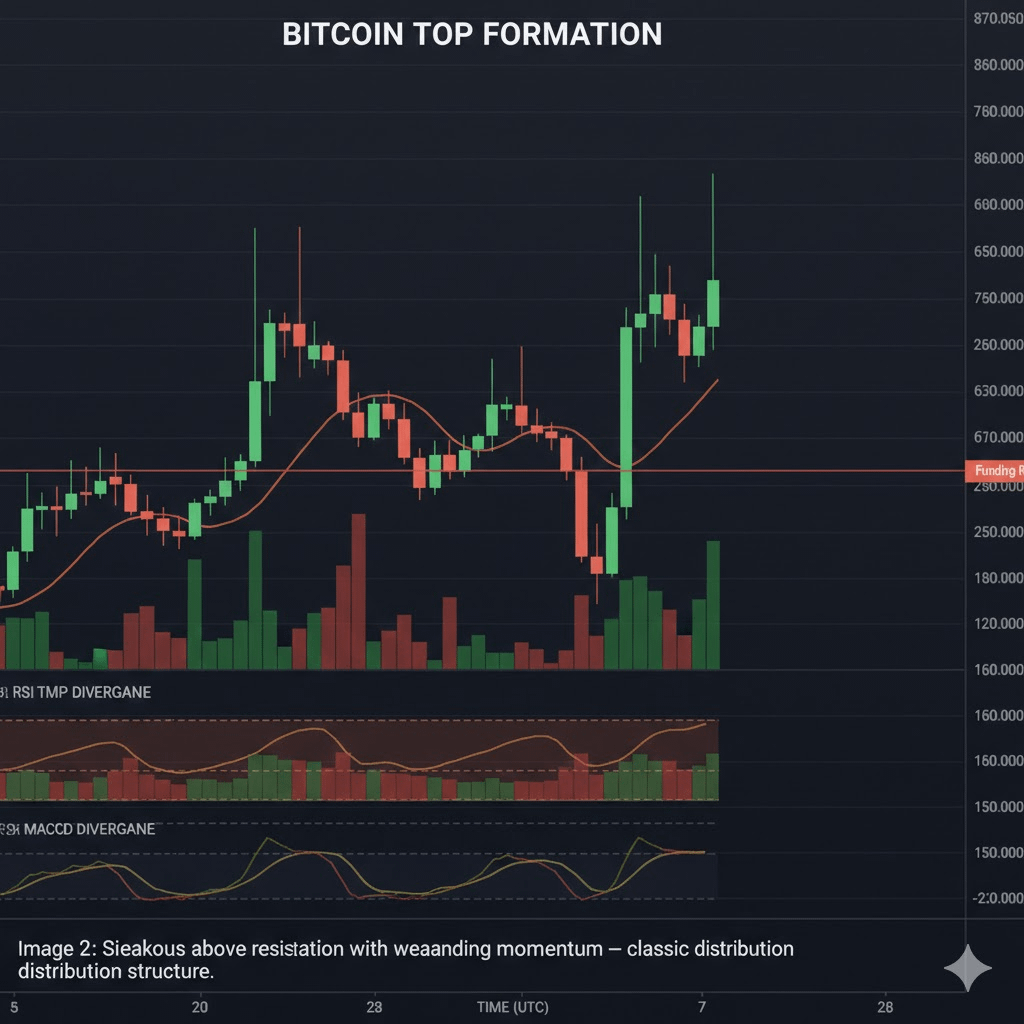
📉 Phase 3: The Panic Sell Phase (Capitulation)
Then momentum shifts.
Support levels break.
Liquidations cascade.
Funding flips negative.
Sentiment turns from euphoria to fear within days.
This is where loss aversion dominates.
Research in behavioral finance shows that humans feel losses more intensely than gains. So when price drops below their entry, panic decisions begin.
Retail traders who bought at the top now:
Close at a loss
Sell into support
Abandon long-term plans
Swear off the market (temporarily)
Ironically, this is often when accumulation quietly restarts.
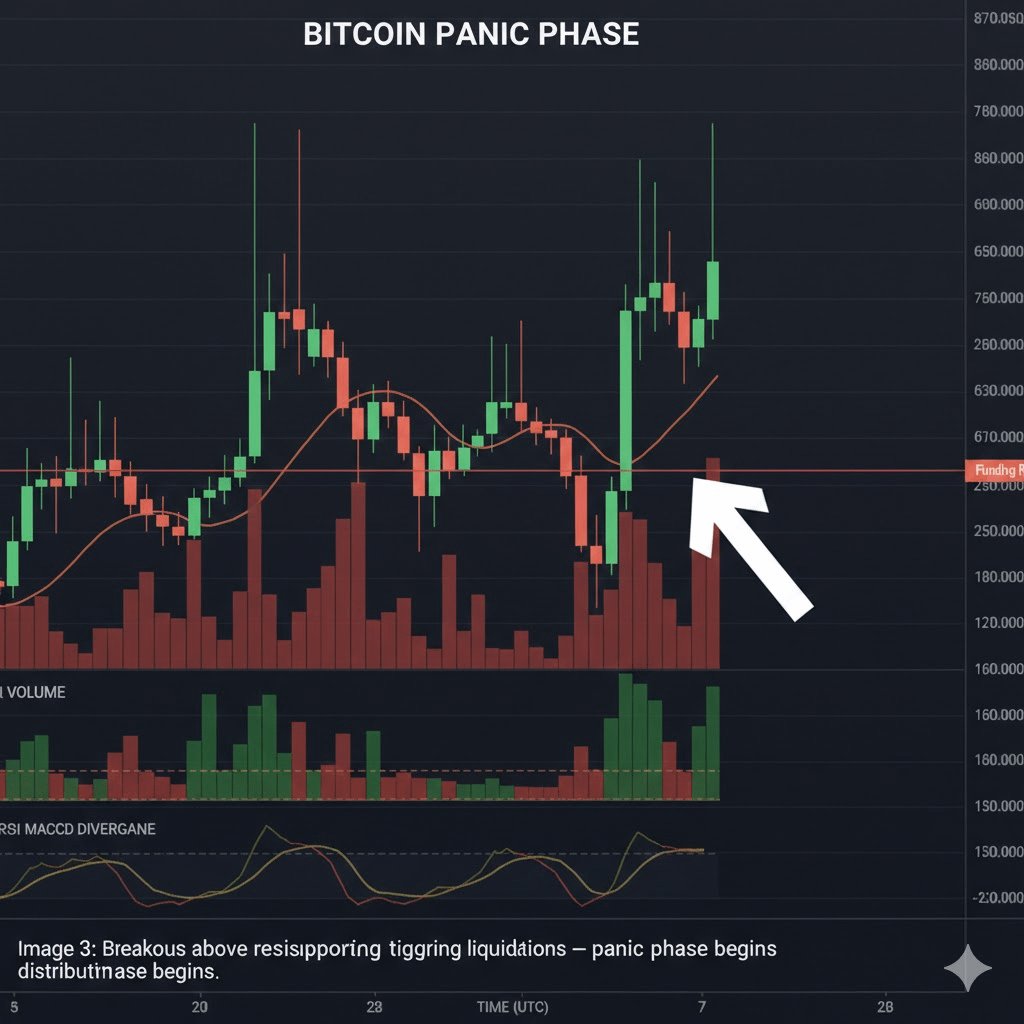
🔄 The Emotional Market Cycle
Every cycle tends to follow this pattern:
Disbelief
Hope
Optimism
Euphoria (Retail heavy entry)
Anxiety
Denial
Fear
Capitulation
The market transfers capital from emotional participants to disciplined ones.
Not because retail is unintelligent but because markets exploit predictable human behavior.
🛡 How to Avoid Emotional Entries
The goal isn’t to predict every top.
The goal is to avoid becoming exit liquidity.
Here are practical decision-making rules:
✅ 1. Define Your Plan Before Entering
If you don’t know:
Where you enter
Where you exit
Where you’re wrong
You are trading emotion.
Professional traders plan in calm conditions not during volatility spikes.
✅ 2. Don’t Chase Parabolic Moves
Late-stage breakouts often offer the worst risk-to-reward.
Buying strength feels good.
Buying value feels uncomfortable.
The uncomfortable trade is often the smarter one.
✅ 3. Monitor Sentiment Indicators
When:
Funding rates are overheated
Social media is extremely bullish
Everyone is calling for new highs
Risk is usually elevated.
Extreme optimism often precedes local tops.
✅ 4. Use Position Sizing
Even if you’re wrong, proper sizing prevents emotional collapse.
Overexposure creates panic.
Controlled exposure preserves clarity.
✅ 5. Accept That You’ll Miss Moves
Missing a pump is not a loss.
Chasing it and getting trapped often is.
Discipline beats excitement in the long run.
🎯 Why Understanding Psychology Matters More Than Predictions
Anyone can predict a target.
Few can manage their emotions when price approaches it.
Judges, serious investors, and long-term participants value decision-making frameworks over hype calls.
The market rewards:
Patience over speed
Structure over impulse
Probability over certainty
If you master your psychology, you automatically improve your edge.
Because in crypto, the biggest trap isn’t volatility.
It’s emotion.