

Most chains launch with ambition. Fogo launches with constraints in mind.
The core thesis behind Fogo is not that blockchains need more features. It’s that they need better conditions. Lower latency. Lower friction. Higher predictability. Everything else builds on that.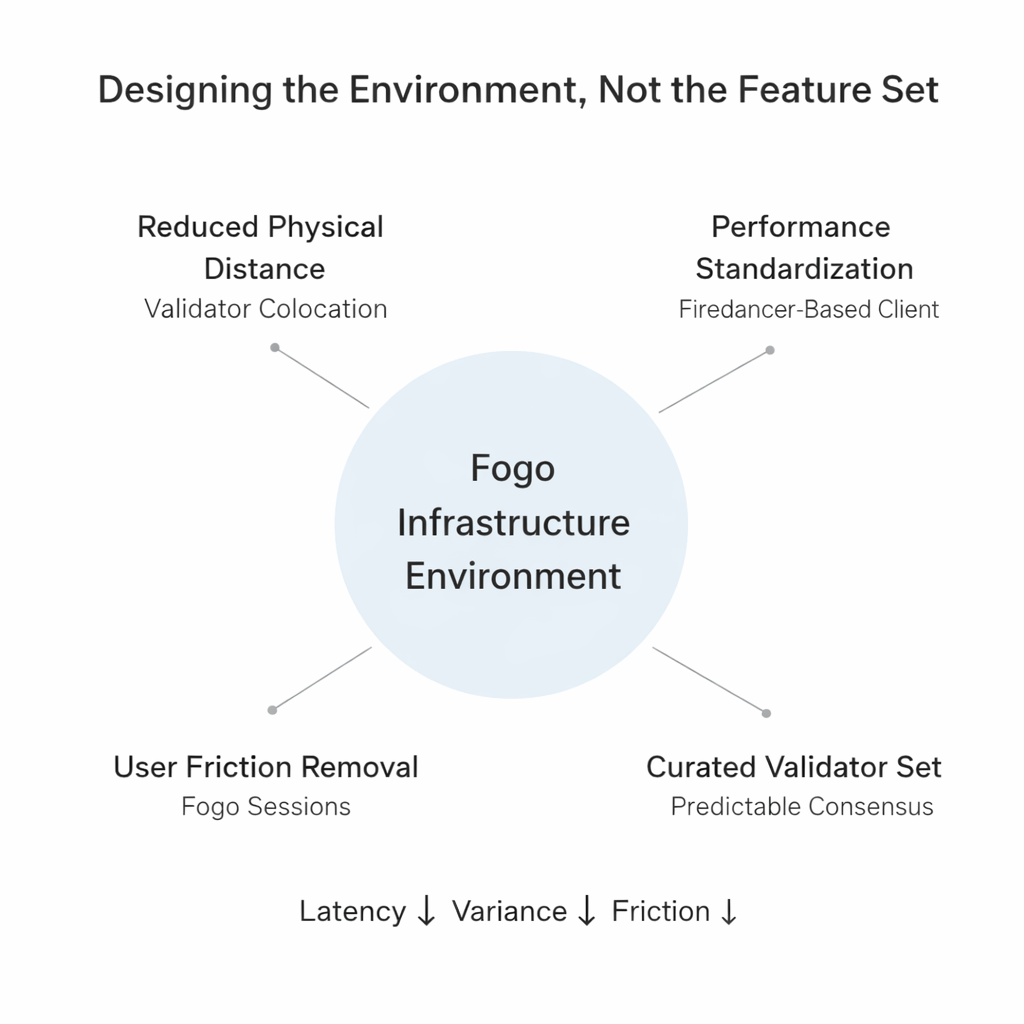
When you look at the ecosystem preparing to go live, it’s not just a list of DeFi apps. Ambient for perpetuals. Valiant for spot liquidity. Pyron and FogoLend for money markets. Brasa for liquid staking. FluxBeam and Invariant for execution. Portal Bridge for connectivity.
The important part isn’t the names. It’s the alignment. These products are launching inside an environment intentionally optimized for real-time execution. That changes how they behave under pressure. It changes how traders experience them. It changes how builders design around them.
Fogo Sessions is where the product lens becomes obvious. Crypto has normalized friction. Repeated signatures. Endless approvals. Gas anxiety. Sessions quietly removes that loop. One scoped intent. Time-limited permissions. Defined boundaries. Interaction becomes fluid without sacrificing custody.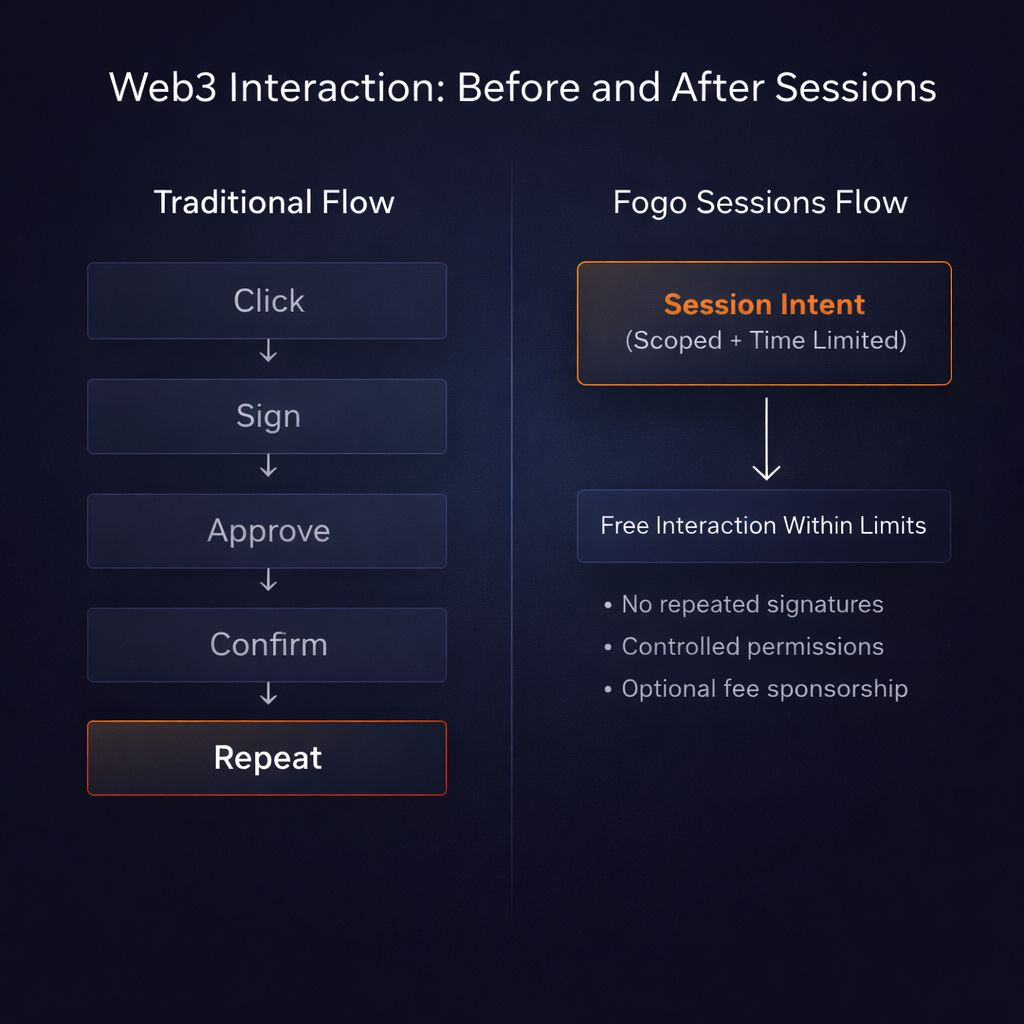
That is not cosmetic UX. It changes user behavior. When friction drops, engagement increases. When signatures disappear, interaction frequency rises. Sessions reframes access without diluting security.
Then comes colocation. This is not a marketing phrase. It’s an infrastructure decision. Validators placed in the same high-performance data center environment reduce signal travel time dramatically. Blocks settle in around 40 milliseconds not because of theoretical throughput, but because physical distance has been minimized.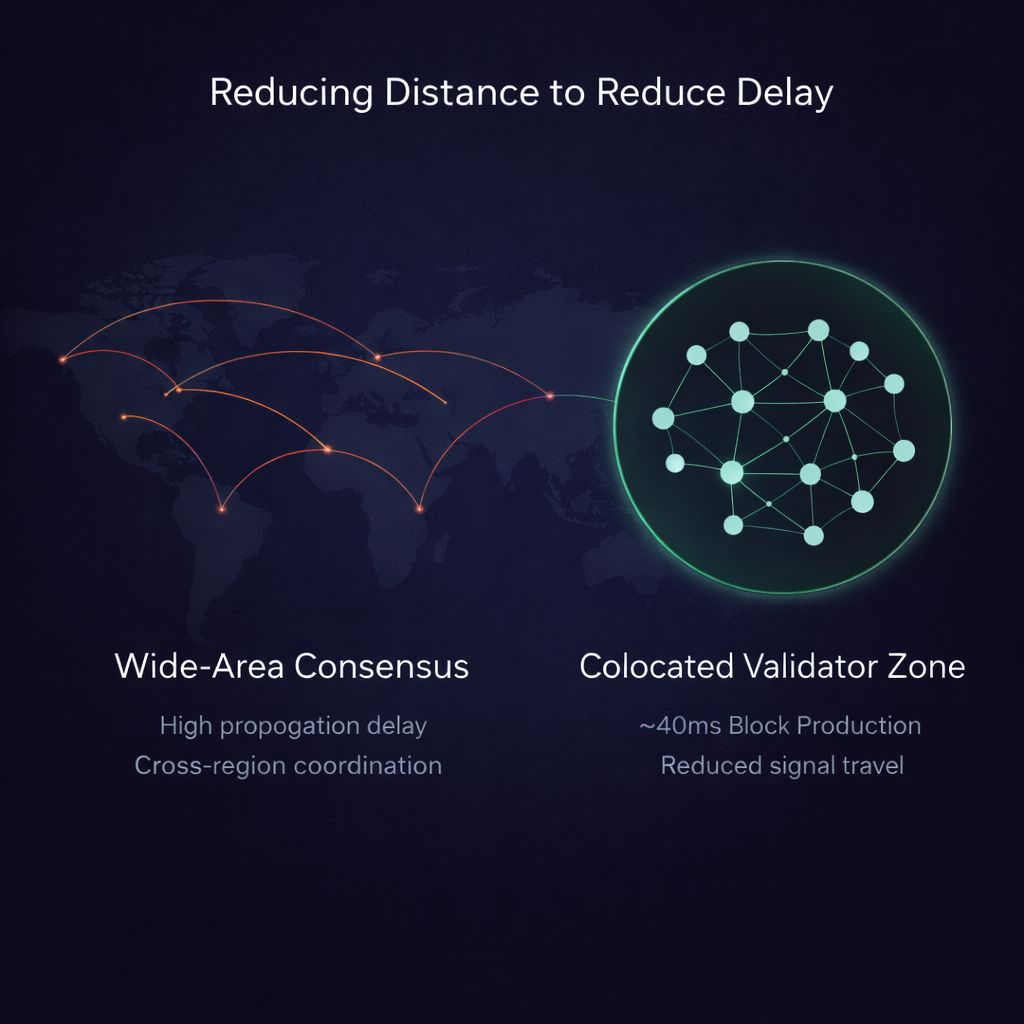
Fogo treats physics as real. That alone separates it from many designs.
Underneath, the Firedancer-based client enforces performance standards. Not everyone can run casually configured hardware and still shape the network’s pace. Variance is controlled early. Validator selection is deliberate. Reliability is monitored.
The idea is simple. If the slowest participants define the ceiling, then raise the floor.
When you combine these layers, a pattern appears. Sessions reduce user friction. Colocation reduces physical delay. A custom client reduces performance variance. A curated validator set reduces unpredictability.
This is not about launching another SVM-compatible chain. It’s about redefining what fast, fair DeFi should feel like in practice.
Fogo is not promising a revolution. It is engineering an environment.
And environments, when designed correctly, quietly outperform narratives.
