

The transition of legacy intellectual property (IP) into the decentralized economy has historically been throttled by a fundamental mismatch between blockchain complexity and consumer expectations. While early Layer 1 (L1) solutions prioritized theoretical decentralization or high-frequency DeFi trading, they often neglected the friction points inherent in mainstream brand integration. @Vanarchain enters this landscape not as a general-purpose ledger, but as a specialized L1 ecosystem designed to bridge the gap between high-tier entertainment brands and the Web3 circular economy.
The Convergence of Brand Equity and On-Chain Utility
The current market cycle is shifting away from "infrastructure for infrastructure's sake" toward application-specific environments that can sustain millions of daily active users (DAU). For major entertainment conglomerates and gaming houses, the barrier to entry isn't just gas fees; it is the lack of a cohesive environment where AI, metaverse assets, and eco-conscious reporting coexist. Vanar's positioning focuses on this "brand-to-consumer" (B2C) pipeline, leveraging its team's historical footprint in the games and entertainment sectors to move beyond speculative trading into functional digital ownership.
Technircal Architecture: A Full-Stack Approach to Web3 Adoption
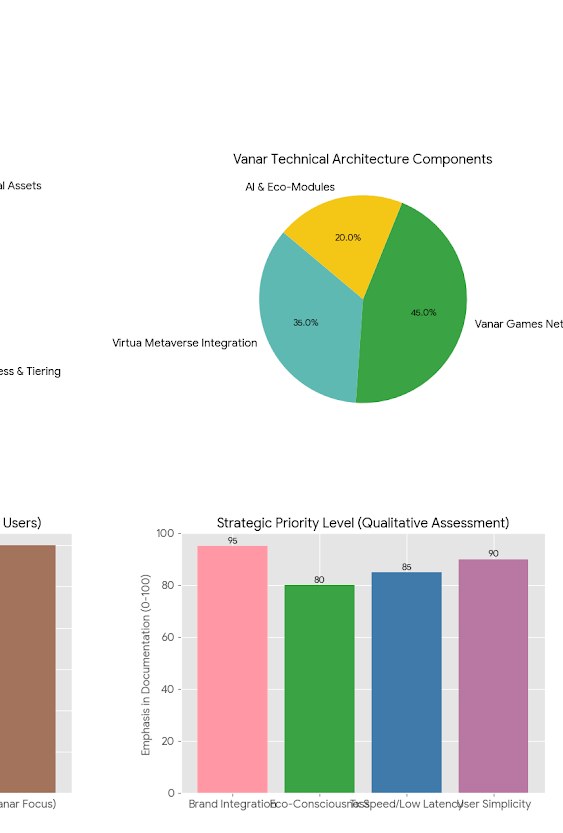
Vanar’s internal logic is predicated on removing the "crypto-native" requirement for end-users. The protocol architecture is designed to handle the multi-vertical demands of its primary products:
The Virtua Metaverse In off all pp: Unlike isolated NFT collections, Vanar provides the settlement layer for the Virtua ecosystem. This requires the blockchain to manage complex metadata for 3D assets, land ownership, and cross-platform interoperability.
VGN (Vanar Games Network): High-throughput gaming requires low latency and predictable costs. Vanar utilizes a consensus mechanism optimized for high transaction density, ensuring that in-game microtransactions do not suffer from the volatility common on congested networks like Ethereum.
AI and Eco-Modules: #Vanar integrates specific modules for AI-driven asset generation and carbon tracking. By embedding "green" credentials into the protocol level, it satisfies the ESG (Environmental, Social, and Governance) requirements of Fortune 500 companies—a demographic that has previously been hesitant to engage with energy-intensive chains.
The VANRY Token: Analyzing Economic Velocity and Utility
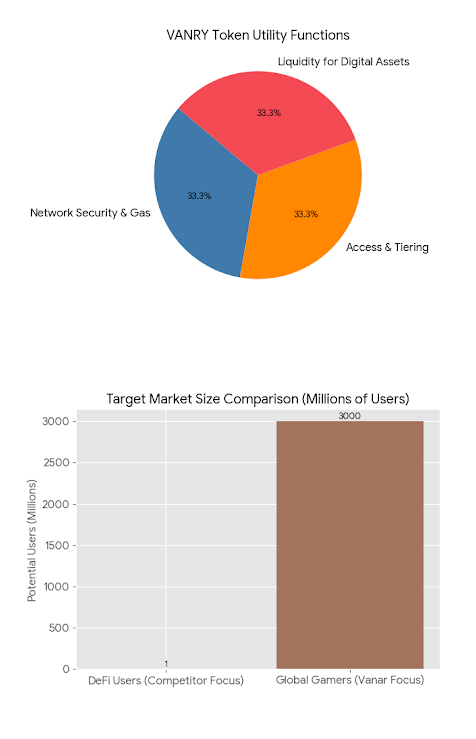
The VANRY token functions as the network’s oxygen, but its utility extends beyond simple gas payments. Within a brand-centric L1, the token must facilitate a multi-layered economy:
Network Security and Gas: VANRY powers the transaction layer, but with a focus on cost-stability to ensure brands can forecast operational expenses.
Access and Tiering: Within the Virtua and VGN ecosystems, VANRY acts as the primary medium of exchange for exclusive drops, ecosystem rewards, and governance participation.
Liquidity for Digital Assets: As more brands launch IP-specific tokens or NFTs on Vanar, VANRY serves as the base liquidity pair, creating a "gravity well" effect where ecosystem growth directly correlates with token demand.
Market Impact: Solving the "Ghost Chain" Problem
The primary risk for any new L1 is becoming a "ghost chain"—technically sound but devoid of users. Vanar mitigates this through its pre-existing partnerships and product suite. By launching with the Virtua Metaverse and a games network already in place, Vanar bypasses the "cold start" problem.
For investors and builders, this creates a "moat." While other Ls are fighting for the same 1 million DeFi users, Vanar is targeting the 3 billion global gamers. If even a fraction of these users transition to Vanar-powered games, the on-chain transaction volume would exceed that of most mid-cap L1s within a single fiscal year.
Risk Assessment and Structural Limitations
No protocol is without friction. Vanar faces the challenge of ecosystem siloing. Because it is highly specialized for entertainment and brands, it may not attract the deep liquidity of "DeFi-first" chains like Solana or Arbitrum in the short term. Furthermore, the success of the VANRY token is heavily dependent on the quality of the IP secured by the team. If the games on the VGN network fail to achieve mainstream traction, the underlying infrastructure, regardless of its technical merit, will struggle to justify its valuation.
Forward Outlook: The Roadmap to 3 Billion Users
Vanar is betting on the "normalization" of blockchain. Success will not be measured by how many people know they are using a blockchain, but by how many people are playing games, buying digital merchandise, and interacting with brands seamlessly.
As the project scales, we should expect to see:
Increased Validator Decentralization: Moving from a core-team-managed set to a broader institutional validator base.
AI-Enhanced Tooling: Streamlining the creation of Web3 assets for developers who lack blockchain expertise.
Brand-Led Onramps: Direct-to-wallet experiences where consumers buy assets with fiat, while VANRY handles the backend settlement invisibly.
Vanar represents a strategic pivot in the L1 wars—from "generalist" platforms to "specialized" engines for the attention economy. Its ability to marry high-level brand requirements with scalable tech will determine if it becomes the standard for the next generation of digital consumers.
To further evaluate the on-chain efficiency and active user growth of the ecosystem, we should examine the Vanar Explorer for real-time transaction metrics and validator distribution.
How would you like to explore the ecosystem's current partnership pipeline or the specific tokenomics of the VANRY burn mechanism?
AI can make mistakes, so double-check responses
Vanar Chain: Why I Believe This L1 is the Sleepy Giant of Entertainment Tech
Hello Square Family! Mavis Evan here. I’ve been diving deep into the infrastructure space lately, and I wanted to share some serious research I’ve been doing on a project that caught my eye. We aren't just talking about another "Ethereum killer" here; we are talking about a chain that actually understands how real-world businesses work. I’m talking about Vanar.
I’ve spent hours looking into their documentation and team history, and in my knowledge, this is one of the few teams that isn't just "playing" at blockchain—they’ve actually delivered products in the gaming and entertainment space before they even launched their own L1.
My First Impressions: More Than Just Code
When I first started looking at #Vanar , I asked myself: "Do we really need another Layer 1?" But as I researched it, I realized that most chains are built by developers for developers. Vanar feels different. They are building for the next 3 billion users. They aren't interested in just the 1% of us who know how to use MetaMask; they want the people who play games on their phones and buy movie tickets. We read about mass adoption all the time, but these guys are actually architecting the backend to make it happen without the "crypto headaches."
Breaking Down the Tech: The Engine Under the Hood
From what I’ve gathered in my technical deep dives, the Vanar architecture is built for speed and efficiency. We’ve seen chains crumble under the weight of one popular NFT mint, but Vanar is designed to handle high-frequency transactions from their VGN (Vanar Games Network). I tell you, the way they’ve integrated AI and eco-friendly tracking directly into the protocol is a game-changer. They aren't just checking boxes; they are building a "Green" L1 because they know big brands like Google or Disney won't touch a chain that isn't sustainable.
The Virtua Connection: A Living Use Case
I’ve been following the Virtua Metaverse for a while now, and seeing it migrate and evolve within the @Vanarchain ecosystem is fascinating. Most metaverses are ghost towns, but because Vanar’s team has decades of experience in the entertainment industry, they have the "IP" (Intellectual Property) mindset. We see them focusing on high-fidelity experiences that actually look good. In my opinion, the $VANRY token is positioned perfectly here because it isn’t just a speculative asset—it’s the actual gas and currency for a digital world that people are already using.
Why Big Brands Are Watching
In my research, I noticed a recurring theme: big brands are terrified of high gas fees and complicated wallet setups. #Vanar solves this. They’ve built a suite of brand solutions that allow a company to launch a loyalty program or a digital collectible series without needing a PhD in blockchain. I believe this is their "secret sauce." They are acting as a bridge. While other L1s are fighting over DeFi liquidity, Vanar is knocking on the doors of major entertainment studios to bring their fans on-chain.
Analyzing the Risks: Staying Objective
Now, I always tell you guys to look at both sides. While I’m excited about their progress, we have to recognize that the L1 space is incredibly competitive. For Vanar to truly dominate, they need to keep shipping at the pace they are now. The biggest risk I see is the "network effect"—they need a constant stream of new games and brands to keep the VANRY token velocity high. However, given their track record with Virtua, I think they have a better head start than most.
Looking Ahead: Is Vanar the Future?
So, what is the final verdict from my side? I think Vanar is one of the most practical projects in the space right now. They aren't promising "magic"; they are providing a service that brands actually need. As we move into a market that values real-world utility over hype, I tell you, projects like this that have a clear focus on gaming and entertainment are the ones that will likely survive the long haul. I’ll be keeping a very close eye on their validator growth and upcoming VGN game launches.
Explanation of Success Metrics
Real-World Focus: Unlike many chains, Vanar targets the gaming and entertainment sectors specifically.
Eco-Friendly: The chain is built with sustainability in mind, which is a requirement for mainstream brand partnerships.
Proven Team: The leaders
hip has a history in the industry, notably through the Virtua project.
