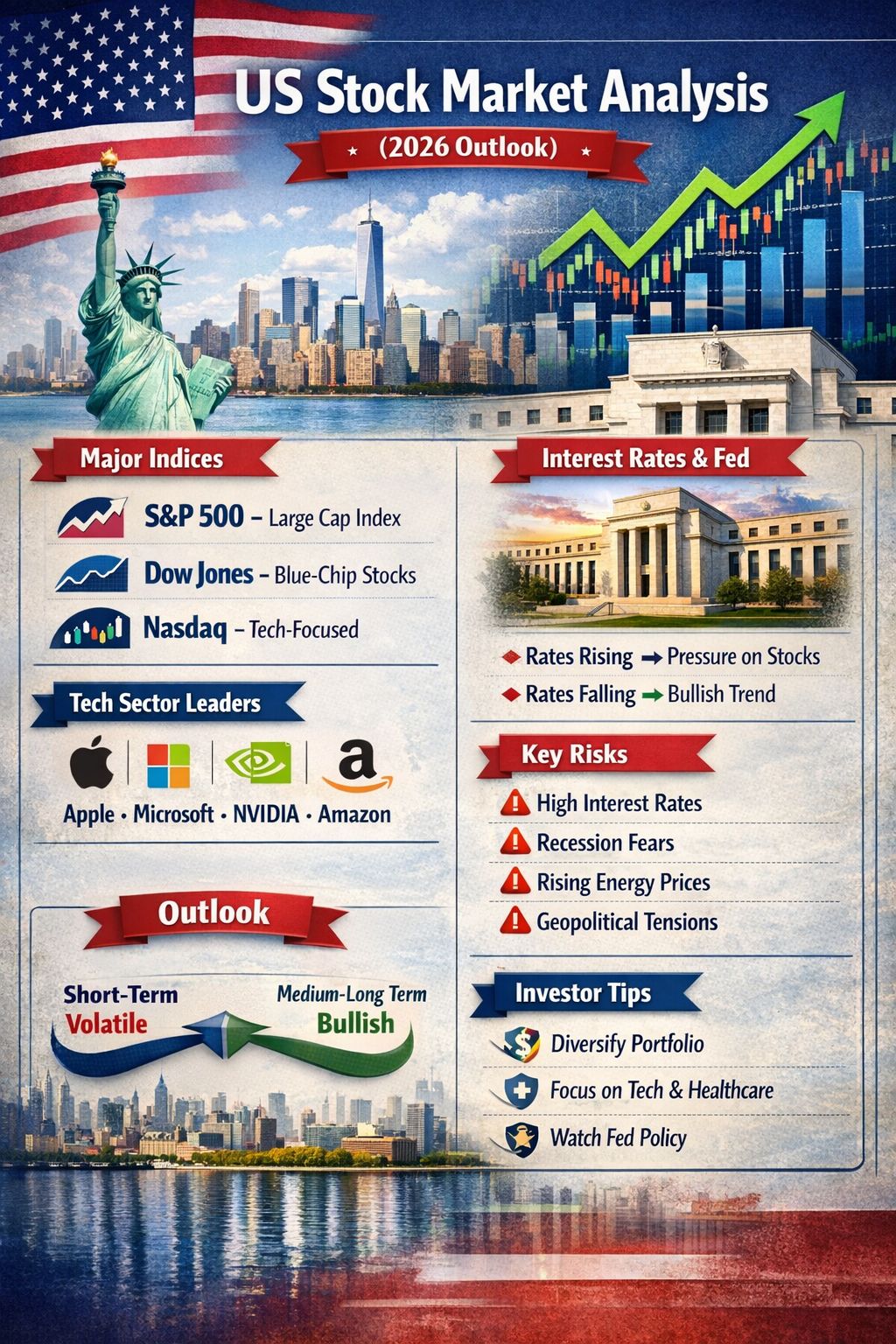
The United States stock market is considered the primary barometer of the global economy. Its direction is mainly driven by four key factors: technology sector performance, interest rates, inflation, and geopolitical conditions.
📊 Major Index Performance
Analysts typically monitor three major indices:
S&P 500 — Tracks the performance of 500 large-cap companiesDow Jones Industrial Average (DJIA) — Represents major blue-chip companies
Nasdaq Composite — Heavily weighted toward technology stocks
Currently, strong earnings from technology companies have made the Nasdaq more volatile but also growth-driven.
🏦 Impact of Interest Rates & the Fed
The biggest driver of the market is the policy of the Federal Reserve.When interest rates rise → stock markets typically face pressureWhen interest rates fall → liquidity increases, often supporting a bullish trendSigns of declining inflation usually raise investor expectations for future rate cuts, which is positive for equities.
💻 Dominance of the Technology Sector
Technology and AI-focused companies are leading the market:
Apple
Microsoft
NVIDIA
Amazon
In particular, demand for AI chips and cloud computing services has created new bullish momentum.
⚠️ Key Risks
Interest rates staying high for an extended period
Recession concerns
Rising energy prices
Geopolitical tensions
These factors could quickly trigger bearish sentiment.
📈 Future Outlook
Under current conditions, the US stock market is likely to remain bullish in the medium to long term but volatile in the short term.
Investor considerations:
Maintain diversification
Monitor technology and healthcare sectors
Closely follow Federal Reserve policy changes