

If you’ve built on Solana, you already know the good part: once you learn the tooling and the mental model, you can move fast. The bad part shows up the moment you try to ship the same product somewhere else. Different virtual machines, different wallets, different RPC quirks, new SDKs, new edge cases. That “porting tax” is one of the quiet reasons a lot of DeFi ideas never leave the prototype stage. This is where Fogo’s SVM compatibility matters, and it’s not a marketing footnote. It’s a direct shot at developer friction.
Let’s translate the term first. “SVM” is the Solana Virtual Machine, the runtime that executes Solana programs (smart contracts). When Fogo says it’s SVM compatible, it’s saying a Solana program can be deployed on Fogo without modification, and that the usual Solana workflow and interfaces still apply. Fogo’s own docs spell it out plainly: any Solana program can be deployed as-is, and standard Solana tooling can be used to interact with the network because Fogo is compatible with Solana’s runtime and RPC interface.
That sounds simple, but simplicity is the whole point. Developers don’t just write code; they live inside an ecosystem of compilers, CLIs, wallets, explorers, indexers, testing frameworks, and battle tested libraries. Every time a chain asks teams to “just learn our new stack,” it’s adding weeks of risk and re auditing. Fogo’s approach is closer to, “Bring what already works, and focus on the product.” Even keypairs and wallet flows are meant to feel familiar if you’re coming from Solana tooling.
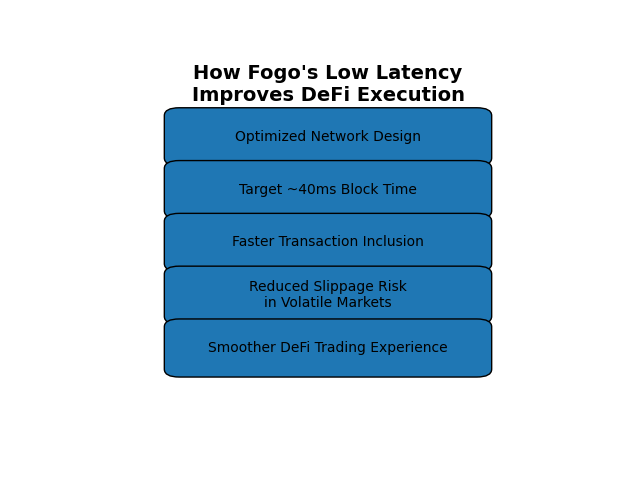
Now layer in why this is suddenly trending. The SVM ecosystem has become a gravity well for builders because it’s one of the rare places where onchain performance and developer throughput can coexist. What Fogo is trying to do is push that performance angle hard, specifically for trading style DeFi where latency and execution quality are the product. On its site and in ecosystem writeups, you’ll see the same numbers repeated: sub 40ms block times as a target, and “sub-second ish” user experience claims built around low latency design choices. In CoinGecko’s overview, the network is described as targeting ~40ms blocks and about 1.3 seconds to finality, with an emphasis on execution that feels nearly instantaneous.
If you’ve traded long enough, you know why that narrative catches attention. In fast markets, “one second” isn’t a rounding error. It’s the difference between getting filled where you expected and getting slipped into a worse position. Traders obsess over latency on centralized venues; DeFi is finally admitting it has to compete on the same axis. Fogo’s thesis, at least on paper, is that you can get closer to that experience by making deliberate tradeoffs: high-performance validator implementations, a Firedancer derived client direction, and design choices like validator co location and “zones” meant to reduce physical network delay.
Progress wise, there are a few concrete timestamps worth knowing. Public testnet activity has been discussed since mid-2025, with at least one ecosystem post dating a public testnet launch to July 23, 2025. Mainnet timing is where you’ll notice the crypto reality: different sources frame “launch” differently. Blockworks Research writes that Fogo launched mainnet on November 25, 2025, and highlights USDC transfers enabled through a Wormhole integration, while also noting that many apps were still in testnet at the time of that research note. Meanwhile, some exchange and third-party guides emphasize “mid January 2026” as the moment Fogo “officially launched,” which may reflect broader public visibility and listings rather than the first block being produced. The practical takeaway is that the network’s buildout spans late 2025 into early 2026, with infrastructure and distribution milestones landing in different waves.
So why does SVM compatibility matter specifically for developers and DeFi builders, beyond the obvious “it’s easier”? Because speed without familiarity doesn’t ship products. If a chain is fast but forces a new execution model, teams pay the cost in audits, tooling gaps, and weird production incidents. If a chain is familiar but not fast enough for the app’s core loop, you end up compromising the design. SVM compatibility is the bridge that lets teams keep Solana’s developer muscle memory while experimenting with different performance assumptions. That reduces the “unknown unknowns,” which is what really kills deadlines.
From a trader’s perspective, I’m less interested in any single TPS headline and more interested in whether builders can iterate quickly enough to find the few designs that actually work in real conditions. Compatibility is an accelerator for that iteration. It’s also a forcing function for honesty: if you claim Solana compatibility, devs will show up with real programs, real dependencies, and real expectations. If the network behaves differently under load, they’ll know immediately.
In other words, Fogo’s SVM compatibility isn’t exciting because it’s novel. It’s exciting because it’s boring in the right way. It tries to make the builder experience predictable, while aiming performance at the exact corner of DeFi where milliseconds and execution quality matter. If you’re building anything trading-adjacent perps, CLOB style markets, or latency-sensitive liquidations the question isn’t “Is it fast?” It’s “Can I ship without rewriting my entire world?” On that question, compatibility is the first gate, and it’s the gate Fogo is clearly trying to keep open.