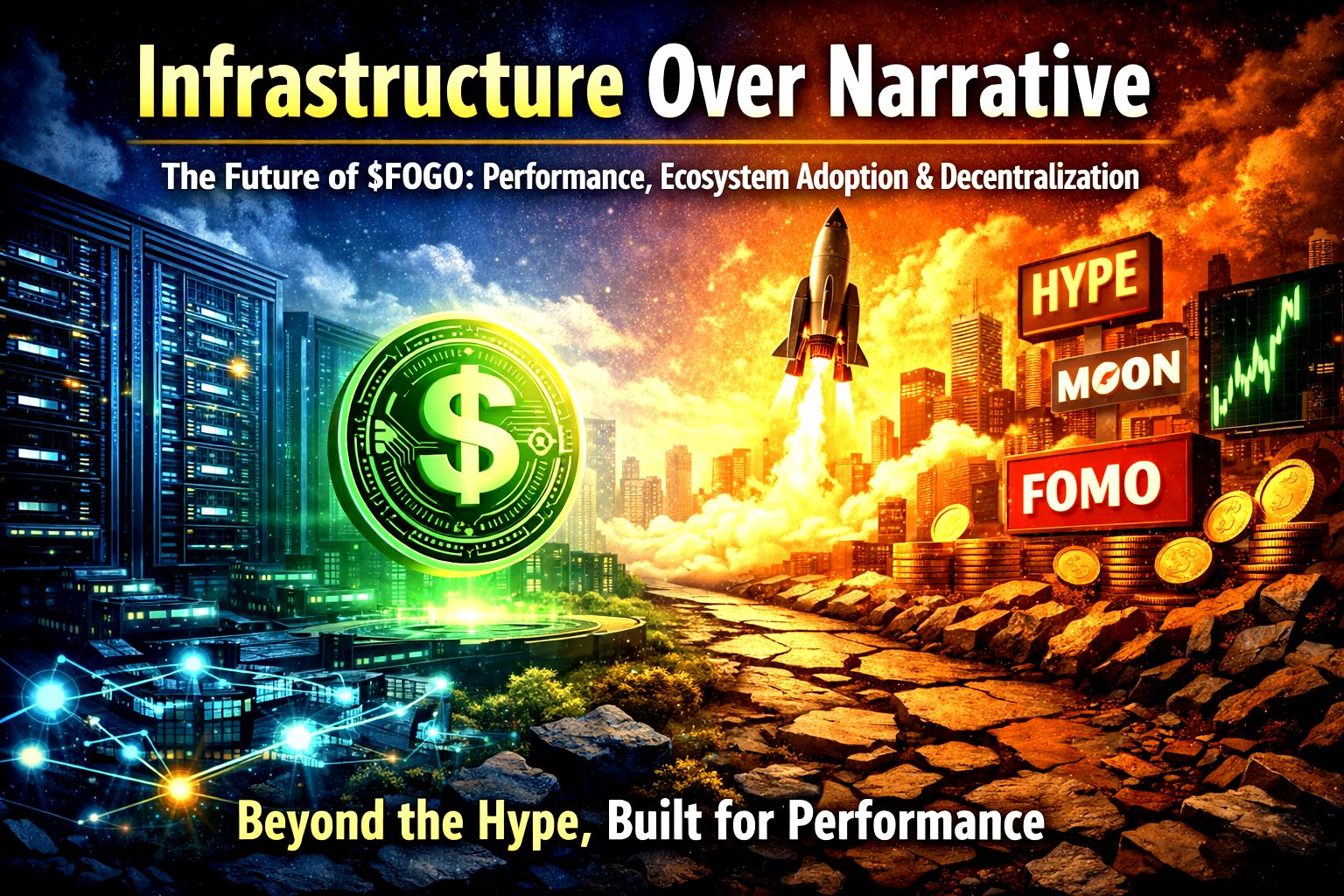
Crypto markets thrive on compelling stories. A strong narrative, viral hashtags, and influencer endorsements can drive massive liquidity almost overnight. This pattern has played out repeatedly with new Layer 1 blockchains: hype arrives first, while robust infrastructure often lags behind.
Eventually, though, the market demands proof: can the network handle real pressure?
FOGO takes a deliberate counter-approach. Rather than chasing narrative momentum, it builds an infrastructure-first Layer 1 blockchain, betting that superior system design will outlast fleeting storytelling in a space that frequently prioritizes vision over verifiable execution.
The Real Test: Performance During Volatility
In high-stakes trading environments, promises mean little compared to actual results. Traders care about slippage, delayed confirmations, block congestion, and unreliable execution not ideology.
When infrastructure falters under load:
Liquidations fail or execute poorly
Order books lose depth
Arbitrage opportunities widen spreads
User confidence quickly deteriorates
The root causes are rarely market direction alone. More often, they stem from latency issues, inefficient validator coordination, and unstable throughput.
Traditional centralized exchanges demand near-zero inconsistency in milliseconds. Many blockchains, however, accept seconds-long delays as normal.
A Clear Analogy
Picture a city engineered for 100,000 people suddenly inundated by 5 million visitors. Traffic jams, signals fail, and logistics collapse. No amount of clever advertising fixes the gridlock you need upgraded roads, better traffic management, and optimized infrastructure.
FOGO applies the same logic: prioritize the "roads" of blockchain ultra-low block times, reduced latency through strategic validator placement, and consistent execution before aggressively pursuing broad ecosystem growth.
What FOGO Actually Delivers (In Simple Terms)
Fogo is a high-performance Layer 1 blockchain built on the Solana Virtual Machine (SVM), fully compatible with Solana tools and applications. It leverages the Firedancer client for optimized execution and introduces multi-local consensus, where validators are grouped in geographic zones (like Tokyo, London, New York) for minimal communication delays.
This design targets:
Sub-40ms block times and near-instant finality
Predictable, low-latency performance
Infrastructure reliability tailored for trading and DeFi
The focus remains on creating objective, measurable benchmarks throughput stability, execution speed, and uptime rather than vague promises that many hype-driven projects prefer to avoid.
The FOGO Token's Practical Role
FOGO serves as the network's native asset: used for transaction fees (gas), staking to secure the network, validator participation, and ecosystem incentives.
Its sustained value hinges on:
Actual network usage and transaction volume
Balanced validator growth and decentralization
Developer and application adoption
While short-term price speculation can create volatility, long-term relevance comes from real utility if builders and users reliably transact and deploy on the chain.
Competing in a Mature Landscape
The Layer 1 space is crowded, with giants like Ethereum and Solana holding massive Total Value Locked (TVL), deep liquidity, mature tooling, and established developer communities.
Liquidity naturally flows to where infrastructure and incentives already exist. For Fogo to gain traction, its performance edge must translate into lasting ecosystem pull turning raw speed into active applications, traders, and liquidity providers.
Pure infrastructure is potential; adoption turns it kinetic.
Short-Term vs. Long-Term Mindsets
Traders chasing quick wins focus on catalysts: exchange listings, unlocks, announcements, or hype cycles.
Infrastructure-oriented participants track slower, harder-to-fake signals:
Consistent uptime and block production
Reliable throughput under load
Geographic validator distribution
Growing real transaction activity
These metrics rarely go viral, but they determine durability. If FOGO succeeds, it will be because developers and institutions select proven reliability over narrative speed.
Key Risks to Consider
Challenges include:
Scaling performance advantages while increasing decentralization over time
Convincing developers to migrate from entrenched ecosystems with network effects
Maintaining a meaningful edge as competitors (including Solana upgrades) close the gap
Performance leads today can become table stakes tomorrow.
The Quiet Truth
In a market dominated by narratives, infrastructure-focused projects rarely capture immediate headlines.
But during real volatility when execution quality separates winners from losers fundamentals prevail.
FOGO is a calculated wager that verifiable, sustained performance not temporary hype will ultimately dictate long-term relevance in on-chain finance.
Time, and consistent results under pressure, will tell if the thesis proves correct. Unlike narratives, infrastructure strength emerges gradually but endures.