

There was a time when I believed understanding crypto meant tracking tokens.
I watched price movements. I followed announcements. I paid attention to whatever was trending. When something moved fast, I assumed it mattered. When something stayed quiet, I assumed it was irrelevant.
It felt like awareness.
In reality, it was distraction.
Because price can move without purpose. Attention can exist without structure. And visibility can be manufactured without real usage.
One night, after hours of watching charts that said everything and explained nothing, I stepped back and asked myself a different question:
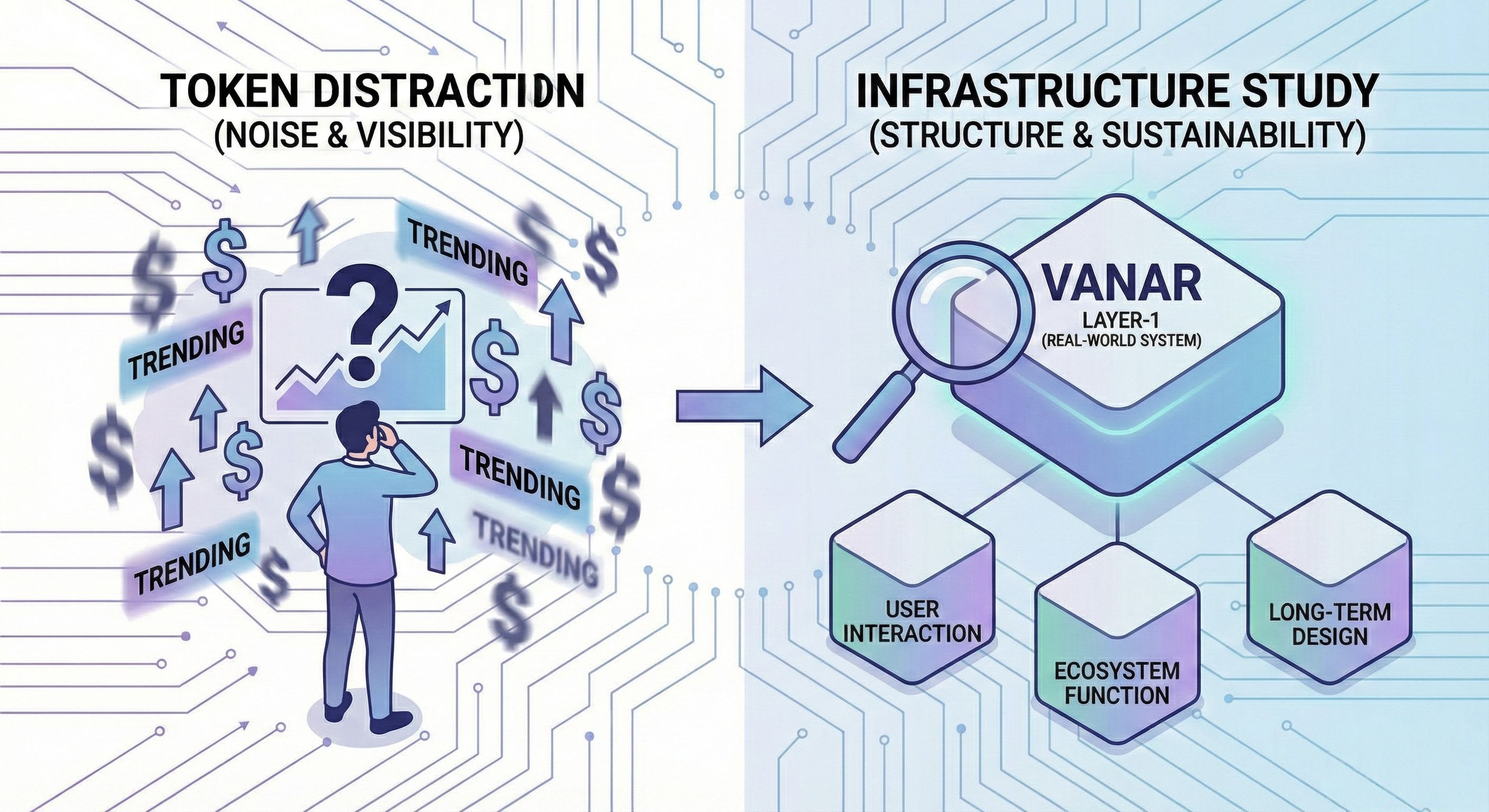
What keeps a blockchain alive when nobody is watching it?
That question changed the way I looked at everything.
I stopped focusing on tokens as isolated assets and started studying blockchains as systems. I began observing how networks are designed. How users interact. How applications connect. How ecosystems function without constant promotion.
What I discovered was uncomfortable.
Many Layer-1 blockchains are optimized for visibility, not sustainability.
They launch with speed as their identity. They attract liquidity through incentives. They generate attention through announcements. But behind that surface, their ecosystems often remain fragmented. Tools exist, but they do not integrate naturally. Applications launch, but users do not stay. Activity appears, but it does not stabilize.
These networks depend heavily on narrative.
And narratives do not last forever.
When attention fades, their usage fades with it.
During this period of deeper research, I came across #vanar .
Not through noise.
Through structure.
@Vanarchain is a Layer-1 blockchain designed from the ground up with a different assumption. Instead of building infrastructure first and hoping real-world usage appears later, Vanar approaches blockchain as a system meant to support real consumer interaction from the beginning.
That distinction is subtle, but important.
Because designing for real-world adoption requires understanding users, not just validators.
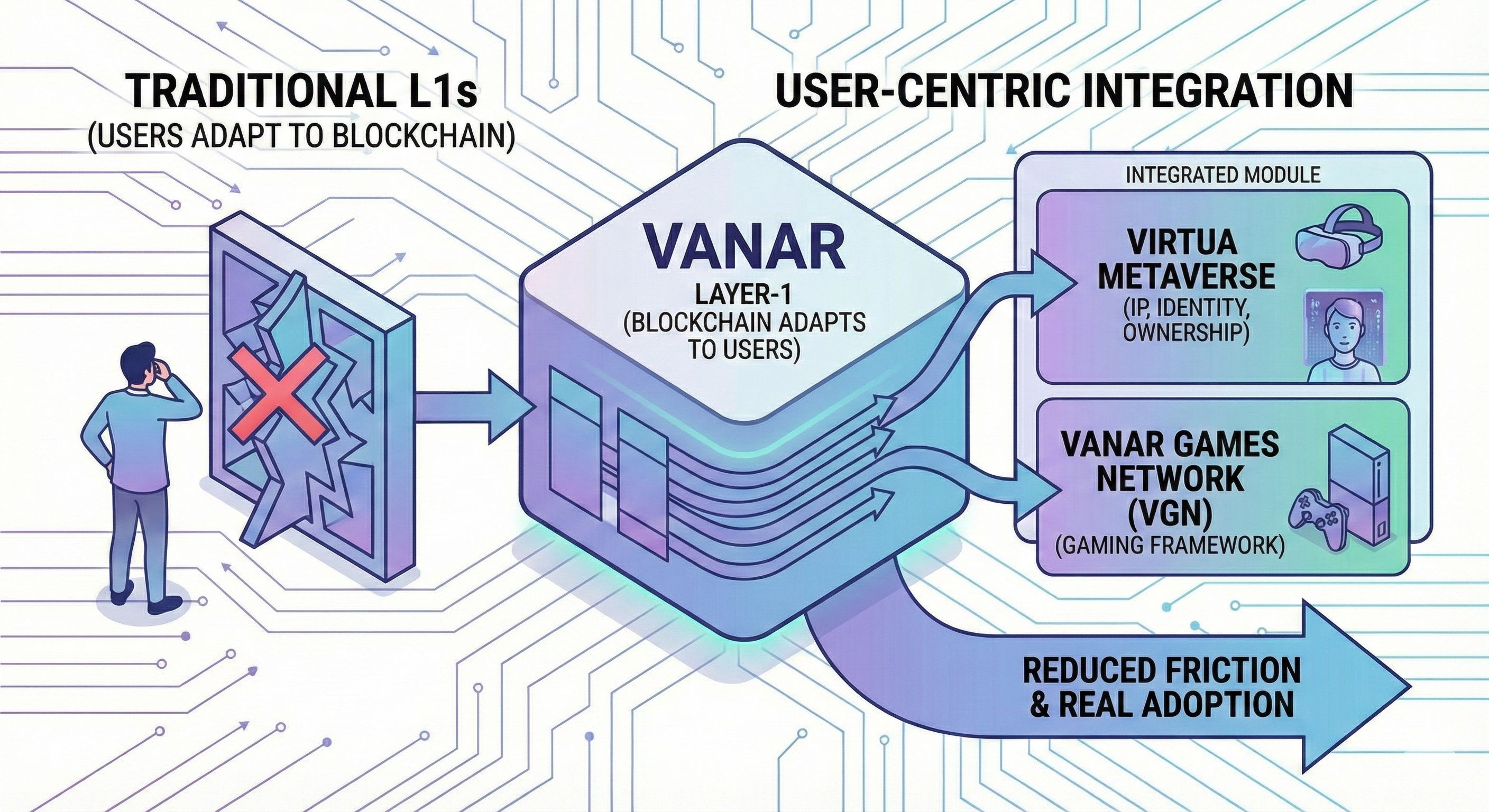
The team behind #vanar brings experience from gaming, entertainment, and brand ecosystems — industries where user experience determines survival. This background is visible in how the ecosystem is organized. Instead of existing as a standalone chain waiting for applications, Vanar integrates directly with environments where users already engage.
Virtua Metaverse is one example of this integration — a digital environment where intellectual property, identity, and ownership exist inside a structured ecosystem rather than as isolated assets.
VGN, the $VANRY Games Network, represents another layer — a framework where gaming infrastructure and blockchain functionality coexist without forcing users to understand blockchain mechanics directly.
This approach reflects a different philosophy.
Instead of asking users to adapt to blockchain, Vanar adapts blockchain to users.
That difference reduces friction.
And friction is what prevents adoption.
As I studied further, I noticed something else.
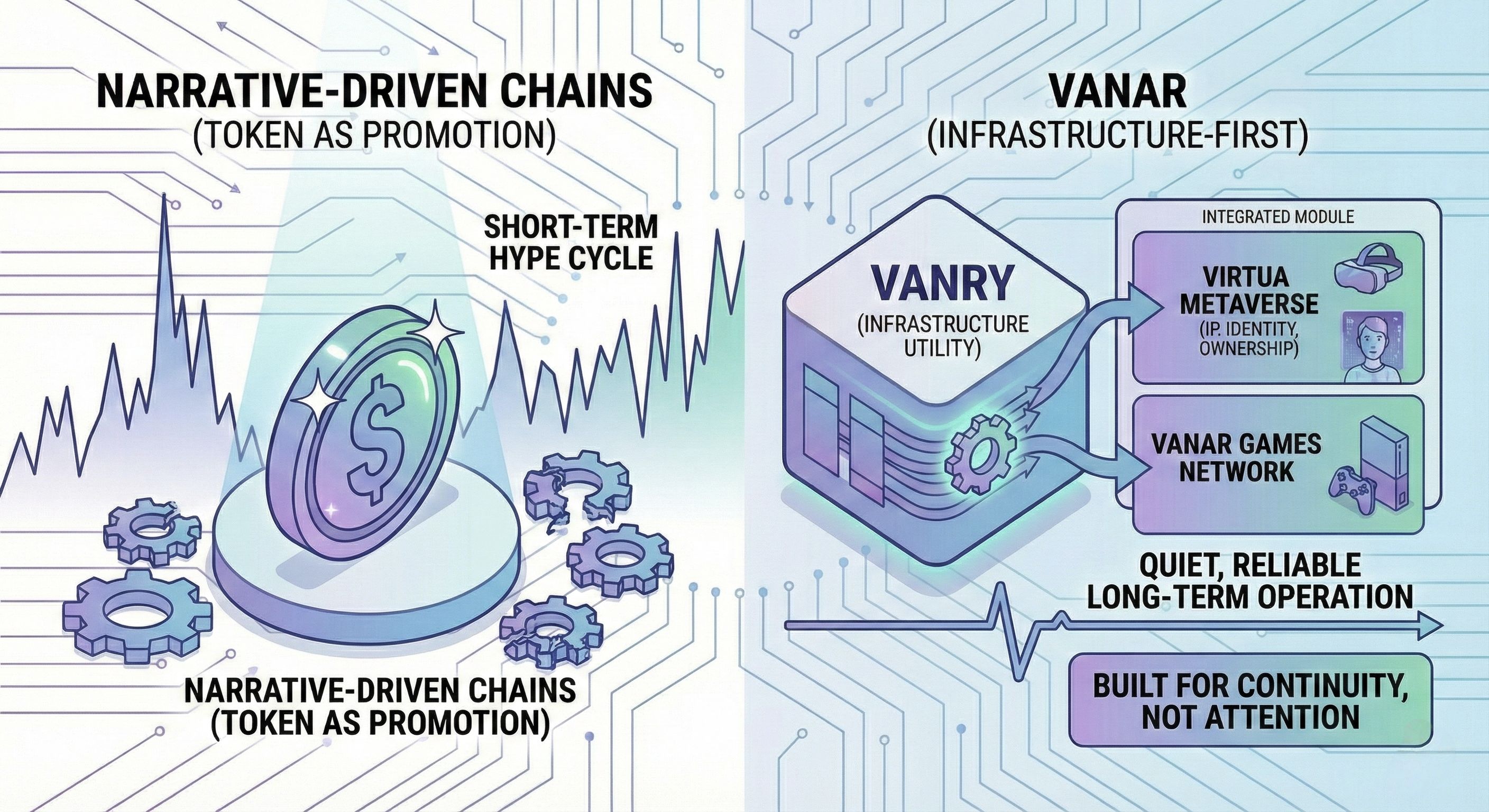
Vanar does not position its token, VANRY, as the center of attention.
It positions it as infrastructure.
$VANRY exists to support interaction across the ecosystem — facilitating transactions, enabling participation, and maintaining system continuity. Its role feels integrated, not promotional. It functions as part of a larger operational framework rather than as a standalone narrative asset.
This design choice reveals confidence.
Because systems built for real usage do not require constant visibility to remain relevant.
They remain active because users remain active.
In contrast, many blockchains rely heavily on token visibility to maintain ecosystem energy. Their activity often rises and falls alongside market sentiment. When excitement slows, engagement slows.
But infrastructure designed around real interaction behaves differently.
It continues operating regardless of attention cycles.
Vanar’s ecosystem structure reflects long-term thinking.
Its integration across gaming, metaverse environments, artificial intelligence applications, ecological systems, and brand partnerships creates multiple points of interaction. This reduces dependence on a single use case and allows the network to evolve organically as adoption grows.
This kind of design is not built for short-term attention.
It is built for continuity.
Studying Vanar reminded me of something important about blockchain infrastructure.
Real strength is rarely loud.
It does not appear suddenly. It does not depend on constant promotion. It emerges through consistency. Through integration. Through usability.
Many networks are designed to attract attention.
Fewer are designed to sustain activity.
Vanar appears focused on the second path.
Its structure reflects intention. Its ecosystem reflects integration. Its token reflects functionality.
It does not attempt to dominate headlines.
It attempts to support usage.
And over time, usage is what defines survival.
This experience changed how I evaluate blockchain systems.
I no longer ask which token is moving fastest.
I ask which infrastructure is built to last.
Because when attention disappears, only structure remains.
And networks designed around real-world interaction do not need to compete for visibility.
They continue operating.
Quietly.
Reliably.
Structurally.
That is when Vanar made sense.