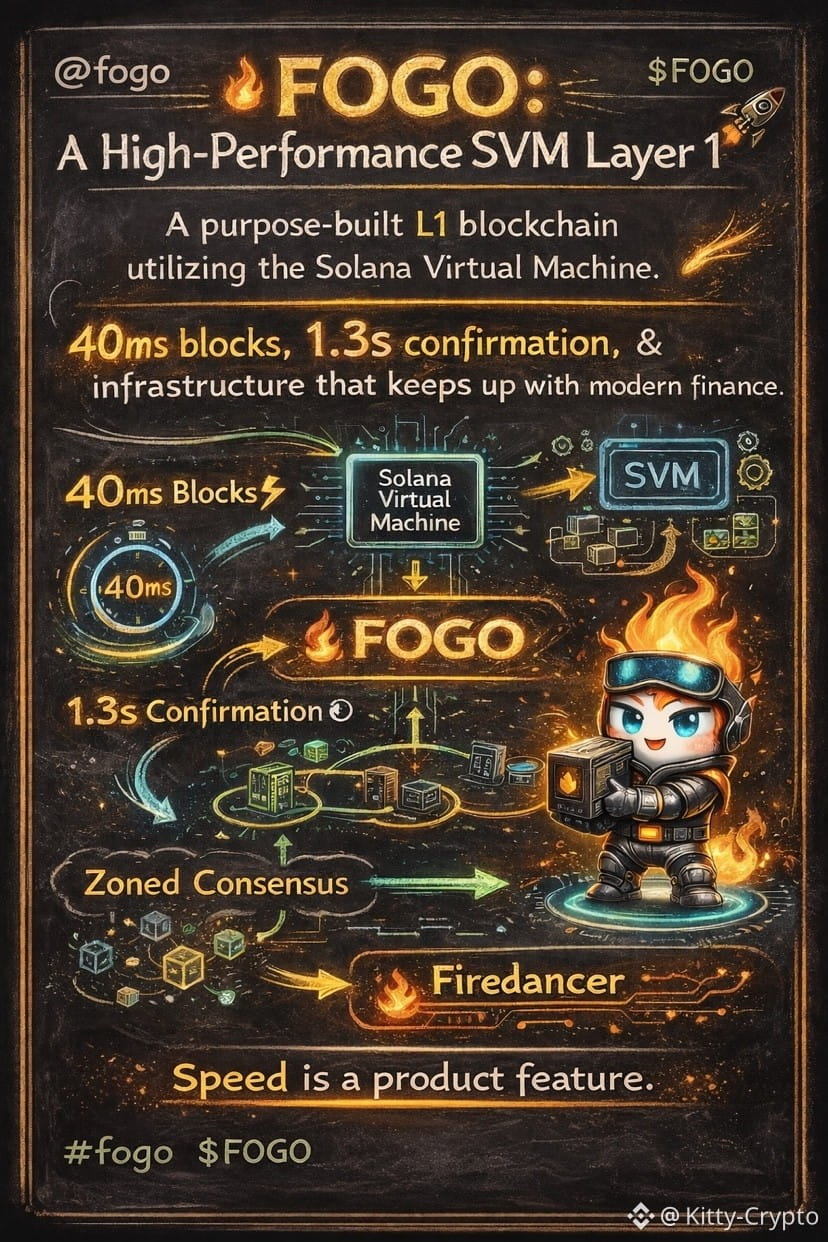
Most L1s optimize the parts we can code: better schedulers, better consensus tweaks, higher TPS claims. But the real speed limit isn’t compute. It’s distance.
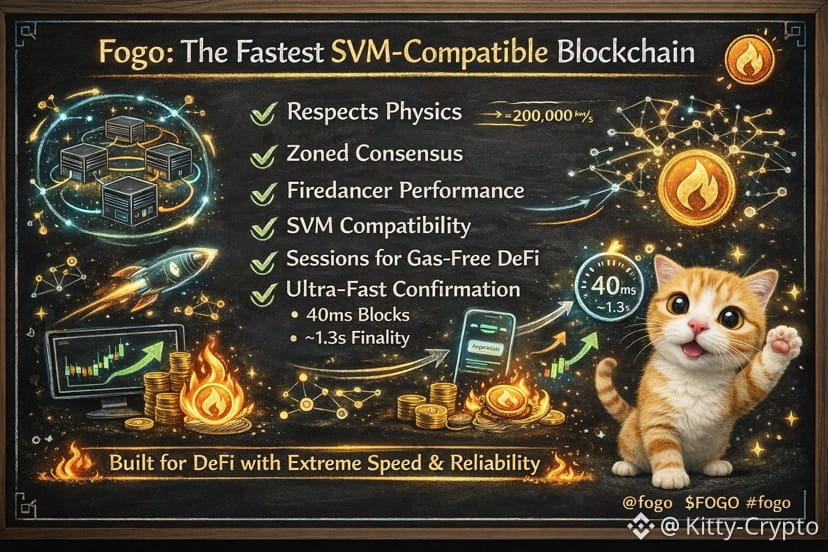
Light in fiber travels ~200,000 km/s. That sounds absurdly fast … until you remember the planet is huge. A single round trip across major routes can land you in 70–90ms (and even worse on longer paths). Now zoom out: consensus isn’t one ping. It’s multiple authenticated message exchanges across a quorum. That means your “finality” isn’t just an algorithm, it’s network tail latency: the slowest few links you must wait on.
Why averages lie (and traders pay)
In real systems, the enemy isn’t average latency it’s the tail. One outlier validator, one congested route, one jittery machine and the entire distributed workflow slows down. That’s why chains feel “fine” in calm markets but melt when volatility hits. The chain doesn’t fail at the mean it fails at the edges.
What Fogo does differently
Fogo starts where most designs pretend reality doesn’t exist:
1) Localized consensus (multi-local / zoned design)
Instead of forcing global coordination on every block, Fogo reduces the distance the quorum needs to coordinate over on the critical path. Smaller physical dispersion → fewer milliseconds burned before a single instruction even executes.
2) Performance enforcement (less variance, more predictability)
A fast chain can’t be governed by its slowest implementation. Fogo standardizes around a high-performance validator stack (Firedancer-based architecture) to reduce jitter and outlier drag. That’s not just “more TPS.” It’s more consistent finality under load.
3) SVM compatibility without inheriting congestion
Fogo keeps the execution environment developers already know (SVM), so Solana programs/tooling can migrate with minimal friction but the settlement layer is engineered around latency constraints, not ignored by them.
The real point: speed is a product feature
40ms blocks and ~1.3s confirmation aren’t marketing numbers if they hold when the mempool is screaming. That’s when on-chain order books, precise liquidations, real-time auctions, and lower MEV surface area stop being theory and start being possible.
Tradeoff (the part people avoid)
Yes, locality and performance standards introduce hard choices. Critics will call it “less decentralized” if they only measure decentralization by how far apart machines are. But decentralization that can’t deliver reliable settlement during stress is not a win for users. In finance, reliability is decentralization’s purpose, not its decoration.
Fogo’s bet is simple: if you design around the physics of a planet-sized network not the fantasy of a weightless internet you get a chain that stays fast when it actually matters.
@undefined @Fogo Official $FOGO #fogo