
When I first researched Fogo, I wasn't just exploring its underlying architecture. I wanted to understand how a high-performance chain like Fogo could support validators without sacrificing speed. Based on the Solana Virtual Machine (SVM), Fogo positions itself as infrastructure for decentralized finance (DeFi) and serious market activities, and its validator reward model reflects this performance-first philosophy.
Fogo's early validator reward structure immediately caught my attention. It didn't assume the network was completely free, but rather combined incentives with transaction fees in its initial phase. However, its long-term vision is clear: the ultimate goal is to establish a true fee market, funded by a secure block space.
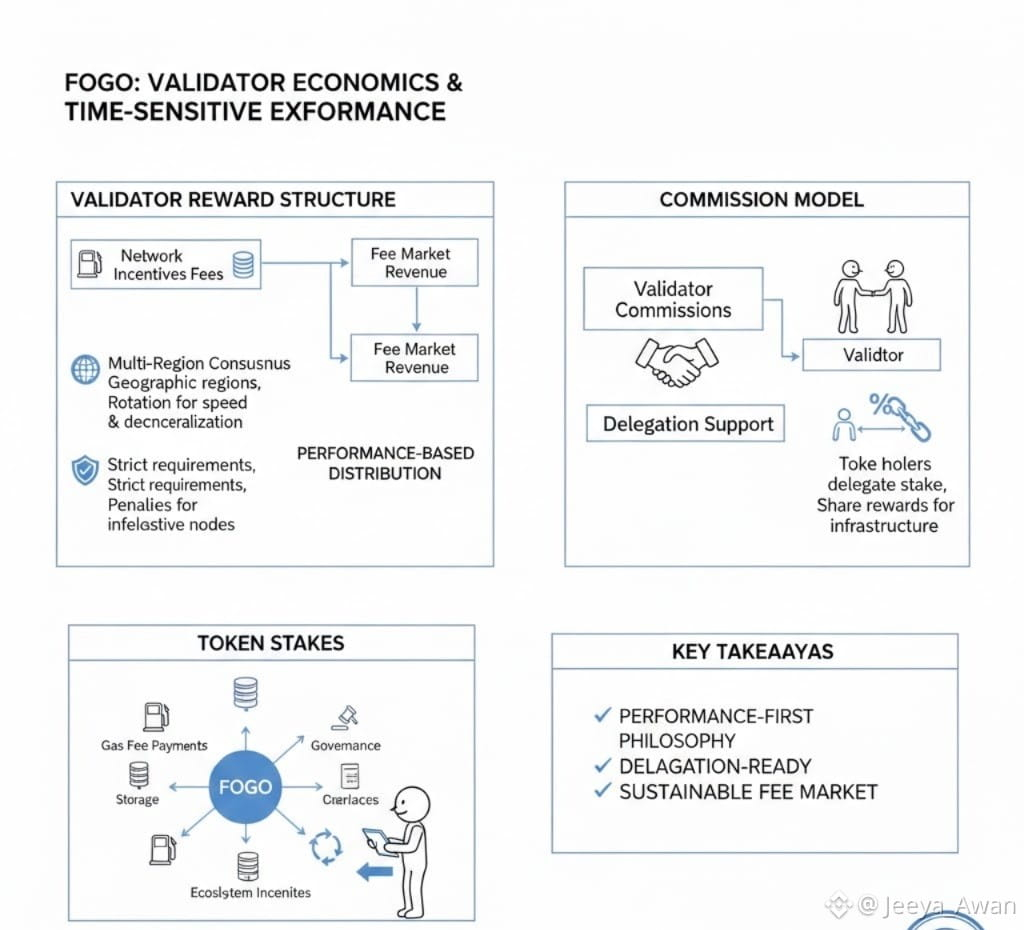
Validator Reward Structure
• Reward Sources: Validators currently receive rewards through a combination of network incentives and transaction fees. In the future, the goal is to rely more on membership fee revenue generated from actual usage.
• Multi-Region Consensus: Validators are organized into different geographical regions to reduce latency. These regions rotate periodically to balance execution speed and the degree of decentralization between regions.
Token Stakes: The $FOGO token supports gas fee payments, storage, governance, and ecosystem incentives, directly linking validator economics to network activity.
Performance-Based Reward Distribution: Fogo maintains a select group of validators with strict minimum storage capacity and specific infrastructure requirements. Ineffective nodes may be penalized or removed to maintain network stability.
As I delved into the commission model, I discovered that delegation is built into the system.
Commission Model:
Validator Commissions: Validators can set commission rates and receive a percentage of the storage rewards generated by delegators.
Delegation Support: Token holders can delegate their staking to validators, who will receive a portion of the rewards used to operate high-performance infrastructure.
Fee Market Transformation: Long-term sustainability depends on accurate pricing of block space demand, rather than indefinite reliance on the block issuance process.
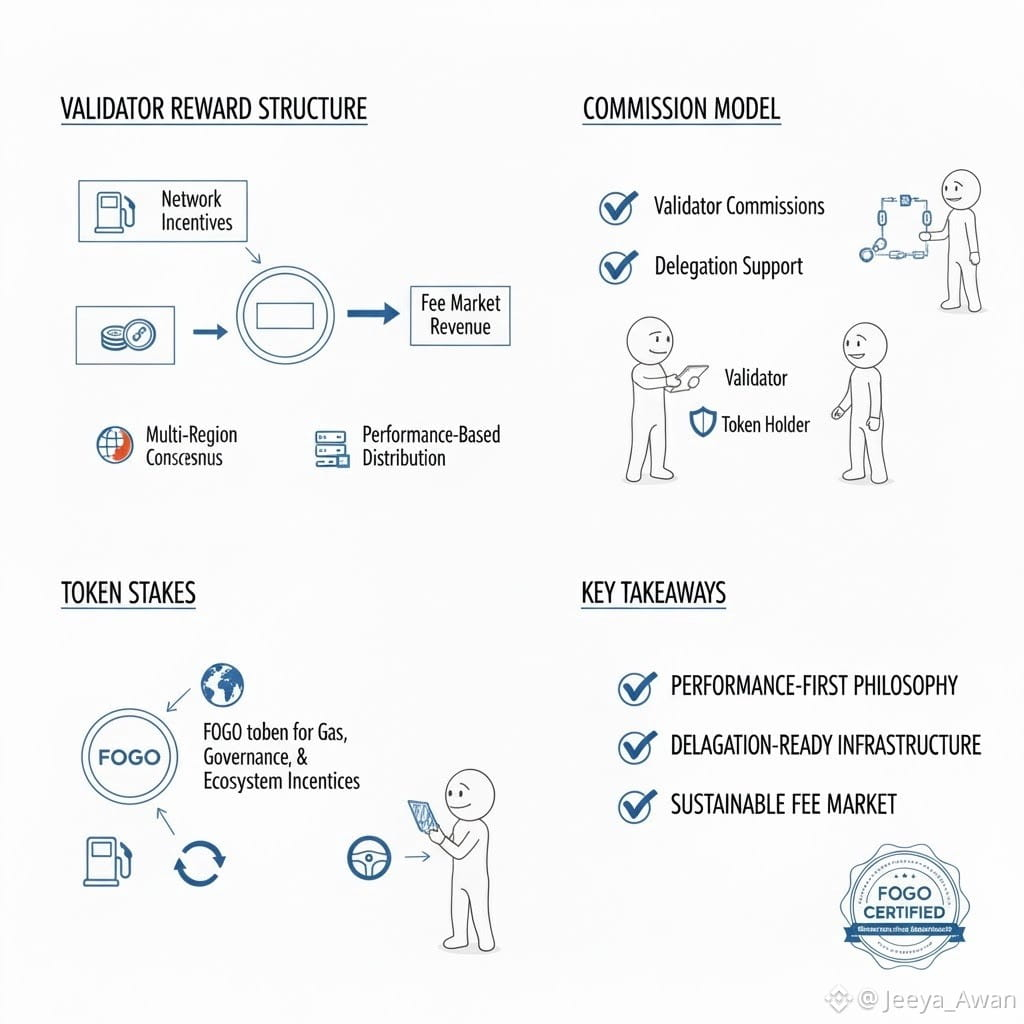
Fogo prioritizes high-performance hardware and stringent validator standards.
Economic models are evolving from incentive-based support models to sustainable cost-based structures.
Validator discipline is crucial for maintaining low latency and predictable execution.
In my view, Fogo's approach demonstrates that performance, governance, and economic design are interconnected. Validator rewards are not merely payments; they are part of a system designed to maintain network speed, stability, and economic viability.
