

How Fogo Simplifies Agreement in Distributed Systems
One big headache in blockchain is getting everyone on the same page. Agreement is how a blockchain decides what really happened. But with tons of people involved, things can get messy.
Think about planning a group project with people all over the globe. Each message and vote adds up. You might spend more time planning than actually doing the work. That's what happens on large blockchains, which slows things down.
Even if the computers checking transactions are speedy, lots of back-and-forth can bog down the system. It's like having a fast car stuck in rush hour—it has potential, but it can't go anywhere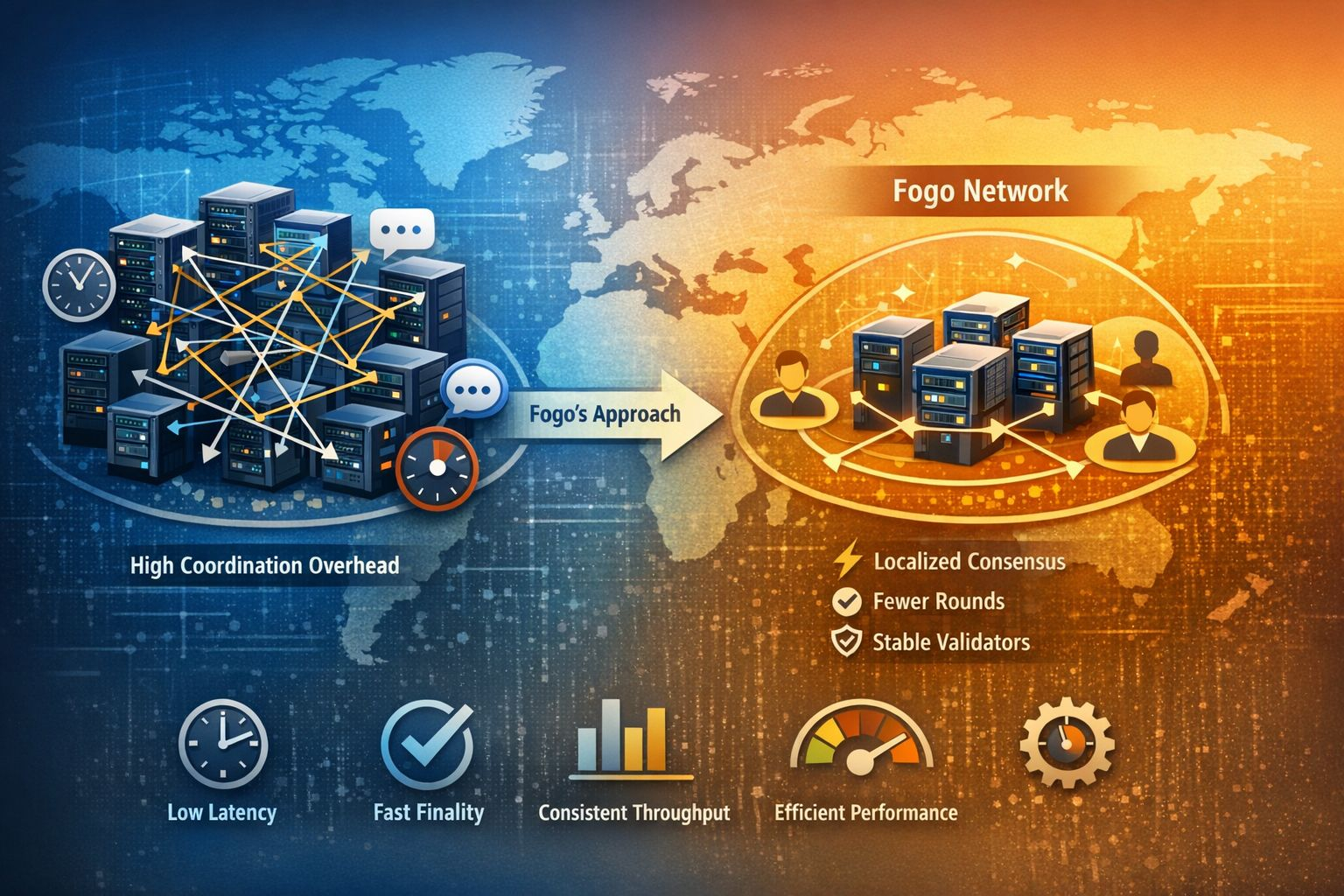
Time, Securely
Here's where it gets interesting. Fogo uses something called Proof of History, like a shared clock that can't be altered. Instead of computers constantly asking each other the time—Did you get that message before or after mine?—they use this secure timeline to know when things occur.
Ever get confused when messages in a group chat show up in the wrong order? Proof of History prevents that mess. Everyone knows the event sequence, automatically.
Location Counts
Fogo also uses location in a smart way. Instead of making computers all over the world constantly communicate, they use local agreement. During any given span, only computers in a specific area are involved.
Why does this matter? Smaller distances mean quicker messaging. It's like shouting across a room compared to calling overseas. When messages don't have to travel far, agreement comes faster and is more dependable. Less changing, fewer delays, and things run smoother.
Everyone on the Same Page
A problem with many blockchains is when computers use different software, leading to issues. Put the same, quick software on every computer. When everyone is running similar, agreement becomes easier. Fewer surprises, fewer fixes, and fewer retries. The system just runs.
Inner Workings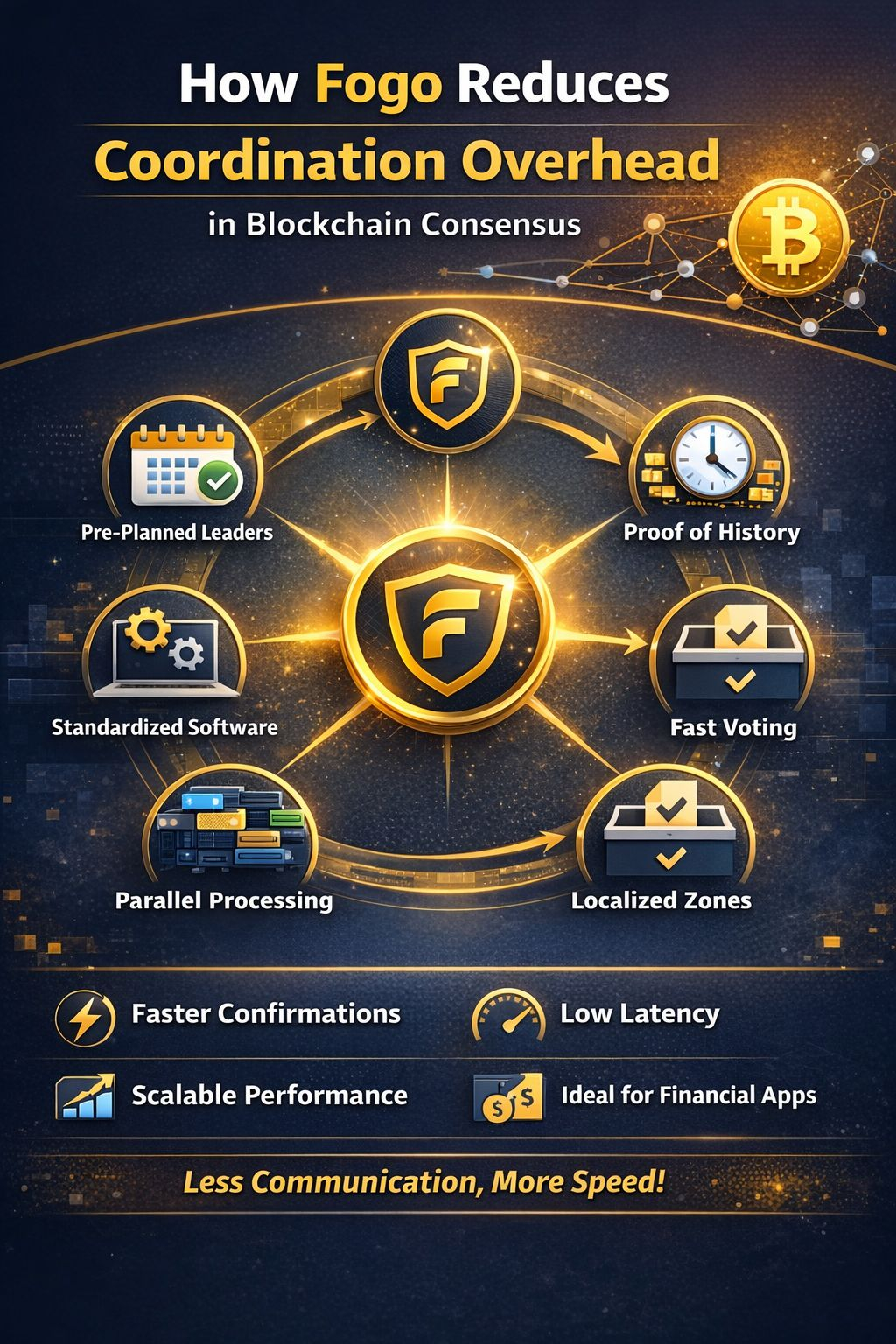
It's not just about computers talking to each other—what happens inside each computer .They don't wait for a central command.
Speed Where It Counts
Voting is quick, too. Once a computer checks a block, it sends its agreement right away.
Why This Is Big for Real Uses
For developers building on the blockchain, this simpler agreement means one thing: things are predictable. When agreement times are fast and stable, you can build systems that depend on consistent timing.
This helps financial applications in particular. In DeFi, timing has impact on pricing and risk. If your blockchain is slow, your application must constantly adjust and work around delays. With Fogo's easier agreement, developers can build with certainty.
Scaling Up
As networks grow, agreement problems usually get worse. More computers mean more communication, more possible jams, and more complexity. When your system cuts down on the need to agree from the start, growth doesn't hurt so much.
Fogo can deal with more computers and transactions without slowing down like other networks. Being fast makes it scalable.
Money Talks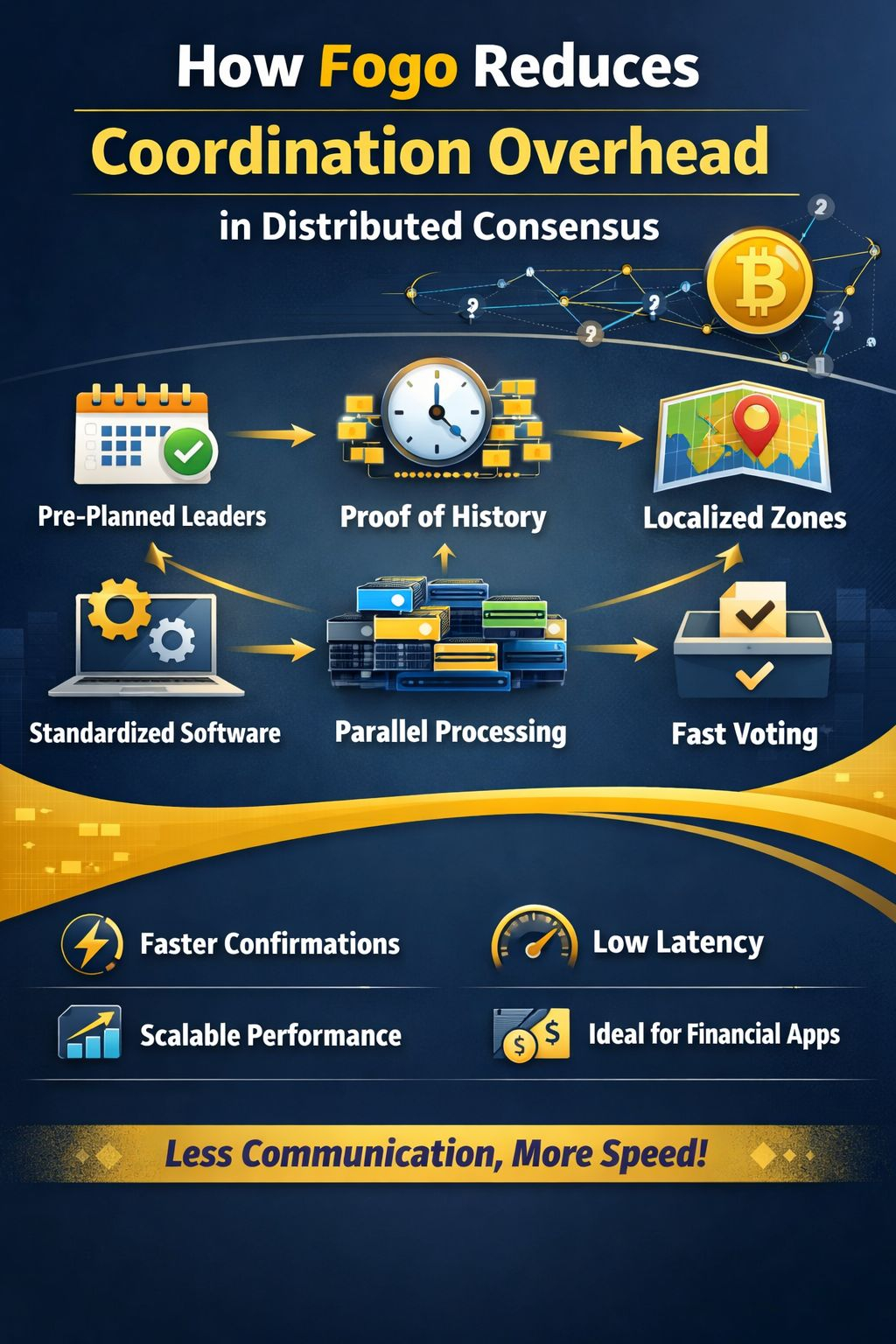
There's also a financial incentive.
The result? A computer system that naturally aims for low delays and quick work. Good work gets rewarded, and the entire network benefits.
The Future Is Real-Time
As blockchain tech grows, we're heading toward real-time uses like games and payments. These need systems that can keep up.
Want to understand how Fogo achieves fast agreement? Follow @fogo for more on agreement design and network speed. The basis for these quick agreements runs on $FOGO @Fogo Official #fogo