

 It was New Year’s Eve. Outside, fireworks kept exploding in the dark sky, bright and loud. Inside our home, the whole family was sitting around the dinner table. The food was warm, the room was full, and for a moment everything felt complete.
Then my serious uncle started telling stories from his childhood.
We had heard those stories many times before. Maybe not eight hundred times, but enough to know every twist and every ending. And yet, no one interrupted him. No one checked their phone. We all listened quietly.
That was the moment something clicked in my mind.
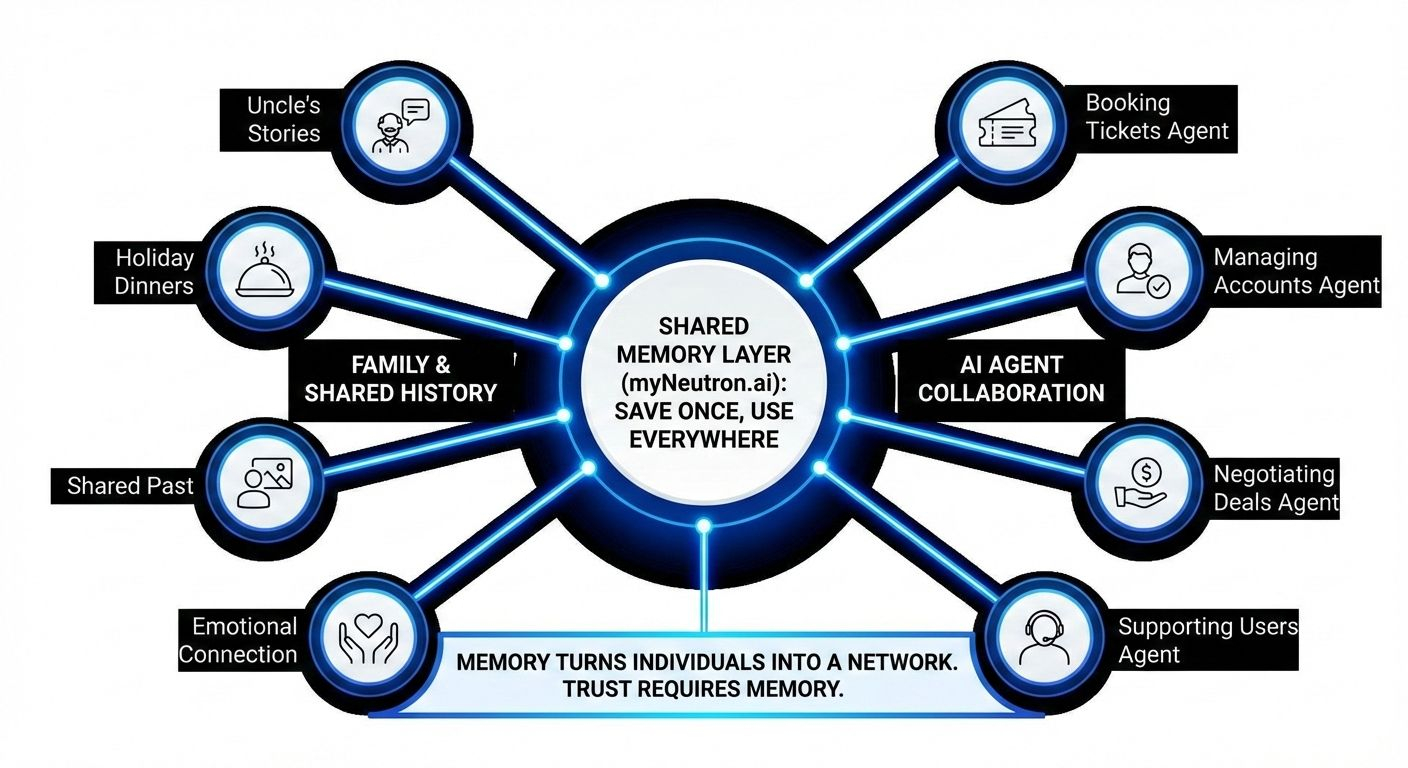
It was not the dumplings on the table that held us together. It was not the decorations or the fireworks. It was our shared memories. The stories we all knew. The moments we all remembered.
Without those memories, we would just be random people sitting at the same table by chance. But because we share a past, we are a family. Memory is what turns individuals into a network. Memory is what turns strangers into something whole.
And that thought led me to something much bigger.
Not long ago, Vanar was loudly saying it wanted to become the brain of AI. The message was bold and direct. It sounded powerful. But over the last few days, something changed.
Instead of shouting about itself, Vanar stepped back.
Detailed articles began to appear from ByteBloom. Community voices like JustTino were being quoted. The discussion around “Memory as Infrastructure” was no longer coming only from the official team. Independent writers and observers started sharing their own views.
This shift is quiet, but it is smart.
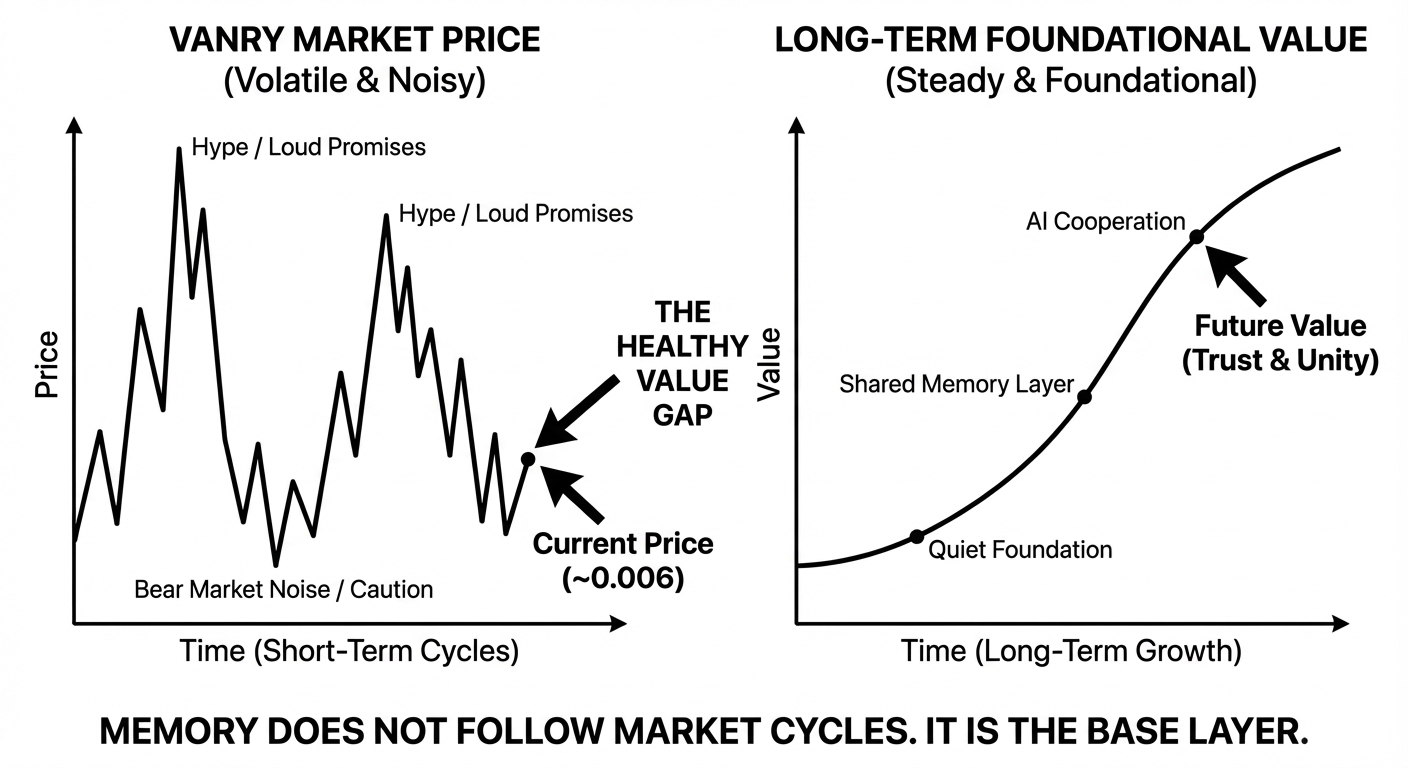
When a project praises itself, people become cautious. Especially in a bear market, where trust is fragile and investors feel defensive. Loud promises often sound like sharp blades.
But when outside builders, researchers, and media voices begin to say on their own, “Memory is not just a feature. It is the base layer,” the effect is much stronger.
It is no longer self-promotion. It becomes shared belief.
Vanar is now allowing agreement to grow naturally instead of forcing attention. It is letting others speak. It is letting the idea spread on its own strength.
At the center of this idea is myNeutron.ai and its simple core message Save once, use everywhere.
Think about that carefully.
Notes, documents, chat records. Once saved, they become shared material that different AI agents can access. Instead of each AI working alone with its own limited context, they can connect through a shared memory layer.
This is like giving AI a family tree.
Right now, most AI agents are like isolated individuals. They answer questions. They complete tasks. But they do not truly share history. They do not build long-term relationships with each other.
With a shared memory network, that changes.
AI agents could cooperate on complex tasks. Booking tickets. Managing accounts. Negotiating deals. Supporting users over long periods of time. True collaboration requires trust. And trust cannot exist without memory.
Memory records actions. Memory tracks promises. Memory builds continuity.
Without memory, there is no confidence. Without confidence, there are no real transactions.
When I look at the current price of VANRY, sitting around 0.006 dollars, I see the usual market noise. Some people say it is boring. Some ask where the big news is. Some want excitement, fast moves, sudden pumps.
But this gap between price and long-term value can be healthy.
The market is still treating it like just another coin to trade. Waiting for hype. Waiting for headlines.
Meanwhile, the deeper work is happening quietly.
Vanar appears to be building something less flashy but far more foundational. It is focusing on becoming the memory layer that supports AI society.
That might not sound glamorous. It might not create fireworks in the short term.
But think about the family dinner again.
The loudest person in the room is not always the most important. The fireworks outside are bright, but they fade quickly.
The most important person at that table is often the uncle who remembers everything. The one who keeps the stories alive. The one who connects the past to the present.
Memory does not follow market cycles. Memory does not care about bull or bear seasons. Memory is steady.
And if AI is going to move beyond simple tools and become a system of cooperating agents, it will need something deeper than speed or intelligence.
It will need shared history.
It will need a foundation.
It will need memory.
Maybe that is the real bet for 2026 and beyond. Not louder promises. Not sharper marketing. But a quiet layer that allows AI agents to remember, to trust, and to work together.
Because in the end, whether it is a family or a network of machines, the truth is the same.
Without memory, there is no unity.
Without memory, there is no society.
And without memory, AI is just a mound of loose sand scattered by the wind.
