

Most blockchains talk about decentralization. Few are actually built around it. Fogo feels different from the first moment you start reading its governance structure. It doesn’t lean on a foundation making quiet decisions in private chats. It doesn’t hide behind a multisig that only a handful control.
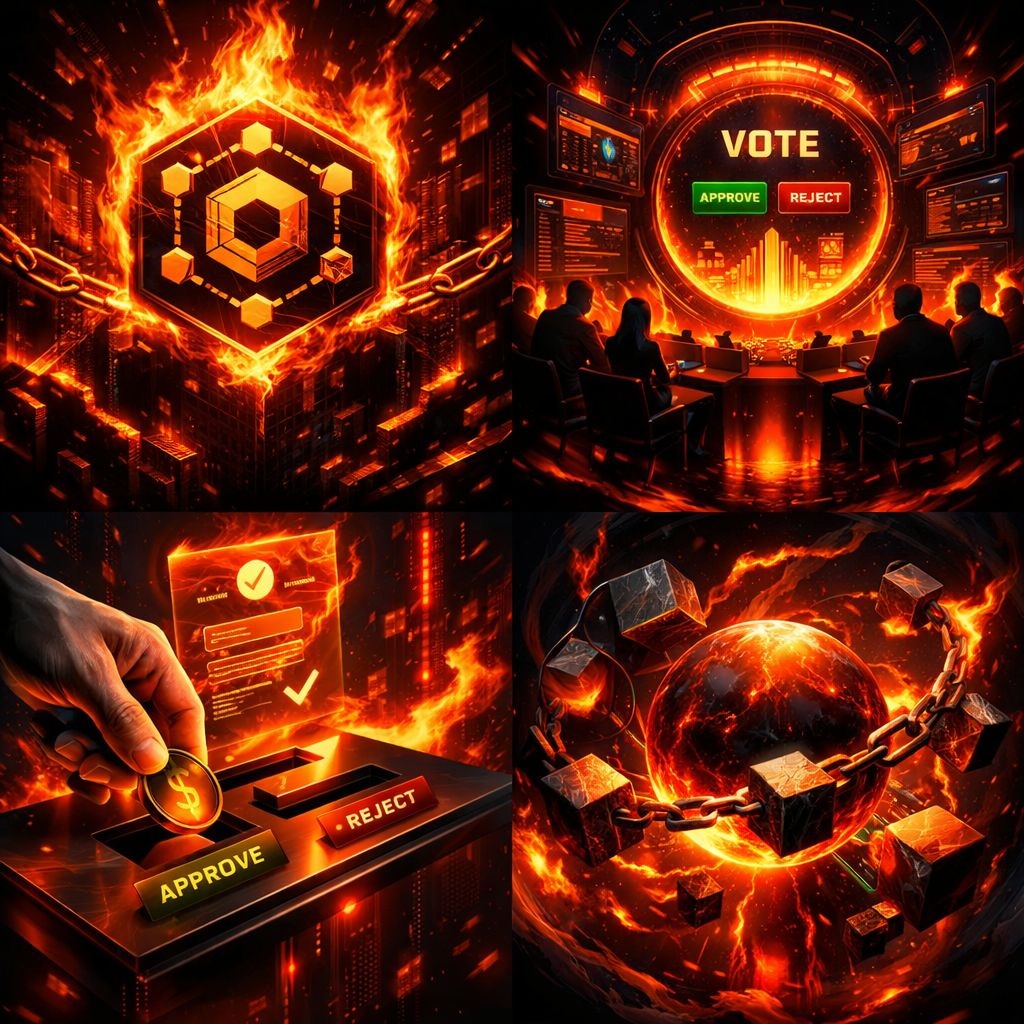
Everything that matters happens on-chain. Visible. Verifiable. Uncomfortable, even. What caught my attention first was its quorum design. One-third participation determines legitimacy. Not a vague “community sentiment.” Not backroom alignment. Real participation. Real accountability. That changes the psychology of a network. When people know their vote genuinely shapes outcomes, they behave differently. They engage differently. Fogo isn’t trying to be loud. It’s trying to be structurally sound.
Security updates, protocol upgrades, parameter changes — these aren’t decided by a centralized core team waving authority. They move through governance flow. Proposal. Debate. Vote. Execute. It sounds simple, but in crypto, simplicity in governance is rare. Many chains drift toward informal power centers over time. Fogo appears to be deliberately resisting that gravity. There’s also something subtle happening here. When a protocol gives up discretionary control, it gives up speed in exchange for legitimacy. That trade-off is intentional. It signals long-term thinking. You don’t design like that if you’re optimizing for hype cycles. You design like that if you expect the system to outlive the founders. And that’s where Fogo becomes interesting.
Because governance isn’t just technical. It’s cultural. A chain governed fully on-chain forces its community to mature. It requires participation. It requires informed debate. It removes the safety net of “the team will handle it.” That can be messy. But messy democracy is often more durable than polished centralization. Of course, there are risks. Voter apathy. Governance capture. Coordination fatigue. Every DAO faces these pressures. Fogo isn’t immune. But the difference is structural transparency. When governance is native and unavoidable, apathy becomes visible. Capture becomes measurable. And visibility is power. The fire metaphor fits. Fire can warm a system or burn it down. Fogo’s model channels that energy into rules rather than personalities. Into process rather than privilege. It’s less about speed and more about sovereignty.
In a market where narratives rotate weekly — AI chains, modular chains, restaking layers — Fogo’s value proposition feels almost old-fashioned. Governance purity. Transparent quorum. No shadow control. But sometimes what looks old-fashioned is actually foundational. If Fogo succeeds, it won’t be because it promised the highest TPS or the loudest incentives. It will be because it trusted its participants enough to hand them the steering wheel — fully, not symbolically. and that’s rare.